Best Interactive Toys for Autistic Children: Engaging Learning and Sensory Play
Finding toys that support language development, sensory processing, and engagement can help children with autism explore new skills in a fun, low-stress way. The following five interactive toys are designed to stimulate speech, sound recognition, motor coordination, and social interaction, while staying safe and engaging for kids aged 2 to 8. Each option combines auditory cues, tactile feedback, and visual stimuli to support varied sensory needs and learning styles.
| Product | Brand | Key Benefit |
|---|---|---|
| AYSREAI Talking Flash Cards with LCD Writing Tablet | AYSREAI | Word recognition and writing practice |
| Aullsaty Toddler Talking Flash Cards | Aullsaty | Rich vocabulary with interactive sounds |
| Playbees Light-Up Transparent Car Toy | Playbees | Cause-and-effect, motion and LED play |
| KOKODI Talking Pen Books Sets | KOKODI | Tap-to-read for independent learning |
| JOYIN 4-Pack Fidget Tubes | JOYIN | Calming sensory tubes for focus and regulation |
Each product below is presented with a concise heading, an image reference, and a summary of its features. The selections emphasize safe, durable designs and accessible interfaces to support varied communication and sensory needs.
AYSREAI Talking Flash Cards

Designed by teachers, this interactive device includes 224 sight words across 12 themes such as animals, vehicles, foods, colors, and more. It offers standard pronunciation and animal sounds to reinforce vocabulary. The 8.5-inch erasable LCD writing tablet enables writing and drawing, with a simple erase function and a locking option to keep drawings intact. This device runs on USB charging, avoiding frequent battery replacements. The product is built with ABS plastics and CPC certified for child safety, aligning with concerns about durable, kid-friendly materials.
Aullsaty Toddler Talking Flash Cards

This set features 248 sight words across 14 subjects, including animals, vehicles, letters, numbers, foods, colors, and daily essentials. The reader phonically pronounces words with a standard American accent, and many cards pair with animal and vehicle sounds to create an engaging Montessori-style learning experience. A repeat function and multi-level volume control support flexible use for different environments. It’s designed to be interactive for solo play or family learning, with emphasis on speech development through auditory feedback.
Playbees Light-Up Transparent Car

This bump-and-go car delivers automatic movement and obstacle-avoidance to foster motor planning and hand-eye coordination. The transparent body reveals spinning gears, offering visual curiosity and a basic introduction to mechanical concepts. LEDs and music provide a sensory-rich experience, facilitating engagement through sight and sound. The toy supports iterative play, where children learn through cause-and-effect actions as the car changes direction after collisions.
KOKODI Talking Pen Books Sets
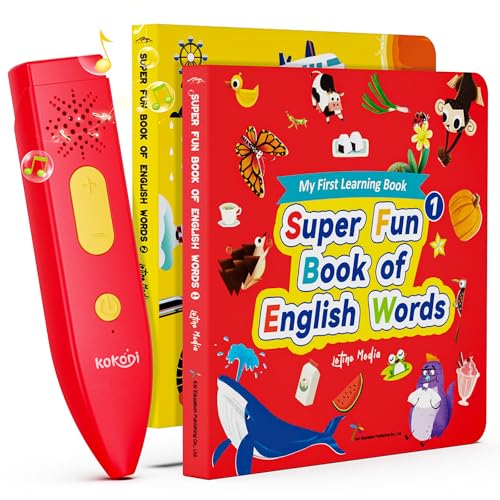
The KOKODI reading pen enables independent learning for children aged 2-6. Tap an image or word to hear content read aloud, supporting early literacy and language development. The set includes 22 themes across two books, delivering over 450 words, 10,000-plus touch-read positions, and 1,500+ pronunciations in American English. The design focuses on intuitive interaction—kids can learn through play, car rides, or quiet time. It promotes confidence in reading while reducing reliance on screens, a consideration for many parents seeking balanced learning tools.
JOYIN Fidget Tubes (4-Pack)

This pack offers tactile stimulation and stress-relief features. The brightly colored tubes are designed for sensory exploration and calming benefits, helping children channel excess energy and improve focus. They can be used in home or classroom settings as part of a calm-down routine or during therapeutic activities. The tubes encourage fine motor manipulation, grip strength, and hand coordination while providing visual and tactile engagement that is accessible for children with diverse sensory preferences.
Scientoy Fidget Toy Set
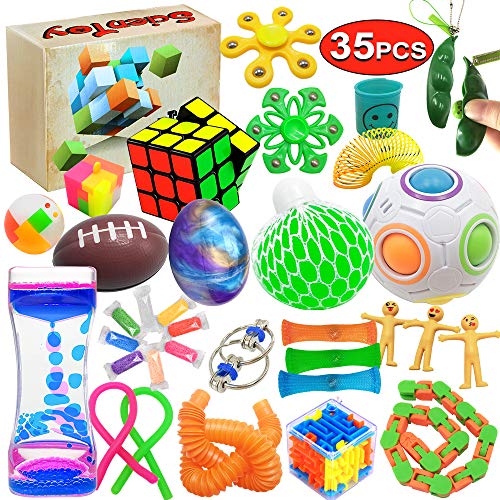
Scientoy’s 35-piece fidget set provides a range of textures and activities, including a rainbow ball, liquid timer, mesh and marble fidgets, putties, and more. While not all items are suitable for every child, the assortment supports sensory exploration, motor planning, and focus. The set emphasizes non-toxic materials and compliance with toy safety standards, making it a versatile option for classrooms or homes seeking a broad spectrum of tactile stimuli to complement speech and social-communication activities.
LESONG Textured Stretchy Fidget Toys

These stretchy noodles glow in the dark and feature varied textures across eight strands. They are designed to provide tactile stimulation and kinesthetic feedback, supporting stress relief and focus for children with sensory needs. The length and stretch capability offer dynamic options for gross and fine motor play, which can be useful in calming routines or as a social activity where children share and compare textures and resistance levels.
Buying Guide: Purchase Considerations for Interactive Autistic Toys
- Learning goals and sensory profile: Match toys to a child’s strongest modalities (auditory, visual, tactile) and target skills (speech, vocabulary, fine motor, social interaction).
- Safety and age-appropriateness: Check material safety, small parts, and recommended ages. Look for CPC or similar certifications when possible.
- Durability and ease of use: Choose sturdy designs with simple interfaces (press, tap, or slide) to minimize frustration and maximize independent exploration.
- Replacement and maintenance: Consider devices with rechargeable batteries or long-lasting power options and easy-to-clean surfaces.
- Adaptability and future-proofing: Prefer toys with adjustable volume, multiple modes, or expandable content to grow with the child’s abilities.
- Family and therapist integration: Select tools that support shared play, guided reading, or therapy sessions to enhance collaboration and consistency.
- Cost and value: Compare features, durability, and refill availability. A higher upfront cost can pay off in longer-term engagement and learning outcomes.
- Individual preferences: Children with autism may favor certain sensory inputs or themes. If possible, pilot a toy that aligns with their interests to improve engagement.
- Multi-sensory balance: A combination of auditory, visual, and tactile elements can help maintain interest and address diverse sensory needs without overstimulation.