Best Conversation Cards for Autism: Social Skills Tools for Kids and Adults
Discover effective conversation cards that support communication, empathy, and social skills for individuals with autism. This guide highlights five carefully selected options, focusing on clear prompts, visual supports, and adaptable activities for kids, teens, and adults. Each item features practical benefits for therapy, classroom use, and family practice, helping unlock confident dialogue and meaningful connections.
| Product | Brand | Key Benefit |
|---|---|---|
| Letz Talk Conversation Cards | Letz Talk | 60 thoughtful questions to open up conversations and build confidence |
| eeBoo: What’s Going on Here? | eeBoo | 50 illustrated prompts to develop empathy and social reasoning |
| eeBoo: I Heard Your Feelings | eeBoo | 48 scenarios with back-of-card discussion prompts for feelings |
| Key Education Photo Conversation Cards | KEY EDUCATION PUBLISHING | 90 photo cards with prompts for diverse social situations |
| Who What Why Conversation Cards | Clever Fox Play | 60 scenarios to grow emotional intelligence and observation |
Letz Talk Conversation Cards for Autism
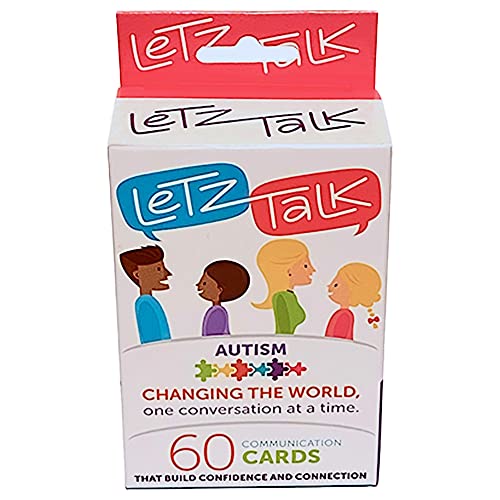
The Letz Talk conversation cards are designed to support family discussions and social development for children and adults with autism or Asperger’s. This set includes 60 age-appropriate questions intended to encourage children to share thoughts beyond routine prompts. The cards aim to boost confidence, self-expression, and social-emotional intelligence by facilitating meaningful conversations with caregivers and peers. They work well as therapy tools, classroom warm-ups, or stocking stuffers for ongoing practice. The deck’s focus on initiating and sustaining conversations helps autistic individuals feel heard and understood, promoting a more inclusive dialogue at home and school.
Features emphasize family conversations, autism-friendly content, and the potential to improve social initiation and maintenance. The materials are structured to support guiding adults in how to respond, helping both the talker and listener navigate topics with comfort. The product notes highlight its suitability for various ages and as a practical tool for daily communication practice.
eeBoo: What’s Going On Here? Conversation Flashcards

eeBoo’s What’s Going On Here? uses friendly illustrations to invite children and adults to infer emotions and social cues. With 50 illustrated cards, the prompts encourage logical thinking, observation, and discussion about social situations. The set is recognized with awards for accessibility and adaptability, underscoring its value in developing empathy and foundational social literacy. The sturdy box and clear prompts support structured activities in therapy sessions, classrooms, or family time, making it a versatile tool for social-emotional learning.
Users can guide conversations by asking players to infer what is happening, why characters feel a certain way, and what could be done differently. This approach helps learners connect visual clues with social context, fostering flexible thinking and improved conversational competence. It is appropriate for a wide age range and can be integrated into broader SEL programs or used as a standalone activity.
Plastic Communication Cards for ADHD and Autism

This set provides 25 double-sided communication cards tailored for nonverbal individuals, including those with ADHD and autism. A color-coded system organizes cards into four key areas: communication, needs, discomfort, and danger. The durable plastic construction supports frequent handling, cleaning, and reuse in various environments. These cards act as practical supports during moments of nonverbal communication, helping wearers express needs, indicate discomfort, and recognize danger signals with clarity. They are suitable for both children and adults who require concise, visual prompts to assist in everyday interactions.
The color-coded approach helps caregivers and educators quickly navigate a session, while the wipeable material ensures longevity in classroom or home use. While compact, the set covers essential communication domains that can complement larger SEL curricula or therapy plans, especially when quick, concrete prompts are needed during moments of stress or transition.
eeBoo: I Heard Your Feelings

I Heard Your Feelings offers scenarios designed to foster discussion about emotions and social dynamics. Each card presents a situation, such as being chosen for a team or an accident, with questions on the backside to prompt dialogue about how someone might feel. This supports families and educators in guiding conversations that promote empathy and social understanding. The 48-card set, housed in a sturdy box, provides a practical framework for practicing emotional literacy in daily life, classrooms, and therapy sessions.
By encouraging reflective conversations, the cards help learners recognize and articulate emotions, analyze social cues, and develop appropriate responses. The format is accessible for a wide age range and compatible with existing SEL plans, making it a reliable tool for ongoing emotional education.
Who What Why Conversation Cards

Who What Why uses engaging animal characters and 60 scenarios to support emotional intelligence and social observation. Each card includes prompts that guide children to consider different perspectives, interpret emotions, and articulate responses. The design emphasizes relatability and accessibility for classroom use, therapy activities, and home practice. The cards encourage critical thinking and empathetic communication, providing a structured way to discuss real-life situations and practice language in social contexts.
The content is tailored to help kids recognize emotions, infer intentions, and describe appropriate actions, aligning with goals for social skills development in autism-focused education. This set offers a versatile, low-friction option for ongoing practice with an emphasis on observation and thoughtful dialogue.
Buying Guide: Key Purchase Considerations
- Age range and developmental level: Choose sets that match the user’s communication skills and comfort with abstract prompts. Some cards are more visuals-based, while others rely on text-heavy prompts.
- Visual supports: For many autistic individuals, clear visuals and concrete prompts improve comprehension. Consider image-rich decks (photo or illustration cards) versus text-only options.
- Interactivity and format: Cards that encourage turn-taking, shared dialogue, or guided prompts can be used in therapy, classroom, or home settings. Think about caregiver involvement and session structure.
- Durability and maintenance: Plastic cards or laminated cards withstand frequent handling and cleaning, which is valuable in classroom or clinic environments.
- Adaptability: Some decks include prompts that align with broader SEL goals, while others offer quick-start options for families. Choose based on whether you need a standalone resource or a supplementary tool.
- Evidence and recognition: Awards and professional endorsements can indicate usefulness in educational or therapeutic contexts. Consider sets with demonstrated impact in social-emotional learning.
- Accessibility: Look for products that provide inclusive prompts, diverse characters, and scenarios that reflect a range of everyday experiences to ensure broad relevance.
- Compatibility with existing programs: If you’re already using a therapy approach or school curriculum, select cards that can be integrated smoothly without requiring a complete workflow overhaul.
In summary, the chosen cards emphasize practical prompts, empathy development, and social communication skills. When selecting, consider the learner’s current abilities, preferred learning style, and the environment where the material will be used most frequently. A mix of visual and scenario-based prompts often yields the broadest applicability across home, school, and clinical settings.