Best Busy Boxes for 2 Year Olds: Engaging Montessori Toys for On‑The‑Go Learning
Busy boxes can support early learning, fine motor skills, and independent play for 2-year-olds. The following selections are portable, engaging, and designed to stimulate curiosity without overwhelming little learners. Each option below is compact enough for car trips or airport waits, yet durable enough for daily use. Read on to compare features, suitability, and how each busy book or cube can fit into a practical early‑learning routine.
| Product | Brand | Key Focus | Travel Friendly |
|---|---|---|---|
| Teefrye Toddler Busy Board | Teefrye | Fine motor, letters, numbers, colors | Yes |
| Montessori Preschool Busy Book | Momo & Nashi | Alphabet, colors, shapes, animals | Yes |
| Sumsoltic Busy Board | Sumsoltic | Color matching, switches, lights | Yes |
| iPlay, iLearn Busy Cube | iPlay, iLearn | 10 activities, sensory play | Yes |
| MUONE Busy Book Color Sorting | MUONE | Color sorting, vocabulary | Yes |
Teefrye Toddler Busy Board Montessori Toys

The Teefrye busy board offers an 8‑page sensory experience with 21 toddler activities designed to build practical life skills, fine motor control, and cognitive recognition. It covers alphabets, numbers, colors, shapes, and basic weather and animal concepts. Portable handles make it easy to carry in a diaper bag, and the soft felt materials reduce the risk of injury during play. The design emphasizes durability and secure components to minimize loose parts, making it suitable for toddlers aged 1 and up.
Montessori Preschool Busy Book By Momo & Nashi

The Montessori Preschool Busy Book from Momo & Nashi arrives preassembled and ready to use, making it ideal for parents who want immediate, distraction‑free learning. It covers essential readiness concepts—alphabet, numbers, colors, shapes, animals, weather, and more—along with life skills activities that support memory, focus, and problem solving. The toy encourages quiet, screen-free play and fosters cognitive development through structured yet open-ended tasks that children can approach at their own pace.
Sumsoltic Busy Board Montessori Toys
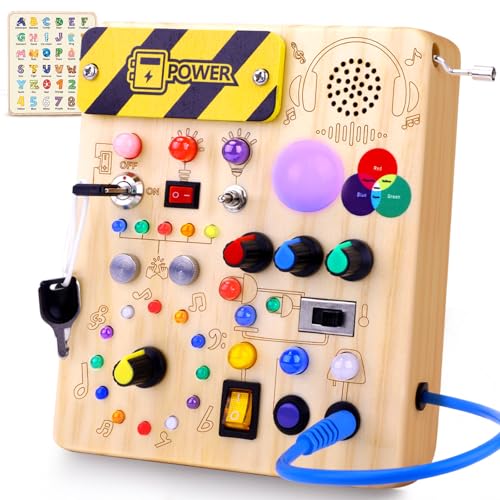
Sumsoltic’s busy board emphasizes sensory exploration with 12 distinct switches, LED lights, a music box, and color‑mixing activities. A master switch helps conserve battery life, while the compact size makes it travel-friendly for airplanes or car trips. The design supports color recognition, auditory processing, and fine motor development, offering a robust, Montessori-inspired learning experience that holds a toddler’s attention for extended play sessions.
iPlay, iLearn 10 in 1 Busy Cube

The iPlay, iLearn busy cube packs 10 activity panels into a compact cube, featuring a spinner, whack‑a‑mole style games, steering wheel, and various matching challenges. It emphasizes sensory stimulation and fine motor skills while offering visuals and sounds that engage toddlers. Constructed with safety in mind, it uses rounded edges and secure components to minimize choking hazards or loose parts during play.
MUONE Color Sorting Busy Book

MUONE’s busy book focuses on color recognition through 12 vibrant colors and a tactile color‑sorting activity using hook‑and‑loop fasteners and matching stickers. It also integrates vocabulary development with simple word labels, supporting early literacy alongside cognitive and fine motor skills. The interactive format invites collaborative play, making it suitable for shared learning experiences with a caregiver or sibling.
Buying Guide
When selecting a busy box for a 2-year-old, consider four core areas: learning goals, safety, portability, and durability. For learning goals, identify whether you want emphasis on letters and numbers, colors and shapes, or practical life skills and vocabulary. For safety, confirm that materials are non‑toxic, edges are rounded, and small parts are secured. Portability matters for travel; compact, lightweight designs with carrying handles or bags are ideal. Durability is essential for everyday use, so look for sturdy stitching, reinforced seams, and components that resist tugging and pulling. Finally, assess how a product fits into an early‑learning routine—whether it supports independent play, guided activities, or shared learning with a caregiver.
Durability and age appropriateness vary across products. Some busy boards lean toward sensory exploration with blinking lights and adjustable features, while others deliver structured, Montessori-inspired activities designed to build memory, sequencing, and problem solving. For families on the go, travel-friendly options with one‑hand carrying capability can reduce fuss during car rides or flights. Consider starting with a single busy box that aligns with your child’s current interests, then expand to additional boxes as confidence and curiosity grow.
Educational goals can be balanced with entertainment value. A product that blends color matching, letter recognition, and hands-on manipulation tends to sustain interest longer and promote repetition, a key factor in early learning. If your child enjoys storytelling or role play, look for busy boards with life skills prompts (like dressing or weather) that translate into practical, everyday contexts. Finally, verify that the product’s maintenance requirements are reasonable, as some items may require simple batteries or occasional part checks.