Best Sorting Trays for Preschool Activities: Top Picks for Classroom Organization
Sorting trays help preschoolers build early math, language, and fine motor skills through hands-on play. The following picks are designed for classrooms, homes, and therapy settings, offering sturdy construction, bright colors, and practical sizes. Each product supports color sorting, piece organization, and creative activities like art, puzzles, and sensory play. Explore five strong options and a quick buying guide to help choose the right tray system for your preschool program.
| Product | Brand | Key Use |
|---|---|---|
| Buffalo Games – Puzzle Sorting Trays – 7 Count | Buffalo Games | Puzzle piece sorting and interlocking trays |
| Mifoci 12 Pack Large Plastic Art Trays | Mifoci | Colorful art and sensory organization |
| Puzzle Sorting Tray Set | Galison | Multi-tray puzzle sorting for high piece counts |
| Learning Resources Rainbow Sorting Set Classroom Edition | Learning Resources | Color sorting, counters, and fine motor tools |
| Slomg 10 Pack Plastic Art Craft Trays | Slomg | Multicolor trays for arts, crafts, and sorting |
Buffalo Games Puzzle Sorting Trays

The Buffalo Games Puzzle Sorting Trays consist of seven sturdy trays that measure 7.5 inches by 7.5 inches by 0.7 inches. The trays can be interlocked or separated to fit various building styles, making them adaptable for different puzzle sizes and classroom layouts. They support quick sorting of puzzle pieces by color, shape, or size, and are designed to withstand daily preschool use with durable construction.
Mifoci 12 Pack Large Plastic Art Trays
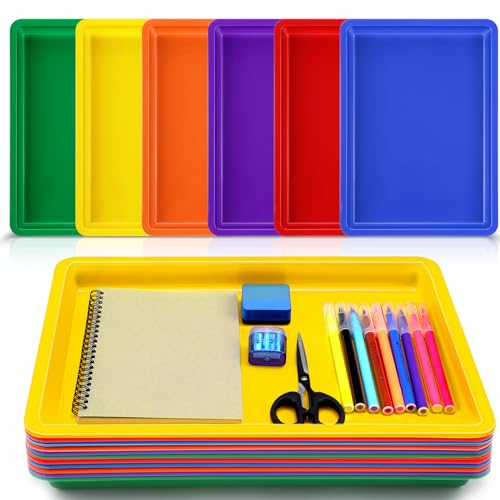
These 12 large, colorful plastic art trays measure about 16″ by 12″ by 1″ and come in six colors. They’re designed for a variety of preschool activities, including brick sorting, color mixing, finger painting, and science experiments. Made from durable polypropylene (PP) plastic, they’re smooth, easy to clean, and safe for repeated use in classroom settings, making them a flexible option for different centers and stations.
Galison Puzzle Sorting Tray Set

The Galison Puzzle Sorting Tray Set includes six multi-colored trays, each about 7.7 inches square with a shallow 0.8-inch depth. A lid for the top tray is included, helping to keep pieces organized between sessions. The design supports high-piece-count puzzles by enabling multiple trays to hold sections of a larger puzzle, facilitating collaborative play while preserving order and reducing piece loss.
Learning Resources Rainbow Sorting Set Classroom Edition

Designed for early learners, this Rainbow Sorting Set comes with four colorful sorting trays, 120 counters, 16 activity cards, and four pairs of fine motor tongs. It’s ready for small-group activities and includes built-in storage in cloud compartments for easy cleanup. The vibrant colors and versatile counting tools support sorting, patterning, and early math skills in preschool classrooms, making it a strong all-in-one option for centers and guided stations.
Excellerations Math Sorting Tray

This yellow sorting tray features eight compartments arranged on the outside with a central compartment, offering a large 15 3/4 inch diameter layout and 1.5 inch depth. It’s described as durable, heavy-duty plastic that is dishwasher safe, suitable for daily preschool math and sorting activities. The open layout helps children organize by color, number, or shape and supports group demonstrations and independent work alike.
Slomg 10 Pack Plastic Art Craft Trays
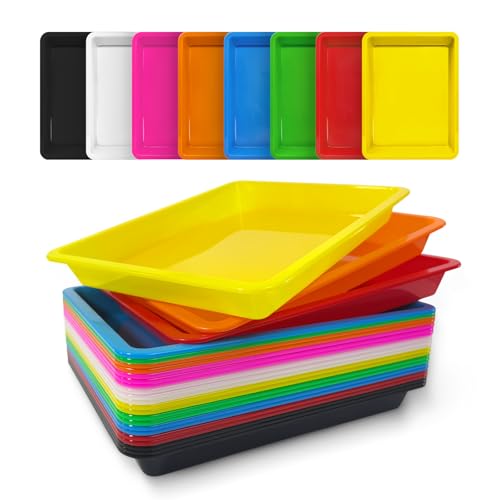
Slomg offers a pack of 10 multicolor plastic trays designed for arts, crafts, and sorting. The trays come in five colors and measure about 11 by 8 inches, providing ample space for sorting beads, small pieces, and craft materials. These lightweight, stackable trays are suitable for centers, stations, or take-home projects, supporting varied sorting activities and easy cleanup.
Buying Guide: Key Purchase Considerations
- Size and capacity: Match tray dimensions to your typical materials (puzzle pieces, counters, beads) and the number of children using each station. Larger trays reduce frequent reorganization, while smaller trays work well for center-based activities.
- Durability and cleaning: Preschool environments benefit from robust, dishwasher-safe plastics or wood. Consider trays that withstand daily use, with rounded edges for safety and easy wipe-down maintenance.
- Interlocking vs. standalone: Interlocking trays save space and maintain order for larger puzzles or multiple activities. Standalone trays offer flexibility for rotating centers and portable setups.
- Colors and visual appeal: Bright, varied colors aid color sorting and engagement. Some sets include lids or storage features that streamline cleanup and classroom organization.
- Multi-function use: Look for trays that support a range of activities—from puzzles and sorting to sensory play and art projects. Versatility reduces total number of purchases.
- Storage and transport: Consider whether trays are easy to stack and carry for classroom transitions, or if you need a dedicated storage solution.
- Safety and materials: Ensure materials are BPA-free, non-toxic, and suitable for classroom use. For younger preschoolers, open trays without small detachable parts are often ideal.
Considerations Across Settings
- Classroom group activities: Containers with clear visibility help teachers guide sorting tasks and monitor progress during structured lessons.
- Independent centers: Stackable, modular designs support quick setup and cleanup, keeping centers tidy and attractive for students.
- Sensory and fine motor development: Some trays pair well with counters, beads, and tactile materials to strengthen hand-eye coordination and dexterity.
- Budget and scalability: For larger classes, selecting trays with interchangeable lids or compatible stacking systems can maximize reuse and minimize costs.