Best Keyboard Options for an 8 Year Old: Fun, Educational Pianos for Young Musicians
Finding a kid-friendly keyboard that balances play with learning can spark a lifelong love of music. The best keyboards for eight-year-olds offer features like recording, playback, built-in rhythms, and kid-sized keys, plus microphones to sing along. Below are five carefully selected options that blend engaging activities with fundamentals of music theory, timing, and hand-eye coordination. Each product focuses on beginner-friendly learning while providing enough versatility to keep a growing player motivated.
Summary Table
| Product | Brand | Key Count | Highlights |
|---|---|---|---|
| 61 Key Upgrade Piano Keyboard for Kids Beginners | Drmukie | 61 | LCD screen, MP3 play, recording, microphone |
| Upgrade Keyboard Piano for Kids Beginners 61 Key | TWFRIC | 61 | LCD screen, U-disk play, microphone, multiple demos |
| Kid Keyboard Piano – 37 Keys | M SANMERSEN | 37 | Record & playback, microphone, 8 tones |
| Toy Piano Keyboard for Kids Upgrade Electric Pianos | M SANMERSEN | 37 | Record & playback, dual speakers, animal sounds |
| EKKBHKI 32 Keys Kids Piano Keyboard | EKKBHKI | 32 | Detachable microphone, ensemble mode, 22 demo |
61 Key Upgrade Piano Keyboard for Kids Beginners
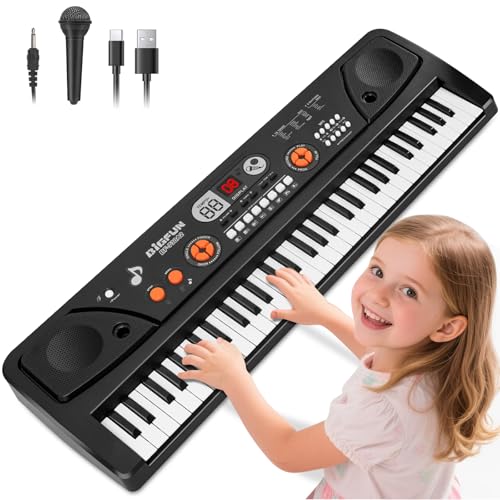
The Drmukie 61-key model combines approachable size with a wide feature set suitable for young learners. Its LCD screen helps with visual feedback, while the MP3 function enables playback of favorite songs via USB, supporting independent practice. A built-in microphone allows singing along as kids learn notes, rhythms, and timing. The keyboard includes 16 tones, 5 rhythms, 6 demos, 8 percussion options, and a range of recording and playback capabilities. This setup supports early-stage music literacy and confident performance in front of family and friends.
Key features include: USB MP3 playback, “One Key for One Note” guidance, and programs for recording, tempo control, and finger-based progressions. The kid-friendly design and demo modes help with repetitive practice, while the follow and simple chord options promote basic harmony. This model is well-suited for ages 3–8, progressively expanding as the child grows into more complex pieces.
Upgrade Keyboard Piano for Kids Beginners 61 Key

This TWFRIC option features a comprehensive array of learning tools in a 61-key format. The LED screen, 16 tones, 5 rhythms, and 6 demos deliver a kid-friendly interface that accommodates growth from simple melodies to more complex arrangements. A note-for-note function guides learners and a microphone supports vocal practice, helping children build confidence in performance while exploring rhythm and tempo through adjustable settings.
Record and playback capabilities preserve progress and let kids listen to their performances, reinforcing memory and technique. The single speaker design keeps the setup simple and affordable for home use. The U-disk compatibility lets learners import their own music for practice, enabling a personalized learning journey and creative exploration beyond the included demos.
Kid Keyboard Piano – 37 Keys
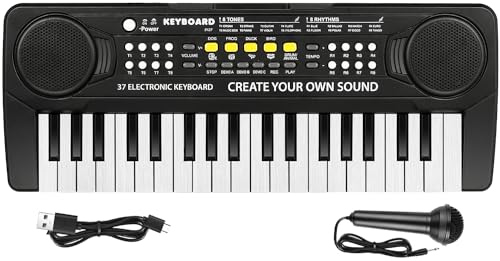
The 37-key keyboard from M SANMERSEN provides a compact, kid-friendly learning environment with essential features for beginners. It includes a microphone for singing, and the keyboard offers 8 tones, 8 rhythms, 19 demos, and 4 percussion sounds, enabling children to experiment with different musical textures. The product is designed to engage young minds with dual speakers and a wood-grain keyboard surface that resembles a real piano, helping kids feel more connected to the instrument as they discover melodies and chords.
Record and playback features allow children to hear their progress and refine performance. The device emphasizes early music theory concepts—beats, tempo, and simple chord progressions—while maintaining a forgiving, playful interface suitable for ages 3–8. It’s a practical first instrument that supports creative expression and confidence-building through performance and repetition.
Toy Piano Keyboard for Kids Upgrade (Blue)

This 37-key model from M SANMERSEN emphasizes accessibility and exploration with a microphone, 19 demos, 6 tones, and 4 percussion sounds. The design focuses on beginner-friendly play, enabling kids to record and playback their compositions while exploring different sounds and rhythms. Volume and tempo controls help tailor practice sessions to a child’s pace, making it suitable for early music education at home or in a classroom setting.
In addition to musical skills, the keyboard supports expressive performance through its microphone and singing activity. The “Record & Playback” capability fosters a sense of accomplishment as children listen back to their creations, encouraging persistence and creativity in budding musicians aged 3–8. The blue color option adds a visually appealing choice for many young learners.
EKKBHKI 32 Keys Kids Piano Keyboard
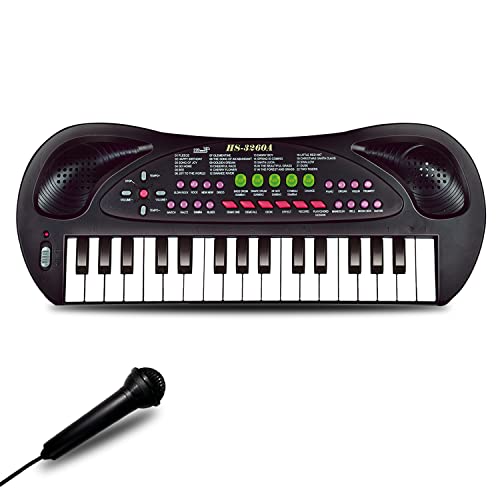
The EKKBHKI 32-key model offers a compact entry point into keyboard learning with a detachable microphone for sing-along sessions. Its 32 keys support basic melodies and practice routines, while the ensemble mode and recording/playback features help children craft multi-part performances. The device includes 8 tones, 8 rhythms, and 22 demos to sustain engagement and gradual skill-building. This option is well-suited for beginners who want a smaller instrument to carry between rooms or to a friend’s house for collaborative play.
Educational benefits focus on motor skills, timing, and basic music theory as children explore different sounds and practice with guided demos. The built-in recording capabilities encourage children to reflect on their progress and repeat passages to improve accuracy and confidence in a friendly, encouraging setting.
Buying Guide: Key Purchase Considerations For Young Musicians
When selecting a keyboard for an eight-year-old, consider size, educational features, and durability. A larger keyboard with more keys affords room to grow, but lighter models are easier for small hands to manage. Look for:
- Key count and key action: 37–61 keys offer a good balance for beginners who will progress to more complex pieces.
- Learning features: recording/playback, built-in demos, rhythms, and tempo control reinforce practice routines and musical concepts.
- Connectivity: USB/SD card options for playing external music can expand practice resources.
- Microphone inclusion: singing along supports vocal development and performance confidence.
- Durability and safety: sturdy casings and kid-friendly materials prevent damage from typical classroom or home use.
- Portability: lighter designs enable practice in different rooms or on the go.
- Expansion potential: consider future accessories or compatibility with external speakers or headphones.
To compare options, assess how each model aligns with your child’s interests—whether they prefer singing, composing, or simply exploring sounds. For a learner who loves performing, a model with a microphone and robust playback features may provide the best motivation. If the aim is to study basic music theory, prioritize devices with clear tempo controls and diverse demos. Finally, ensure the device offers safe and simple operation so children can explore independently with occasional parental guidance.