Best Little Kitchen Ideas for Toddlers: Safe, Engaging Play Sets
Toddlers love exploring the world of pretend play, and a compact, kid-friendly kitchen set can spark hours of imaginative cooking, cleaning, and social interaction. This guide highlights five top Amazon picks designed for 2+ year olds, focusing on safety, durability, and engaging features. Below is a quick summary, followed by detailed product sections and a buying guide to help you choose the best fit for your child’s space and development goals.
| Product | Brand | Key Features | Ideal For |
|---|---|---|---|
| Step2 Best Chefs Kitchen Playset | Step2 | Interactive doors, lights, sounds; 25 accessories; durable plastic | Social play; open design for group activities |
| Little Tikes First Oven | Little Tikes | Realistic sounds; working buttons; rotating dials; removable shelf | Imaginative role play; realism with simple mechanics |
| Fisher-Price Laugh & Learn Kitchen | Fisher-Price | Multiple play modes; 75+ songs; bilingual elements; various activities | Cognitive and language development through music |
| Woodure 4-in-1 Toddler Kitchen Tower | Woodure | Foldable; blackboard; table and chair conversion | Flexible learning space; early writing practice |
| Montessori Kitchen Toys Set | Yeeammk | Realistic wooden tools; safe knives and cutting board | Hands-on kitchen skill exploration |
Step2 Best Chefs Kitchen Playset

The Step2 Best Chefs Kitchen Playset offers a modern open design that appeals to toddlers and caretakers alike. The 35.8” H x 34.4” W x 11.5” D footprint fits most play spaces without feeling cramped. Interactive features include a working oven and refrigerator, a pass-through window, and a stove with lights and sounds to evoke real cooking experiences. The unit accommodates 25 included accessories, which helps foster organized pretend play with peers or siblings. Storage is simplified by hooks and shelves, plus a recycling bin, keeping play areas tidy after use. This set emphasizes social, cooperative pretend play with a durable build suitable for indoor and outdoor use.
Little Tikes First Oven Realistic Pretend Play Appliance
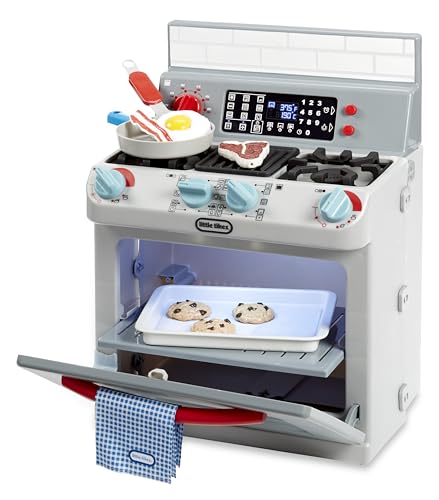
This realistic toy oven from Little Tikes focuses on authentic pretend play with sound effects and functional features. Kids can engage in hours of role play, with burners that ignite, water that boils, and a timer that rings. The stovetop lights illuminate, the oven light turns on when the door opens, and the oven shelf is removable. Dials turn to simulate adjusting heat, supporting fine motor development. The design encourages imaginative cooking and household chores, helping children practice responsibility while enjoying a tactile, interactive experience.
Fisher-Price Laugh & Learn Kitchen

The Fisher-Price Laugh & Learn Kitchen blends music, language, and imaginative play. It includes four modes—Learning, Bilingual, Music, and Imagination—and offers 75+ songs, tunes, and phrases that teach letters, numbers, colors, and shapes. Two sides of play expand the activity possibilities, featuring shape sorting, a light switch, openable oven and refrigerator doors, a rolling bar, and flip pages. This setup supports early literacy and cognitive development while delivering engaging, upbeat interaction that keeps kids motivated to explore and learn in a kitchen role-play context.
Woodure 4-in-1 Toddler Kitchen Tower

The Woodure 4-in-1 Kitchen Tower combines a sturdy A-frame design with a built-in blackboard, encouraging drawing and message-scribing as part of kitchen-related play. Its safety features include edge rounding and a removable safety bar to reduce tipping risk, making it suitable for younger toddlers learning to stand and explore. The tower can be repurposed as a table and chair set through a simple clip mechanism, offering an adaptable learning environment that grows with a child’s needs and motor development.
Montessori 13 Pieces Kitchen Toys Set

This Montessori-style set includes 13 pieces of wooden kitchen tools designed to mimic real cooking experiences safely. The kit features child-safe knives made with wood and high-quality plastics, with serrated edges that are gentler on little hands. The included cutting board and various vegetable tools promote hands-on practice with cutting, slicing, and arranging food figures. The wooden construction provides a sturdy feel and a tactile, natural aesthetic that supports fine motor skills and imaginative play in a kitchen setting.
Buying Guide: Key Purchase Considerations
- Age and safety: Look for age recommendations of 2+ years and inspect for rounded edges, non-toxic materials, and sturdy bases to minimize tipping during active play.
- Space and footprint: Measure your play area to ensure the unit fits without crowding. Open designs tend to work well in living rooms or playrooms; compact sets are ideal for small apartments.
- Interactivity vs. simplicity: For younger toddlers, interactive lights, sounds, and doors can spark engagement. For older toddlers, more complex sets that resemble real kitchens can support role-play and problem-solving.
- Durability and maintenance: Durable plastic or wood with secure hardware lasts longer in active play. Check cleaning requirements and whether parts are dishwasher-safe or easy to wipe down.
- Storage and organization: Look for built-in shelves, hooks, or bins to manage accessories. A tidy play space encourages longer sustained play and reduces clutter.
- Educational value: Choose features that promote language skills, counting, color identification, and imaginative storytelling, aligned with your child’s developmental stage.
- Future flexibility: Consider whether the kitchen can evolve with your child—tables that convert to chairs, or sets with expandable accessory kits can offer ongoing value.
- Outdoor suitability: If you plan to use the kitchen outdoors, verify weather resistance and UV stability of materials to maintain safety and color longevity.
These selections cover a range of styles—from realistic, sensory-rich sets to Montessori-inspired wooden tools—so caregivers can pick a kitchen playset that aligns with space, safety, and developmental goals. Each option encourages pretend play that supports coordination, language growth, and social interaction, while remaining appropriate for toddlers and their early learning journeys.