Best Science Kits for Classrooms to Enhance Hands-on Learning
Discover top science kits that fit classroom needs, from structured Earth science explorations to hands-on chemistry and physics activities. The selected products emphasize durability, educator-friendly features, and multi-student value to support inquiry, collaboration, and STEM literacy in diverse learning environments.
Summary Of Chosen Products
| Product | Focus | Ideal For | Lesioned Notes |
|---|---|---|---|
| National Geographic Earth Science Kit | Earth sciences, experiments, crystal growing, volcano | Whole-class or small-group demonstrations | Includes comprehensive teacher-friendly guide |
| Steve Spangler Extreme Geyser Tube | Chemistry reactions, student inquiry | Demonstrations and student-driven exploration | Multiple cap options for varied eruptions |
| Carson Dellosa STEM Challenges | Physical, life, earth and space science cards | Structured stations and guided inquiry | Compact, easily stored activity cards |
| Learning Resources Primary Science Lab Activity Set | Early science tools and experiments | K–grade classroom readiness and centers | Kid-sized tools promote safe exploration |
| UNGLINGA 150 Experiments | Broad STEM experiments and manuals | Diverse topics for rotating centers | Includes user-friendly manuals and materials |
National Geographic Earth Science Kit

The National Geographic Earth Science Kit includes more than 15 experiments, such as dueling water tornadoes, a bustling erupting volcano, crystal growth, and geologic dig activities. This large kit is designed to be shared among students, making it well suited for classroom centers or small-group labs. A detailed full-color Learning Guide helps teachers connect experiments to core Earth science concepts, promoting a classroom culture of inquiry and scientific reasoning. Ideal for classrooms seeking hands-on exploration and collaborative discovery.
Teacher considerations: The kit supports multiple activities simultaneously, aiding differentiated instruction. It fosters teamwork and oral explanation skills as students predict outcomes, observe results, and discuss the science behind each activity. While robust, educators may want to supplement with additional safety gear or storage solutions depending on class size.
Steve Spangler Extreme Geyser Tube

Steve Spangler’s Extreme Geyser Tube focuses on a classic Mentos-and-soda reaction, offering a controlled, engaging way to explore chemical reactions and gas expansion. The kit includes the geyser tube, Mentos candies, and various spray caps to produce different eruption styles. It supports inquiry-based questions like “What makes the eruption faster or taller?” and encourages students to compare outcomes across trials. Suitable for demonstrations, small-group experiments, or science clubs within classrooms.
Teacher considerations: This kit emphasizes critical thinking and creativity as students hypothesize, test, and refine their approaches. It works well as a showpiece demonstration to spark curiosity or as a collaborative experiment at stations. Safety guidance and supervision are important due to the spray and reaction nature of the activity.
Carson Dellosa Stem Challenges

Carson Dellosa STEM Challenges provides 30 physical, life, earth, and space science activity cards. Each card outlines directions, required materials, and hints to guide students through challenges, making it ideal for centers, stations, or small-group exploration. The compact size and boxed storage help teachers organize a rotating schedule, ensuring coverage of diverse scientific topics throughout the term.
Teacher considerations: The card-based format supports quick setup and classroom management. It suits teachers seeking low-cost, scalable activities that promote collaboration and problem-solving. It’s easy to incorporate into existing curricula and quick transitions between topics.
Learning Resources Primary Science Lab Activity Set
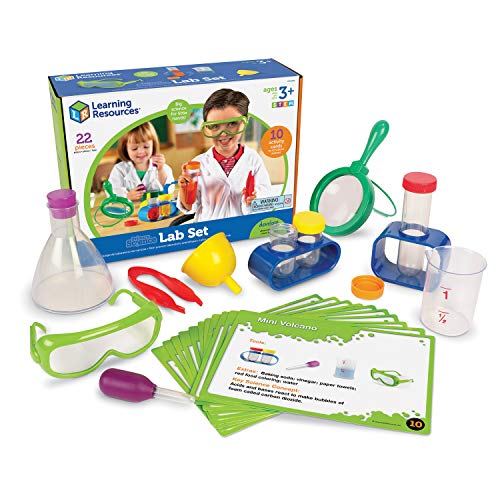
This Primary Science Lab Activity Set brings real scientific tools in kid-sized formats, including a beaker, flask, magnifying glass, eye dropper, test tubes, and safety goggles. The kit supports early exposure to laboratory routines, measurement, and basic experimentation. With 22 pieces and durable construction, it’s well-suited for classroom centers or early science explorations, aligning with pre-kindergarten to early elementary science standards.
Teacher considerations: The set emphasizes tangible, hands-on experiences while maintaining safety and accessibility for younger students or mixed-age classrooms. It pairs well with guided activities and teacher-led demonstrations to build confidence in scientific inquiry.
UNGLINGA 150 Experiments Science Kits

UNGLINGA’s 150 Experiments Science Kits provide a broad selection of projects across earth science, chemistry, physics, and more. Each activity is described in an easy-to-follow manual, with a well-curated set of tools and materials suitable for classroom use. This kit is designed for rotating centers, science fairs, and enrichment stations where students can explore a variety of topics at their own pace.
Teacher considerations: The variety supports differentiated learning and keeps students engaged through a spectrum of topics. The included manuals help teachers plan lessons, track progress, and align activities with standards. Some activities may require additional materials or safety considerations depending on the specific experiment.
Buying Guide: Key Purchase Considerations For Classrooms
- Curriculum fit: Choose kits that map to your science standards and support teacher-led demonstrations as well as student-centered inquiry.
- Durability and safety: Prioritize sturdy tools, kid-friendly safety gear, and materials that withstand routine classroom use and cleaning.
- Group sizing: Consider kits designed for shared use or multiple concurrent stations to accommodate whole-class or small-group formats.
- Age-appropriateness: Ensure the complexity matches your student population, with scalable activities for diverse learners.
- Storage and organization: Favor kits with compact storage, labeled components, and easy-to-follow guides for quick setup.
- Instructor resources: Look for comprehensive teacher guides, alignment to standards, and ready-to-use lesson ideas.
- Assessment compatibility: Choose activities that support observation, student reflections, and formative assessment opportunities.
- Cost-per-use: Factor in long-term value—durability, reusability, and potential for multiple classes or terms.
- Safety and supervision: Review required supervision levels and any special handling instructions for materials.
- Expansion potential: Consider how easily a kit can be supplemented with additional activities to extend learning across topics.