Best Science Kits for Boys: Hands-on STEM Gifts for Junior Builders
If you’re shopping for science-loving kids, these curated science kits deliver hands-on experiments, magical demonstrations, and Earth science adventures that make learning exciting. Each kit is designed to spark curiosity, build foundational STEM skills, and make complex concepts approachable through interactive activities. The following selections emphasize clear experiment guides, engaging materials, and a variety of science topics—from chemistry sets to geology and beyond—so you can find the right fit for budding scientists.
| Product | Focus | Key Benefit |
|---|---|---|
| National Geographic Amazing Chemistry Set | Chemistry Experiments | 100+ experiments with engaging color changes and crystal growing |
| NATIONAL GEOGRAPHIC Science Magic Kit | Magic Tricks & Science | 100+ experiments paired with magic tricks and a wand |
| National Geographic Earth Science Kit | Earth Science & Crystals | Crystal growing, volcanoes, rocks and fossils exploration |
| National Geographic Mega Science Lab | Earth Science, Chemistry & Magic | 75 experiments across three science areas plus extra ideas |
| UNGLINGA 150 Experiments Science Kits | Broad STEM & Projects | Extensive range of experiments with guided manuals |
National Geographic Amazing Chemistry Set

The National Geographic Amazing Chemistry Set offers more than 100 experiments, including crystal growing and colorful reactions. This kit includes all essential materials to conduct 15 chemistry experiments and provides an additional 85 bonus experiments that use common household items. The comprehensive package is designed to engage kids with hands-on activities that demonstrate chemical reactions through vivid visuals and interactive components. The kit targets curious learners who enjoy exploring color changes, bubbling solutions, and glowing demonstrations, encouraging experimentation and observation. The included guide supports independent or guided learning, helping young scientists develop a foundational understanding of chemistry concepts.
NATIONAL GEOGRAPHIC Science Magic Kit

This kit blends science with magic, offering 100+ experiments plus tricks designed to wow audiences. Kids can bend metal with water, vanish a test tube, and float a coin while learning the science behind each illusion. The included magic wand and white gloves enable kids to perform like budding magicians, reinforcing concepts from physics and chemistry in an entertaining format. With a focus on performance and demonstration, the kit provides an engaging way to build presentation skills while exploring scientific principles. The comprehensive materials cover a broad spectrum of experiments and tricks, fostering curiosity and iterative thinking.
National Geographic Earth Science Kit

Designed for curious geologists-in-training, this kit includes more than 15 experiment activities such as dueling water tornadoes, erupting volcanoes, growing crystals, and mineral dig kits. It’s well-suited for sharing with family or classmates, offering a rich learning experience through hands-on discovery. A detailed learning guide helps young scientists understand the Earth sciences behind each activity, reinforcing observational skills and scientific reasoning. The kit’s emphasis on real rock and mineral specimens adds a tangible element that helps kids connect theory to real-world geology.
National Geographic Gross Science Kit

Gross science appeals to kids who enjoy playful, icky experiments. This kit includes 15 gross activities along with an additional 30 experiments using household items. Included are kid-friendly instructions with illustrations that explain the science behind each procedure, making complex ideas accessible. The gross-factor is balanced with educational insights to maintain a constructive learning experience. The bonus booklet expands exploration with more experiments, encouraging ongoing curiosity and experimentation beyond the initial set.
National Geographic Mega Science Lab
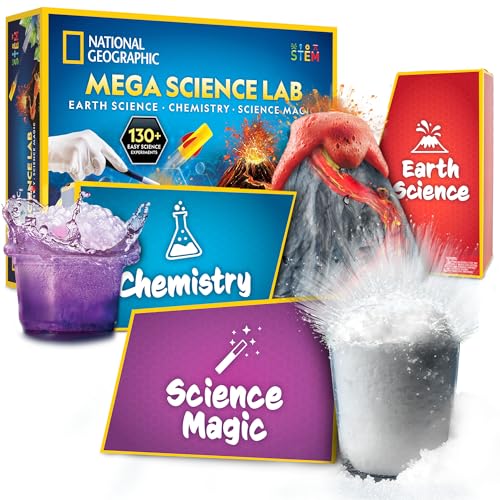
The Mega Science Lab bundles 75 experiments across Earth science, chemistry, and science magic. It includes a volcano, glassy crystals, water tornadoes, fossils, and a rock specimen collection for practical study. The kit’s three-way focus supports a broad STEM learning path, encouraging kids to explore how different scientific domains intersect. An added bonus guide provides 30 extra experiments using common household items, increasing flexibility for at-home learning and collaborative projects with peers.
UNGLINGA 150 Experiments Science Kits

UNGLINGA’s 150 Experiments kit covers a wide spectrum of topics—from earth science and chemistry to physics and biology—offering extensive hands-on practice. The included manual is well-illustrated, guiding kids step-by-step through each project. The kit includes some basic lab tools and materials, enabling many experiments with household items. This breadth makes it suitable for extended learning, school projects, or family science nights, helping children develop critical thinking, problem-solving, and scientific literacy.
Buying Guide
Key purchase considerations when selecting a science kit for boys include age range, complexity, and learning goals. Look for kits with clear, kid-friendly manuals and visual guides to support independent work or guided learning. Consider the breadth of topics: chemistry, earth science, physics, and simple STEM tricks provide a well-rounded foundation. Material quality and safety certifications are essential, especially for younger children who handle chemicals or small parts. A mix of experiments that demonstrate real-world applications, as well as projects that enhance fine motor skills and measurement literacy, offers balanced development.
- Age suitability: Match the kit’s difficulty with the child’s age and prior experience.
- Theme variety: Choose kits that cover multiple science domains for exposure to different fields.
- Guided learning: Prefer kits with illustrated, step-by-step manuals and clear safety instructions.
- Materials and tools: Ensure the kit includes essential tools and uses safe, household-safe components where possible.
- Learning outcomes: Seek kits that emphasize observation, hypothesis testing, documentation, and scientific reasoning.
When comparing options, consider how each kit supports ongoing engagement—whether through bonus experiments, magic-inspired demonstrations, or additional learning guides. For family use, look for kits that encourage collaborative activities and provide opportunities to discuss results and concepts. The selections above offer varied focuses and instructional approaches, making it easier to pick a kit aligned with a child’s curiosity and educational goals.