Best Learning Toys for Babies 9 Months: Top Picks for Development
Choosing development-friendly toys for a nine-month-old supports motor skills, sensory growth, and early cognitive learning. The following picks blend safe materials, engaging activities, and age-appropriate challenges to encourage crawling, grasping, and exploratory play. Each product is designed to stimulate vision, touch, and sound while promoting curiosity and safe exploration.
Summary Of Chosen Products
| Product | Brand | Key Benefit | Age Range |
|---|---|---|---|
| Montessori Toys 6-in-1 Baby Toys | Smallzi | Multi-sensory blocks and cups for stacking, rattles, and tactile exploration | 0-12+ months |
| Fisher-Price Stacking Toy – Baby’s First Blocks | Fisher-Price | Sort, stack, and drop with easy storage | 6+ months |
| Jyusmile Musical Turtle Crawling Toy | Jyusmile | Light and sound with crawling encouragement and motor skill practice | 6-12+ months |
| Baby Piano Toy – Light Up Educational Toy | WITALENT | Two modes of learning with numbers, instruments, and colors | 6-12+ months |
| Vanvimen Barn Farm Animals Toy | Vanvimen | 12 plush animals for multisensory play and fine motor skills | 6-12+ months |
Montessori Toys for Babies 0-3-6-12 Months

6 IN 1 Montessori baby toys provide a comprehensive sensory and developmental toolkit. The set includes six building blocks, eight stacking cups, sensory balls, suction cup spinners, a pull string toy, a sensory bin, and baby rattle toys. Designed to support fine motor skills, hand-eye coordination, and early problem solving, these toys help foster imagination and cognitive growth. The materials are BPA-free and certified to meet safety standards, contributing to a secure play environment for babies from 0 to 12 months.
Fisher-Price Stacking Toy: Baby’s First Blocks

This set of 10 sorting blocks is ideal for early sorting, stacking, and motor exploration. Each block has different shapes and colors to stimulate visual tracking and tactile feedback. The bucket storage keeps pieces organized for clean-up and easy travel play, while the easy-carry handle supports on-the-go learning and independent play. Suited for babies 6 months and older, it encourages problem solving and hand manipulation skills through playful repetition.
Fisher-Price Laugh & Learn Coffee Mug Musical Toy

Imaginative pretend-play is sparked by a take-along cup toy featuring lights, sounds, and learning phrases. Press the buttons to activate lights and more than 20 songs and educational cues that introduce the alphabet, counting, and colors. A peek-a-boo lid reveals rattle beads, promoting sensory engagement and early language exposure in a familiar pretend-play format.
hahaland Tissue Box Toy — Montessori 6-12 Months

This tissue box-based toy set includes a soft tissue box, three textured tissues, and 12 silk scarves. It supports fine motor skills as babies pull tissues one by one and explore textures. The bright colors and varied textures promote visual tracking, tactile perception, and multisensory discovery, making it a versatile option for babies around 6 to 12 months.
Jyusmile Baby Toys 6-12 Months – Musical Turtle
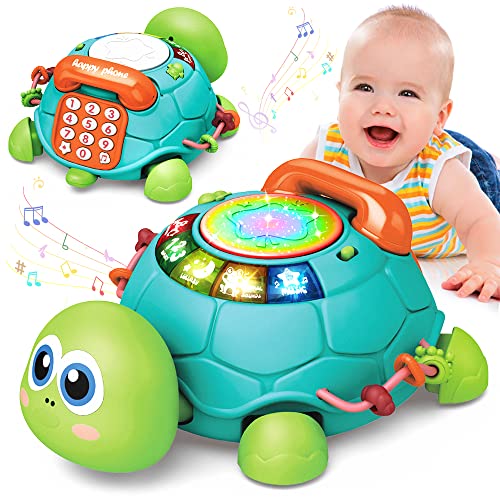
This crawling turtle toy combines light, sound, and interactive features to encourage movement and exploration. It teaches numbers and letters with colorful lights synchronized to music, while buttons and rotating beads develop fine motor skills and hand-eye coordination. The two-volume setting helps parents manage noise while preserving a stimulating learning environment for babies 7 to 12 months old.
WITALENT Baby Piano Toy — Light Up Musical Keyboard

This elephant-themed piano toy offers two modes: Learning and Music. It introduces numbers, instruments, colors, and animal sounds through bright visuals and engaging tunes. The durable ABS construction and volume control safeguard little ears, while the two modes support cognitive development, auditory discrimination, and gross motor coordination as babies explore key pressing and sound-making.
Vanvimen Barn Farm Animals Toy
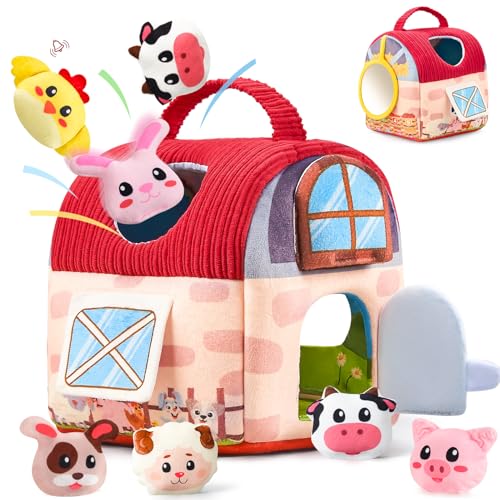
This 12-piece plush farm barn set doubles as a multisensory playland. With a mirror panel for self-recognition, bright colors, and soft textures, the barn encourages visual and tactile exploration. The open-entry design promotes reach-and-grab actions, helping little ones practice hand-eye coordination, object permanence, and early pretend play as they explore feeding, sorting, and stacking activities.
Buying Guide: Key Considerations For 9-Month-Olds
- Safety first: Look for BPA-free materials, rounded edges, non-toxic paints, and certifications. Supervise baby play and ensure toys are appropriately sized to avoid choking hazards.
- Sensory richness: Choose toys with varied textures, sounds, and colors to stimulate sight, touch, and hearing. Multi-sensory toys support cognitive and motor development.
- Motor skill development: Prioritize items that promote reaching, grasping, pulling, stacking, and crawling. Simple cause-and-effect toys help babies understand actions and outcomes.
- Durability and ease of cleaning: Fabric and plastic toys should withstand mouthing and rough handling. Washable materials and easy-clean surfaces are practical.
- Portability and storage: Compact toys with simple storage or travel-friendly designs support playtime on the go and reduce clutter at home.
- Age-appropriate progression: Start with easy textures and sounds, then advance to more complex stacking or puzzle elements as coordination improves around 9 to 12 months.
- Noise considerations: If a toy is music or sound-based, consider adjustable volume to protect hearing and to avoid overstimulation.
- Parental involvement: Choose toys that invite interaction, encouraging short guided play sessions that build language, imitation, and turn-taking skills.
These selections emphasize safe, developmentally appropriate play for nine-month-olds, balancing independent exploration with interactive learning. Each option aligns with common milestones for motor and cognitive growth, making them suitable for diverse development paths and family preferences.