Best Scissors for 3 Year Olds: Safe Training Tools for Little Hands
Choosing the right scissors for toddlers involves safety, ease of use, and development support. The following hand-picked selections offer blunt tips, simple grips, and kid-friendly designs to help preschoolers practice cutting with confidence. Each pick prioritizes safety features, durable materials, and age-appropriate learning benefits.
| Product | Brand | Key Benefit |
|---|---|---|
| Crayola Toddler Safety Scissors (3pk) | Crayola | Three cutting styles; rounded tips; suitable for classrooms |
| Fiskars Training Scissors (Turquoise or Red) | Fiskars | Training lever with spring-action; left/right friendly |
| Channie’s Safety Scissors (2 Pack) | Channie’s | Small handles; blunt tips; child hand-fit design |
| Skillmatics Scissor Skills Activity Book | Skillmatics | 25 activities; two child-safe scissors; progressive difficulty |
| 3-Pack Toddler Safety Scissors Kit | amassan | 60 sheets of craft paper; multiple colors; blunt tips |
Crayola Toddler Safety Scissors (3pk)

Crayola offers a three-pack of safety scissors designed for “ouch-free” paper cutting, making them an ideal starter set for toddlers. Each pair features a plastic blade with rounded tips to reduce the risk of accidental nicks during craft time. The set includes straight, wavy, and zigzag cutting styles, broadening the range of creative projects for young learners and helping nurture early scissor skills. The blunt tips and lightweight handles support comfortable use by both left- and right-handed children, fostering confidence in preschool art activities.
Fiskars Training Scissors for Preschoolers (Turquoise)

Fiskars Training Scissors are designed for kids ages 3+, with an easy-grip handle and a training lever featuring spring-action to teach proper cutting technique. The metal blades are covered in plastic with blunt tips for safety. They accommodate both left- and right-handed users through two wide, symmetrical handle loops. The design emphasizes longevity and classroom durability, making these a popular choice for teachers and families seeking reliable, kid-friendly scissors that promote independent cutting skills while emphasizing safety.
Fiskars Training Scissors for Preschoolers (Turquoise) – Red/Blue Version
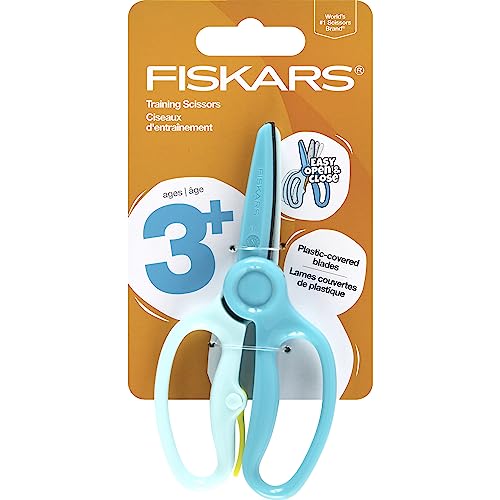
Another variant of Fiskars’ training scissors emphasizes the same kid-friendly features: plastic-covered metal blades, blunt tips, and a spring-action training lever. With left- and right-handed compatibility and a reputation for reliable classroom use, these scissors support steady progress in scissor skills, from guided cutting to independent practice.
Channie’s Safety Scissors for Small Hands (2 Pack)
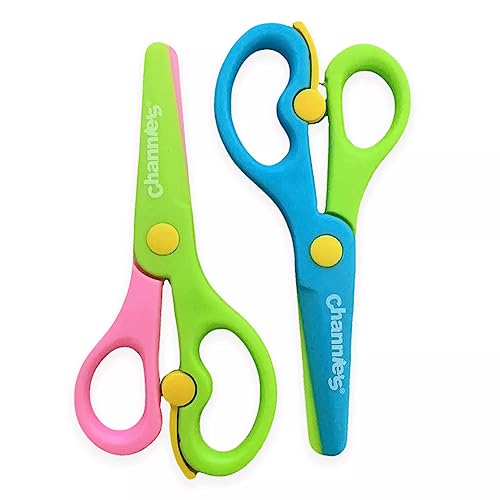
Channie’s safety scissors are tailored for children aged 3-5, featuring blunt tips and small handles that fit little hands precisely. This design supports improved hand-eye coordination through guided cutting activities, making them well-suited for preschool learning centers and home crafts alike. The durable plastic construction ensures safety without sacrificing longevity for ongoing use in arts and crafts projects.
Skillmatics Scissor Skills Activity Book

Skillmatics Scissor Skills Activity Book combines cognitive activities with practical cutting practice. The kit includes 25 cutting tasks designed to progressively increase difficulty, plus two child-safe scissors and a glue stick. The activities encourage kids to cut straight lines, curves, zigzags, and shapes, reinforcing fine motor development while supporting classroom-like structure and independent play at home.
3-Pack Toddler Safety Scissors Kit (amassan)
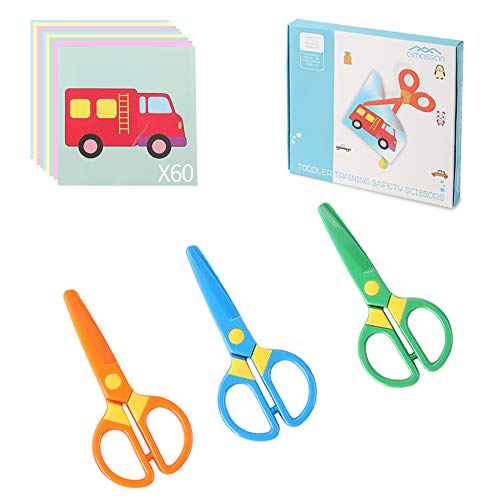
The amassan 3-Pack Toddler Safety Scissors Kit combines ergonomic, blunt-tipped blades with brightly colored handles. The set includes 60 sheets of craft paper, offering a ready-made assortment for cut-and-paste activities. An emphasis on safety, comfortable grip, and a variety of colors makes this kit a versatile option for classrooms and homeschool settings seeking a broader crafting experience for children ages 2-5.
Buying Guide
Key purchase considerations for scissors for 3-year-olds:
- Safety first: Look for blunt tips, plastic blades, and rounded edges to minimize the risk of injury during cutting practice.
- Cutting mechanics: Training levers, spring-action, and easy-to-grip handles help young learners open and close blades with less effort, building confidence.
- Ambidextrous design: Scissors that work for both left- and right-handed children support inclusivity and smoother progression as kids grow.
- Durability: Choose sturdy plastic or lightweight metal-blade options that withstand frequent use in classrooms or home environments.
- Skill progression: If possible, select a kit or set that includes activities or multiple blade styles to advance from straight cuts to more complex shapes.
- Included materials: Some kits come with craft paper or activities, which can provide immediate practice and reduce setup time.
- Maintenance: Easy-clean and store-friendly designs help keep scissors safe and ready for use between activities.
- Comparisons:
- Crayola vs. Fiskars: Crayola offers multi-style blades in a toddler-friendly package, while Fiskars emphasizes a guided cutting technique with a training lever and robust classroom-ready build.
- Channie’s vs. amassan: Channie’s focuses on hand-fit design with safety in a small-pack format, whereas amassan bundles a larger set with extra craft paper for extended activities.
- Skillmatics vs. activity kits: Skillmatics centers on skill progression through guided tasks, while broader kits provide raw materials for diverse crafts alongside tools.
Notes on Safe Use and Practice
Parents and teachers should supervise initial uses and model proper technique. Start with simple straight cuts on easy-to-cut materials like thin paper, then gradually introduce curves and shapes as hand strength improves. Rotate scissors between hands if a child prefers one side, and store tools out of reach when not in use to reinforce safe habits. Regular check-ins for blade condition and grip comfort help maintain a positive, injury-free crafting experience for toddlers and preschoolers.