Best Juggling Bean Bags for Beginners and Pros: Top Picks and Buying Guide
Juggling bean bags are a versatile training tool for performers, students, and hobbyists. The right set helps you learn rhythm, hand-eye coordination, and timing without the fear of hard impacts. Below, you’ll find five well-reviewed options that balance softness, durability, and control. Each product section includes practical details to help you compare at a glance.
Product Quick Reference
| Product | Brand | Key Benefit |
|---|---|---|
| 6 Packs Juggling Balls Set | Patelai | Soft, durable, beginner-friendly with irregular shape to reduce bounce |
| Juggling Balls Set Of 3 | speevers | Variety in size and color with sturdy construction |
| Juggling Bean Bags 30 Pack | Cedilis | Large color variety, small soft balls for kids and beginners |
| Juggling Balls For Beginners And Pros | oazoxcx | Handmade stitching, balanced weight, portable bag |
| Duncan Multicolor Juggling Balls | Duncan | Vinyl shells with no-bounce construction, good for classrooms |
Patelai 6 Packs Juggling Balls Set For Beginners

The Patelai set includes six juggling balls in four colors, sized at 5 x 5 cm (2 x 2 inches) and weighing about 1.9 ounces. The construction uses stitching cloth and plastic pellets, offering a soft feel that remains durable after repeated pinching or dropping. The irregular round shape reduces bouncing and rolling, making it easier to pick up and continue juggling. This configuration is suitable for beginners who want a forgiving, low-pain experience while learning grip and throw consistency.
speevers Juggling Balls Set Of 3

The speevers set is designed for both beginners and professionals, with three balls available in multiple color options and a sturdy two-layer net plus carry case. The product emphasizes durability under challenging juggling conditions, with claims of an almost indestructible build tested for robust use. Buyers can select ball size, weight, density, and color to match their preferred juggling style, making this set adaptable for varied skill levels and performance contexts.
Cedilis 30 Pack Juggling Balls

Cedilis offers a 30-pack of small juggling balls in five colors, with each ball weighing roughly 1.4 to 1.7 ounces and about 2 x 2 x 1.6 inches. Made from durable PU with a foam and ceramsite fill, these balls balance softness and resilience. The irregular shape helps prevent rolling or bouncing away when dropped, which is ideal for kids and beginners practicing catches and tosses in a classroom or home setting. The stitching is designed to retain form over time, supporting long-term use.
Duncan Multicolor Juggling Balls (3-Pack)
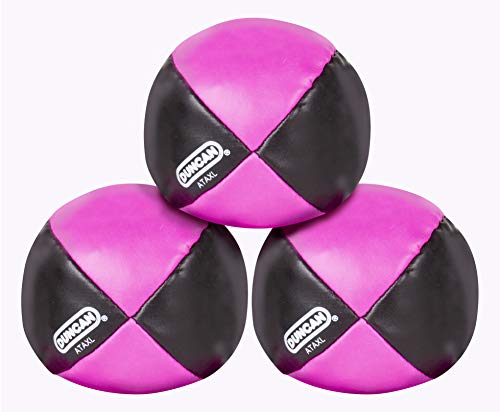
These multicolor vinyl-shelled juggling balls feature a no-bounce design with plastic beans, creating reliable catches and tosses for both beginners and seasoned jugglers. The larger-than-basic-ball size (2.25 inches) enhances visibility and handling, useful for instructional settings or practice at home. The bright color contrast aids in tracking flight paths and improving rhythm during routines, making them a versatile option for learners and educators.
Cedilis 30 Pack Juggling Balls (Revisited)
Additional notes: These balls use a compact weight distribution and uniform sizing to support steady practice. The color variety helps differentiate catches and throws during drills, and the lightweight construction reduces fatigue during long practice sessions. The durable stitching ensures longevity even with frequent drops and finger-grip practice. This batch is particularly suitable for schools, clubs, or families exploring juggling as a group activity.
Buying Guide
Key factors to consider when choosing juggling bean bags for practice and performance include size, weight, material, bounce, and durability. Beginners typically benefit from slightly larger, softer balls that are easy to grip and catch, reducing discomfort during early attempts. For more advanced juggling, weight and density can be adjusted to suit personal throwing style and routine pace.
- Size and weight: Pick balls around 2 inches in diameter with a weight between 0.25 and 0.35 pounds for comfortable handling. Heavier balls can improve control for stronger throws, but may be harder for beginners to catch.
- Fill material: Cloth with plastic pellets provides a soft, durable feel; foam-filled or ceramsite options offer different bounce control and weight distribution.
- Construction quality: Look for well-stitched seams and a firm shell. Irregular shapes help reduce bouncing and rolling, aiding quick pickups during drills.
- Color and visibility: Bright, contrasting colors help with tracking and rhythm, which is beneficial for learners and performers alike.
- Portability and storage: A compact bag or included carry case can simplify practice sessions on the go and in classrooms.
- Durability for age groups: For kids, choose softer, more forgiving materials to minimize impact while learning basic catches and tosses.
- Training goals: Beginners may prioritize bounce-free and easy-grip designs; performers seeking technique work may prefer lighter or heavier options to refine throws and catches.
Across these options, the selection helps accommodate different learning environments—from home practice to classroom or studio use. Consider trying a mixed set or a few distinct weights to identify which feel best for your style. Always supervise young learners and adjust drills to match skill level and comfort.