Best Board Games That Build Skills and Fun for Kids
Discover top learning board games that blend education with play. From social skills to math mastery, these picks help kids build confidence, practice critical thinking, and enjoy family game nights. Below you’ll find five carefully chosen titles, each with a quick look at what it offers and how it supports learning goals.
Summary at a glance: the selected products focus on social-emotional learning, geography and general knowledge, math fluency, and word recognition. They are suitable for kids in early elementary grades and align with classroom-appropriate themes. Use the buying guide at the end to compare features like age range, skill focus, and play style to find the best fit for your family.
Note: This article includes clickable Amazon product links for convenience and does not include pricing information.
Junior Learning Social Skills Board Games: Empathy, Manners, and More

This bundle targets essential social skills for ages 5-8, aligning with first to second-grade standards. Players build empathy and emotional understanding through action-based and sentence-building activities. The varied gameplay keeps sessions engaging while reinforcing manners and friendship concepts. The design supports classroom-style goals and home learning, offering frequent opportunities to practice communication, perspective-taking, and collaborative play.
Key features include versatile options that switch between action-centric play and language-focused tasks, ensuring a rich learning experience. The games are specifically shaped for children within Grades 1–2, making them a practical choice for parents and educators who want structured yet playful skill development.
Scholastic Race Across the USA Board Game

Educational geography adventure for 2–4 players, ages 8 and up. Players hop states, answer geography questions, and race back to the home state to claim victory. The game combines learning and family fun, offering an engaging way to build map literacy and general knowledge about U.S. geography. Questions are designed to be grade-appropriate, supporting a personalized learning rhythm that adapts to players’ educational stages.
The game emphasizes recall, location awareness, and strategic movement, making it suitable for classroom centers or family game nights. Its pacing allows players to discuss state facts, capitals, and landmarks, reinforcing memory retention and collaborative problem-solving as teams or individuals compete in a friendly setting.
Learning Resources Math Island Addition & Subtraction
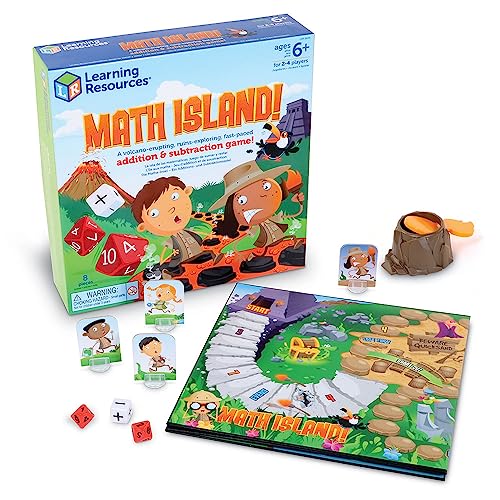
Turn math practice into an adventure on Math Island. This game targets addition and subtraction for ages 6 and up, using two 10-sided dice plus an operation die to generate varied equations. Players navigate a volcano island, with a dice-launching volcano popper adding a tactile thrill to reinforcement of mental math skills. It’s ideal for homeschoolers, classroom centers, or family game nights as a hands-on math experience.
Learning outcomes include improved speed with basic arithmetic, confidence in applying math facts, and engagement through thematic play. The combination of dice-based challenges and interactive progression helps children internalize math concepts while maintaining a playful tone that reduces performance pressure.
Number Hunter Math Board Game – Addition & Subtraction
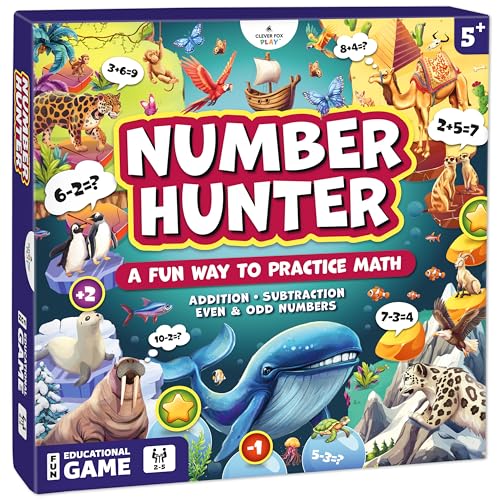
Designed for ages 4–8, Number Hunter blends addition and subtraction into a race-style adventure. It targets foundational math skills while promoting number recognition and strategic thinking. The simple-to-learn rules support rapid onboarding for young players, making it suitable for classrooms, homeschool settings, and family game nights. The game’s pace encourages steady practice without overwhelming beginners.
Key strengths include its age-friendly scope, clear progression of difficulty, and replayability. It’s a practical STEM-focused option for early elementary learners who need a structured yet entertaining path to math fluency and confidence building in problem-solving.
Candy Land Kingdom of Sweet Adventures

A classic entry point for younger players, Candy Land Kingdom of Sweet Adventures invites kids ages 3 and up into a colorful journey toward the castle. The game emphasizes simple color and path-following mechanics, with no reading required. It remains a friendly introduction to board games, storytelling, and shared play, making it a staple for families with preschoolers and early learners.
Despite its age range, the game supports early numeracy and sequencing skills through color recognition and turn-taking. It serves as a gentle bridge toward more complex strategy games, while still offering an enjoyable, engaging experience for younger children and newcomers to tabletop gaming.
Buying Guide: Key Purchase Considerations For Learning Board Games
- Age range and educational focus: Match the game to your child’s age and learning goals—social skills, geography, math fluency, or reading readiness. Some titles offer multi-skill benefits that align with classroom standards.
- Play style and session length: Consider whether you want cooperative or competitive play, a quick 15–20 minute session, or longer gameplay. Shorter sessions are great for younger children; longer formats work for older kids or wider families.
- Skill progression and difficulty: Look for games with scalable challenges or levels that adapt as the child improves. This ensures continued engagement and growth without frustration.
- Hands-on and tactile elements: Dice, spinners, or physical components like coins and tokens can boost engagement and reinforce counting, strategy, and fine motor skills.
- Educational alignment: Consider how well the content aligns with curricula or learning standards, especially for math and geography-focused games. This helps reinforce classroom learning at home.
- Durability and replay value: Durable boards and pieces withstand frequent use by children. Re-playability depends on how many different scenarios or questions the game offers.
- Age-appropriateness and reading requirements: Some titles require no reading, which can be ideal for younger players, while others include word-based prompts to support early literacy.
- Multiplayer suitability: If you have siblings or classmates, pick games that accommodate multiple players to maximize participation and social interaction.
- Gender-neutral design and themes: Choosing inclusive artwork and themes can help broaden appeal and keep games welcoming for all players.
- Storage and portability: Compact games with included bags or organizers are convenient for travel or classroom use.
When selecting among these options, consider which skills you want to emphasize and how the game fits into your regular learning routine. A mix of social-emotional, mathematical, and literacy-based games can provide a well-rounded set of activities that support steady development while keeping learning enjoyable.