Best Stem Robotics Kits for Kids Aged 8-12: Engaging 5-in-1 and 3-in-1 Sets
Explore top stem robotics kits designed to inspire young engineers. Each option blends hands-on building with basic coding and problem solving, making learning interactive and fun for ages 8 to 12. The selections emphasize creativity, fine motor skills, and logical thinking through engaging projects and scalable challenges.
| Product | Brand | Key Feature |
|---|---|---|
| STEM Robotics Kits for Kids Age 8-12 8-10 | Yutin | Six separate kits, includes bubble machine, doodling robot, and more |
| Kyanio STEM Robotics Kits | Kyanio | 3-in-1 remote/app control with 560 pieces and multiple models |
| BeAndge STEM Kit | BeAndge | Six-in-one set with reptile robot, bubble machine, and more |
| Sillbird Robot Building Kit | Sillbird | 5-in-1 programmable robot with dual control modes |
| NEXTJOY STEM Robot Building Kit | NEXTJOY | 337+ pieces, 5 models, remote/app programming |
Yutin STEM Robotics Kit Collection

Yutin’s 6-pack STEM kit provides diverse projects that reinforce learning through play. Each kit is independently packaged, covering concepts from motion to simple electronics. The set is designed to foster problem solving and curiosity, with activities suitable for family science time and screen-free exploration. The collection supports shared learning experiences and encourages iterative experimentation as children complete different builds.
Kyanio 3-In-1 STEM Robotics Kit

Kyanio combines STEM education with building blocks (560 pieces), remote control, and app programming into a single, comprehensive kit. It offers three distinct models that showcase rotating gears and synchronized movements, providing hands-on engineering challenges. The clear assembly guides and color-coded blocks support independent learning while promoting coordination, logic, and focus.
BeAndge 6-In-1 STEM Kit

This BeAndge kit assembles six distinct projects, including a reptile robot and a bubble machine, in a gift-ready package. It emphasizes hands-on learning, teamwork, and family bonding as children and caregivers build and explore together. The kit aims to cultivate enthusiasm for science and engineering through approachable, media-free play.
Sillbird 5-in-1 Programmable Robot
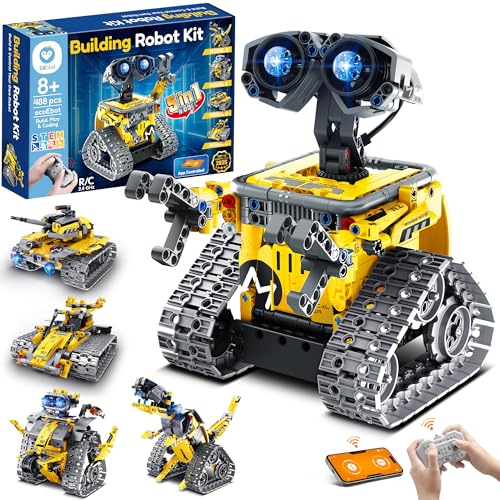
Sillbird’s kit combines five build options with programmable features, offering a scalable challenge for growing makers. The dual control modes (app via Bluetooth and a traditional remote) enable flexible learning environments, from basic motion to simple programming sequences. The design supports ongoing tinkering and extended play as skills advance.
NEXTJOY 5-in-1 STEM Robotics Kit

NEXTJOY presents a large-scale building set with 337+ pieces, enabling five different models and a robust stepping stone into engineering concepts. The kit includes a detailed guide and supports remote or app-based control, introducing basic programming and robotics principles while delivering tangible results and a rewarding sense of achievement.
Thames & Kosmos Mega Cyborg Hand

The Mega Cyborg Hand focuses on pneumatics and hydraulic principles to operate a wearable hand. Without motors or batteries, it demonstrates air pressure and fluid power in a tactile system, with adjustable finger joints for precise movement. This kit emphasizes pneumatic systems and hands-on experimentation, appealing to learners who enjoy physical mechanics and hydraulic concepts.
Buying Guide
- Age and skill progression: Look for kits that offer multiple models or difficulty levels to grow with the child’s abilities. Some sets enable simple builds first, then more complex assemblies and basic coding.
- Control method: Consider whether a remote, smartphone app, or both are available. App-enabled kits often introduce programming concepts, while remotes provide straightforward, tactile control.
- Educational value: Prioritize kits that explicitly teach STEAM principles—mechanics, electronics, coding, and problem-solving—through hands-on activities and guided instructions.
- Piece count and storage: Higher piece counts can support longer-term engagement but require organized storage. Look for kits that include organized bins or bags and clear labeling.
- Safety and age suitability: Check for age recommendations and small parts that may pose choking risks for younger children. Parents should supervise younger builders when necessary.
- Durability and expandability: Some sets allow adding new modules or compatible accessories. This flexibility can extend the usable life of the kit as interest broadens.
- Learning style fit: If a child enjoys building with blocks, choose kits with clear assembly guides and color-coded components. If they prefer programming, favor app-controlled models with simple coding tasks.
- All-in-one vs. modular: All-in-one kits offer a cohesive experience, while modular sets let kids swap parts between builds. Decide based on whether the goal is variety or targeted skill practice.
- Family involvement: Kits designed for family projects can strengthen collaboration and communication, turning learning into shared experiences.