Best Loop Pedals for Beginners: Easy Ways to Build Your First Looping Tracks
Loop pedals can transform a solo practice session into a full-band feel. For beginners, choosing a pedal with simple controls, clear feedback, and reliable overdub functionality is essential. This guide highlights beginner-friendly loop pedals from trusted brands, explains what to look for, and compares key features to help you pick the right one for your playing style.
| Product | Brand | Key Benefit |
|---|---|---|
| Donner Triple Looper Guitar Pedal | Donner | 90 minutes total looping with 3 saved slots |
| LEKATO Looper Pedal (9 Loops, 40 Minutes) | LEKATO | Multiple loops, long record time, built-in tuner |
| BOSS RC-1 Loop Station | BOSS | Industry-standard, simple operation, reliable performance |
| LEKATO Looper Pedal with 3 Loops (18 Minutes) | LEKATO | Clear visual timing, compact design, USB options |
| Sondery Looper Pedal Triple Loop | Sondery | Three tracks, USB import/export, undo/redo |
Across these options, you’ll find a mix of single-button operability, built-in tuners, visual loop indicators, and durable housings—all features that help beginners stay in the groove without getting lost in menus. The following sections explore five carefully chosen models, summarizing what makes each one friendly for players just starting out.
Donner Triple Looper Guitar Pedal

The Donner Triple Looper provides a straightforward looping experience with a bright screen that displays loop mode and timing. This helps beginners stay in rhythm during take after take. It offers three saved slots, each capable of storing up to 30 minutes, for a total of 90 minutes of looping. A single footswitch handles recording, playing, overdubbing, stopping, and clearing, which reduces confusion during practice sessions and allows players to experiment freely without fumbling through multiple controls.
LEKATO Looper Pedal (9 Loops, 40 Minutes)

LEKATO’s 9-loop model is designed for players who want more space to layer ideas while keeping a compact footprint. It includes a 40-minute total recording time and a visual time indicator for easy monitoring of loop length. The looper features uncompressed 48K/24-bit audio quality with an Analog-Dry-Through design, ensuring your dry, unaltered tone passes through. A built-in tuner helps you stay in tune between loops, reducing the risk of timing disruptions during performances or practice sessions.
MOOER GE100 Multi-Effects Pedal

The MOOER GE100 offers more than core looping, combining a wide range of presets and effects with looping and a drum rhythm feature. For beginners, this can be appealing if you want to explore different sounds while maintaining a manageable learning curve. It includes 80 preset patches and 66 effect types, plus eight effect modules and a simple control scheme. The unit’s design supports experimenting with tones and textures as you develop your looping techniques.
LEKATO Looper Pedal With Sync & Tuner
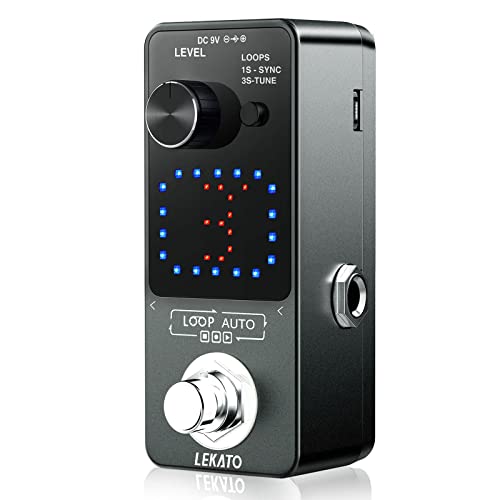
This LEKATO model emphasizes synchronized recording and tuning, helping players keep phrases aligned across loops. It features three loops with up to 18 minutes of total recording time and a visual time indicator. The uncompressed 48K/24-bit audio quality mirrors LEKATO’s emphasis on clear, pure tones. The built-in tuner and straightforward single-knob operation for volume control simplify use for beginners who want quick results without deep setup.
Sondery Looper Pedal Triple Loop

The Sondery triple-loop pedal offers three separate save slots with a capacity of up to 30 minutes per track, making it easy to arrange different sections or ideas. A single footswitch handles recording, playback, overdubbing, stopping, and clearing, which reduces distractions during performances. USB access supports easy import/export of loop files to a PC, facilitating practice with pre-made ideas or collaborating with others. This model emphasizes straightforward operation alongside practical file management capabilities.
Buying Guide: Key Purchase Considerations
When choosing a loop pedal for beginners, several factors influence how quickly you’ll adapt and how much you’ll enjoy the device. Consider the following perspectives to balance ease of use with future growth.
- Number of loops and recording time: More loops and longer total recording time provide greater flexibility for building layered ideas. Beginners often start with 1-3 loops and gradually expand.
- Ease of use: A simple interface, prominent loop indicators, and a single or minimal set of footswitches reduce learning time and prevent frustration during practice.
- Tuner and metronome: Built-in tuning helps keep sessions productive, especially for players who practice without a metronome. A metronome or rhythm track can be a helpful addition for timing practice.
- Audio quality: Look for 24-bit or higher resolution and a clean Analog-Dry-Through path if you value preserving the dry guitar tone when looping.
- USB or file management: USB export/import allows you to save ideas, share with peers, or assemble larger projects. This is particularly useful for collaboration and feedback.
- Durability and size: A compact, sturdy unit is practical for practice rooms or gigs. Aluminum enclosures and reliable switches contribute to long-term use.
- Compatibility with your setup: Check whether the pedal works well with your guitar, amp, amp sim, or direct-to-DI workflow. Some models offer line-out modes or headphone options for quiet practice.
- Power requirements: Confirm whether a power supply is included and ensure the supplied adapter matches the pedal’s voltage and polarity. Some models require 9V center-negative power.
- Upgrade path: If you anticipate using more complex looping in the future, choose a model that comfortably scales to more tracks, longer loops, or additional effects.
In practice, beginners benefit from pedals that combine straightforward recording with clear visual cues and reliable overdub capabilities. The models highlighted here balance simplicity with useful features like tuners, USB file options, and robust loop management, helping new players develop timing and creativity without getting bogged down in menus.
Quick Comparisons
- Best for simple setups: Donner Triple Looper and BOSS RC-1 both emphasize straightforward operation with dependable performance for beginners.
- Best for tuner integration: LEKATO and LEKATO with Tuner functions integrate tuners directly into the pedal workflow, reducing separate gear needs.
- Best for multi-track ideas: Sondery Triple Loop and LEKATO 9-Loop models offer multiple tracks to store different ideas and sections for more complex practice.
- Best for portability: Compact LEKATO and MOOER gear provide versatile options suitable for small practice spaces or travel setups.
Usage Tips For Beginners
- Start with a single loop. Record a simple rhythm, then overdub a melodic idea twice to hear how layers interact.
- Use the visual timing indicators to align phrases. Don’t rely solely on memory—let the display guide your timing.
- Keep sessions structured. Plan a short practice routine (intro, verse, chorus, outro) and assign each section to a different loop or overdub.
- Save separate ideas on different tracks when possible. This makes it easier to experiment with arrangement without losing prior progress.
- Experiment with dynamics. Vary your playing intensity on different loops to create a richer, more musical texture.