Best Scientific Toys for Kids to Spark Curiosity in STEM
Discover exciting, hands-on toys that make science fun for kids. This article highlights five top picks that encourage exploration, critical thinking, and practical problem-solving. Each option blends engaging activities with clear learning goals, helping children build a strong foundation in science, technology, engineering, and math (STEM). Below you’ll find quick-access sections for each product, plus key buying considerations to help you choose the right one for your learner.
| Product | Key Focus | Ideal For |
|---|---|---|
| UNGLINGA 70 Lab Experiments Science Kit | Chemistry, Reactions, Circuit Basics | Young experimenters |
| National Geographic Air Rocket Toy | Aerodynamics, Engineering, Physics | Outdoor STEM fun |
| National Geographic Break Open Geodes | Geology, Crystals, Hands-on Discovery | Earth science lovers |
| Snap Circuits Jr. SC-100 | Electronics, Circuitry, Projects | Giftable introductory electronics |
| National Geographic Junior Chemistry Set | Chemistry experiments, Safe lab skills | Beginners in chemistry |
UNGLINGA 70 Lab Experiments Science Kit

The UNGLINGA science kit offers a broad array of experiments designed to inspire curious kids. With 70 different activities, children can explore volcano eruptions, crystal growth, fruit-based circuits, and chemical reactions. The included manual presents clear, illustrated steps and explanations, helping young scientists think critically and solve problems as they work through each project. This kit is well-suited for home learning, classroom activities, or as a birthday gift that encourages ongoing STEM engagement.
National Geographic Air Rocket Toy
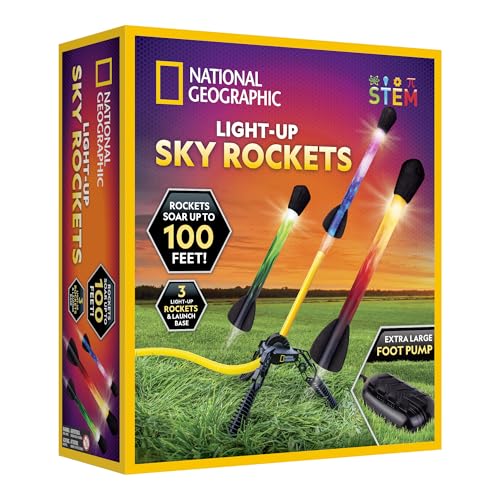
This outdoor STEM toy combines motion, light, and physics. The foot-pump launcher sends foam-tipped rockets up to 100 feet, with LED illumination for a dramatic sky show. The included learning guide delves into rocket flight, motion, and aerodynamics, making it more than just a fun launcher. It’s a practical way to illustrate core physics concepts while encouraging active, outdoor play and experimentation.
National Geographic Break Open 10 Premium Geodes

Geodes invite tactile, discovery-based learning as kids crack open rocks to reveal crystals inside. The kit includes 10 premium geodes and two display stands, plus goggles for safety. Its natural variety and hands-on approach provide an engaging geology experience, encouraging patience and observation as children compare crystal formations and discuss mineral properties. A strong option for budding geologists or curious families exploring Earth science.
Snap Circuits Jr. SC-100

The Snap Circuits Jr. kit introduces fundamental electrical engineering concepts through hands-on projects. Featuring more than 100 possible projects with a color-coded, step-by-step manual, it provides a safe, engaging way for kids to learn about circuits, switches, and basic electronics. The modular components make it easy to expand with additional kits over time, enhancing STEM skills with progressively complex experiments.
National Geographic Junior Chemistry Set

This beginner chemistry set provides a complete, kid-friendly lab experience. With 50 experiments and more than 20 tools, it guides young scientists through safe, age-appropriate chemical investigations using household items. Clear, illustrated instructions help youngsters carry out each experiment with confidence while building foundational chemistry knowledge and scientific thinking.
Buying Guide: Key Purchase Considerations And Comparisons
When selecting scientific toys for kids, consider the child’s age, interests, and safety. Here are several factors to help you compare options effectively:
- Age and safety: Check recommended ages, small parts, and included safety gear (gloves, goggles). Look for kits designed for beginners if your child is new to hands-on science.
- Curriculum alignment: Some kits emphasize chemistry, others focus on physics or geology. Choose based on your child’s interests or desired skill areas, such as problem solving, measurement, or experimental reasoning.
- Hands-on complexity: A kit with a broad range of experiments provides variety, but ensure the activities are not overly complex for the child’s current ability. Starter kits with clear instructions often yield better engagement.
- Learning materials: Clear manuals and illustrated guides facilitate independent exploration. Some sets include accompanying experiment explanations that reinforce scientific concepts.
- Expandability: Consider whether the toy can be complemented with additional kits or components later, offering ongoing STEM growth without replacing the entire system.
- Outdoor vs. indoor use: Outdoor-focused kits (like rocket launchers) promote active play, while indoor kits (like Snap Circuits) fit inside living spaces and schools.
- Durability and storage: Sturdy components and included storage help sustain long-term use and organization, especially for families with multiple children.