Best Beginner RC Planes for Easy Flying and Fun
Whether you’re new to radio-controlled flight or returning to the hobby after a break, these beginner-friendly RC planes offer stability, forgiving controls, and helpful stabilization systems. Each model emphasizes ease of use, durable construction, and features designed to boost confidence while learning. Below, five top options blend Ready-to-Fly simplicity with growth potential so you can advance from basics to intermediates without frustration.
The following quick reference helps compare the five picks. It highlights target user, stabilization aids, flight modes, and key strengths to consider for starting out in RC plane flying.
| Product | Stabilization & Modes | Flight Time / Range | Best For |
|---|---|---|---|
| RCSHOBBY RC Plane Sport Cub 500 S2 | Ultra-stable Xpilot gyro stabilizer; 3-level flight control | Approximately 20 minutes | Absolute beginners seeking step-by-step learning |
| Fms 500mm PA-18 Super Cub | 3 flight modes (Beginner/Intermediate/Expert); one-key return | Long enough for casual sessions; exact time varies by battery | First-time pilots wanting crash resistance and quick setup |
| VOLANTEXRC 761-9 T28 Trojan | Xpilot stabilization; three flight modes; self-righting | outdoor-friendly range; typical RC flight durations | Outdoor flyings with stable handling for newcomers |
| VolantexRC 400mm Trainer | Xpilot gyro stabilizer; 3-level flight control | Depends on battery setup; designed for easy flights | Compact trainer with strong stability for beginners |
| HobbyZone Carbon Cub S 2 | SAFE technology with multiple flight modes | Designed for forgiving takeoffs and landings | Indoor/outdoor practice with crash-avoidance features |
This article focuses on five beginner-friendly RC planes that balance stability, ease of use, and potential for progression. Each model is Ready-to-Fly (RTF) or similarly approachable, with stabilization features aimed at reducing crashes and helping new pilots build confidence on the flight line.
RCSHOBBY Sport Cub 500 S2 RC Plane

The RCSHOBBY Sport Cub 500 S2 is designed for beginners who want a forgiving, easy-to-control airplane. Built with lightweight EPP foam, it combines durability with maneuverability. The included Xpilot gyro stabilization system helps keep flight paths steady, while a three-level flight control setup provides full assist for beginners, partial assist for intermediates, and manual control for experienced pilots. A robust gear and motor system delivers stable performance, and the design emphasizes longer flight times—up to about 20 minutes on a typical charge—allowing extended practice sessions without frequent recharges.
Fms 500mm PA-18 Super Cub RC Plane

The FMS PA-18 Super Cub is widely recommended for beginners due to its intuitive flight modes and sturdy EPP foam construction. It offers beginner, intermediate, and expert modes, with a one-key return feature to simplify recovery from off-course flights. The two-point assembly and protective prop guard enhance durability, making it suitable for casual backyard flights and park days. This Ready-to-Fly plane includes a 2.4GHz transmitter and USB-C rechargeable battery, enabling quick setup and immediate testing after unboxing.
VOLANTEXRC 761-9 T28 Trojan RC Plane
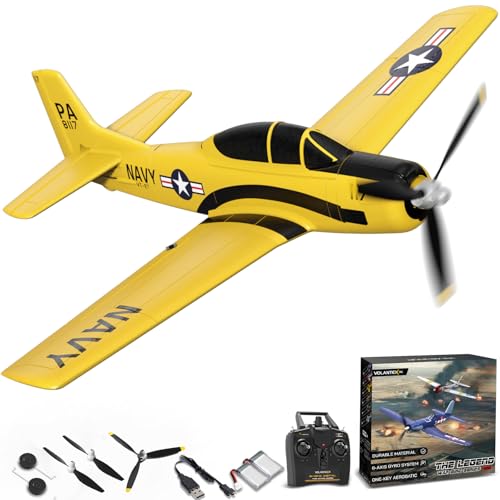
The Volantex 761-9 T28 Trojan focuses on stability and growth. Its XPILOT stabilization system provides ultra-stable flight control, and the three-mode flight control (Beginner/Intermediate/Expert) helps pilots progress at their own pace. The 2.4GHz radio offers a long control range, supporting outdoor practice sessions without excessive interference. Beginners can enjoy easier takeoffs and landings with the self-righting feature, while more advanced users can explore aerobatics as confidence grows.
VolantexRC Trainer 400mm RC Plane
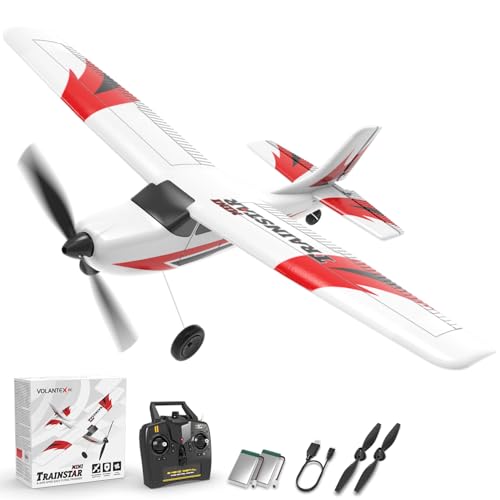
The 400mm VolantexRC Trainer is a compact option ideal for beginners who want a manageable plane without sacrificing stability. It features an ultra-stable Xpilot gyro stabilizer and a powerful motor system that supports easy aerobatics. The three-level flight control makes learning incremental, progressing from full assist to manual control. Its 2.4GHz radio enables a solid outdoor range, suitable for backyards or small fields where new pilots can practice in a controlled environment.
HobbyZone Carbon Cub S 2

The HobbyZone Carbon Cub S 2 combines safety features with steady handling. It includes SAFE technology that helps prevent crashes and simplifies learning. With multiple flight modes ranging from beginner to experienced, pilots can ease into complex maneuvers as confidence grows. The aircraft’s design emphasizes forgiving takeoffs and landings, which reduces the chance of damage during practice. This makes it a solid option for beginners practicing in a variety of outdoor or semi-enclosed environments.
Buying Guide: Key Purchase Considerations For Beginner RC Planes
- Stability vs. performance: Stabilization systems like Xpilot or SAFE technology make learning easier but can slightly limit advanced aerobatics. If you plan to progress quickly, choose a plane with multiple flight modes that gradually remove assistance.
- Construction materials: EPP foam is common in beginner planes for its durability and forgiving crash resistance. Heavier balsa wood or composite builds may offer lifelike feel but are less tolerant of rough landings.
- Flight modes and automation: Look for tri-level flight control (Beginner, Intermediate, Expert) and features such as one-key return or auto takeoff/hover. These features reduce stress during solo practice sessions.
- Transmitter and compatibility: Ensure the included transmitter uses a common frequency (2.4GHz) and is comfortable to hold. Some models may allow upgrading receivers for future aircraft.
- Durability and crashes: Planes with protective guards, such as prop guards, extend the usable life during early attempts at takeoffs and landings. A foam body can absorb impacts better than rigid shells.
- Flight time and charging: Beginner flights benefit from longer air times, but keep expectations realistic. Imaging and miniature batteries vary; choose a model with accessible spare batteries if you anticipate frequent sessions.
- Aggressive vs. gradual progression: Some planes offer quick “out-of-the-box” stability, others invite gradual skill growth. Assess your goals: casual backyard flier or aspiring aerobatics pilot.
- Assembly and maintenance: Ready-to-Fly packages simplify initial setup, but check if minor assembly or adjustments are expected. Lightweight planes require careful storage to prevent warping.
- Outdoor suitability: Ground conditions matter—look for rugged tires and a design that handles grass, light mud, or pavement depending on typical flying venues.
Each of the five models above presents distinct strengths for someone beginning with RC planes. When selecting your first plane, weigh stabilization features, ease of use, and the potential to advance to more demanding flights as you gain experience. This approach helps ensure a satisfying introduction to aerial hobby activities while keeping doors open for continued learning and enjoyment.