Best Telescopes for Deep Space Viewing: A Guide to Top Pick Refractors and Beginners’ Scopes
Exploring deep space requires a telescope that balances light gathering, clarity, and ease of use. This guide highlights five solid options for American readers seeking deeper views of the moon, planets, and distant galaxies. Each pick is evaluated on optical quality, portability, and beginner friendliness, with practical notes for setup and observing. Whether shopping for a youth space enthusiast or an adult beginner, these selections offer reliable performance for deep space viewing without overwhelming complexity.
| Product | Brand | Key Feature |
|---|---|---|
| Bushnell Refractor 600x50mm | Bushnell | 50mm aperture; deep space viewing capability |
| NASA Lunar Telescope (Kids) | Blue Marble | Kid-friendly lunar details; tabletop tripod |
| Tasco Spacestation 600x50mm | TASCO | Starter telescope; easy setup; two eyepieces |
| SVBONY SV48P 102mm | SVBONY | 102mm aperture; dual-speed focuser; wide field |
| Gskyer 80mm AZ Refractor | Gskyer | 80mm aperture; adjustable tripod; versatile eyepieces |
Bushnell Refractor 600x50mm Deep Space Telescope

The Bushnell Refractor 600x50mm is positioned as a straightforward entry into deeper space viewing. It features a compact 50mm aperture refractor design that can deliver crisp views of the Moon’s craters and bright deep-sky objects under dark skies. The included packaging notes an item size around 32.63 inches long and a shipping weight near 6.9 pounds, indicating a portable setup suitable for beginners and family use. Simple assembly and reliable optics make it a practical starting point for serious stargazing at night.
NASA Lunar Telescope For Kids
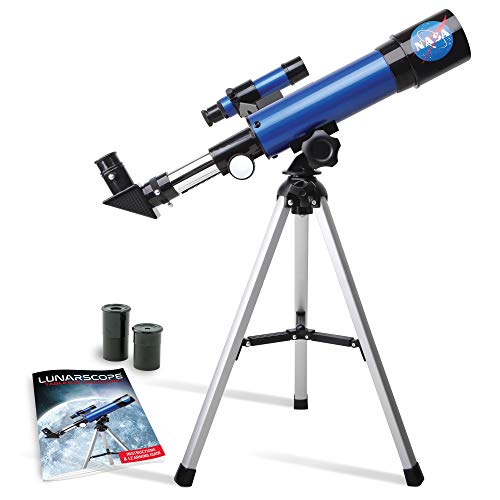
This kid-focused telescope emphasizes lunar detail and discovery. It includes two eyepieces, a finder scope, and a tabletop tripod designed for stability and ease of use. The NASA branding adds educational appeal, helping aspiring space observers locate the Moon, then zoom in for a closer look. The smooth mount system aids scanning the lunar surface, encouraging steady practice with low-power and high-power eyepieces for varied lunar features and phase observation.
Tasco Spacestation 600x50mm Refractor

The Tasco Space Station is designed as a robust starter telescope that appeals to adults and beginners alike. With H12 and H4mm eyepieces, a star diagonal, and a 2x Barlow lens, this model emphasizes easy assembly and broader observing options. A full-size aluminum tripod and an accessory tray add practical stability for longer observing sessions, making it a viable choice for families or hobbyists who want deeper space exploration without complex setup steps.
SVBONY SV48P 102mm Refractor OTA

The SVBONY SV48P 102mm model offers a larger aperture to collect more light, supporting brighter images and broader fields of view. Its dual-speed focuser and 360-degree rotatable design provide flexible focusing and easy adjustment during deep space viewing. Weighing about seven pounds, it is reasonably portable for field use and can be an attractive option for those who want more light gathering than beginner 70-80mm scopes without stepping into heavy, professional setups.
Gskyer 80mm AZ Refractor Telescope

The Gskyer 80mm refractor features an 80mm aperture with a 400 mm focal length, delivering a balanced blend of portability and light-gathering ability. It includes three eyepieces (16X, 40X, 80X) and a 3X Barlow lens to extend magnification. The erect-image diagonal makes initial object locating easier, and the adjustable full-size tripod supports various viewing angles, which is helpful for staking out lunar features or wider deep-space targets when conditions permit.
ToyerBee Kids Telescope

This 8-12 age telescope introduces children to space with a trio of eyepieces (20X, 30X, 40X) and a built-in compass for quick target finding. The 360-degree rotating tripod allows multi-angle viewing, fostering curiosity about the Moon, stars, and distant landscapes. While designed for education and play, its portability and clear optics can also serve as a supplementary tool for beginners seeking a lightweight introduction to practical astronomy.
SVBONY SV48P 90mm Refractor

This SVBONY model features a 90mm aperture refractor suitable for beginners who want more light than a basic 60-70mm scope. The design emphasizes practical viewing of the Moon and brighter deep-space targets with a double-speed focuser that balances speed and precision. It is positioned as a versatile option for amateur astronomers seeking an upgrade from entry-level scopes without moving into heavy, professional gear.
Buying Guide: Key Purchase Considerations
- aperture size: Larger apertures gather more light, enabling fainter deep-space objects to be seen. Beginner friendly models typically range from 60mm to 102mm; 80–102mm is a strong balance for deep space viewing and portability.
- Focal length and magnification: Short focal lengths are easier to handle, while longer focal lengths provide higher magnification. Match eyepieces and optional Barlow lenses to your target objects and observing conditions.
- Ease of use: Look for simple assembly, stable tripods, and intuitive controls. Starter kits with smooth focusers and straightforward alignment help new observers build confidence quickly.
- portability: If you travel to dark-sky locations, consider weight and balance. A scope under 10 pounds with a sturdy tabletop or compact tripod is easier to transport.
- eyepieces included: A range of eyepieces (low to high magnification) expands viewing options for the Moon, planets, and brighter deep-space targets.
- Mount type: Alt-azimuth mounts are straightforward for beginners; equatorial mounts are more capable for astro-imaging but require more setup and understanding of sky coordinates.
- Accessories: Finder scopes, diagonals, and sturdy tripods improve usability. Some kits offer educational materials or kids-friendly accessories that support learning and exploration.
- Astrophotography potential: If deep-space photography is a goal, look for scopes with a stable, dual-speed focuser and a clear optical path; additional adapters may be needed for cameras.
- Budget and durability: Entry-level scopes are affordable and robust for family use. Consider warranty and brand reputation when evaluating long-term value.
When evaluating options, weigh your observing environment, whether you’re viewing the Moon, planets, or faint deep-space objects. A larger aperture enhances light gathering, but portability and ease of use often determine satisfaction for casual observers. The selections above present a spectrum of beginner-to-intermediate options designed to deliver meaningful deep-space views without excessive complexity.