Best Bikes for 3-Year-Olds: Safe, Fun Rides for Toddlers
Choosing the right bike or tricycle for a 3-year-old involves stability, ease of use, and room to grow. The products below are designed to support balance, steering, and confidence as little riders transition from strollers to independent travel. Each option emphasizes safety features, adjustable components, and age-appropriate design to suit toddlers in the 2–5 year range.
Summary of Selected Products:
| Product | Brand | Recommended Age | Key Feature |
|---|---|---|---|
| Umatoll Tricycle for Toddlers | Umatoll | 2–5 years | 3-position adjustable seat; light-up wheels; sturdy steel frame |
| SEREED Toddler Balance Bike | SEREED | 2–5 years | No pedals; quick-release adjustments for seat/handlebar |
| Umatoll Toddler Tricycle with Light-Up Wheels | Umatoll | 18 months–4 years | Wide wheelbase; adjustable seat; light-up wheels |
| KRIDDO Tricycle for 2–5 | KRIDDO | 2–5 years | Extended rear wheels; improved rollover prevention |
| Besrey Toddler Tricycle with Bell | besrey | 18 months–5 years | 2-in-1 design (ride/fold) and wide wheelbase |
Umatoll Tricycle for Toddlers With Adjustable Seat

The Umatoll tricycle is built with a durable carbon steel frame and reinforced connectors to support growing children. Its stability-focused design includes an extended rear wheelbase to reduce tipping and a wide stance for secure rides. A 3-position adjustable seat helps the bike grow with your child from ages 2 to 5, making this a long-term option for early riders.
Safety is reinforced through sturdy construction and a simple riding motion that encourages balance and leg strength. The tricycle is suited for indoor or outdoor use, providing a reliable introduction to pedaling and steering. Parents can expect straightforward assembly and a duration of use as the child grows older and more confident on two wheels.
SEREED Toddler Balance Bike 2 Year Old

This balance bike uses a strong carbon steel frame capable of supporting up to 110 lbs, with a 12.6-inch starting seat height to suit toddlers. The quick-release mechanism allows tool-free adjustments of both seat and handlebar height, enabling a custom fit as your child grows. With no pedals, kids learn balance and steering early, easing the transition to a pedal bike.
Personalization comes via a bonus plate and stickers, letting children add a unique touch to their ride. The no-pedal design is ideal for developing core balance, spatial awareness, and confidence in early riders, while the adjustable components ensure ongoing comfort during playtime and practice sessions.
Umatoll Toddler Tricycle With Adjustable Seat

This Umatoll model emphasizes a stable, beginner-friendly ride with a wide wheelbase to reduce tipping and a 3-position adjustable seat to accommodate toddlers from ages 2 to 5. The design supports comfortable gearing as children practice pedaling, steering, and balance, while robust construction ensures long-lasting use.
Users will appreciate the straightforward assembly and the built-in safety features that help new riders gain confidence. The light-weight yet sturdy frame assists caregivers with handling and setup, making this a practical option for households looking for a growing-child tricycle with enduring value.
KRIDDO Tricycle for 2-5 Year Olds

The KRIDDO tricycle targets early riders with a focus on stability and balance. Its wider wheelbase and extended rear wheels help prevent tipping while learners get a feel for steering and pedal coordination. The ergonomic seat and non-slip grips enhance comfort for small riders and make transport easier for parents.
Designed for 24–48 months and up, this trike supports growth through early stages of motor development. The compact design allows for easy storage and portability, making it a versatile choice for families seeking a dependable, long-lasting option for toddler riders.
Besrey Toddler Tricycle With Bell
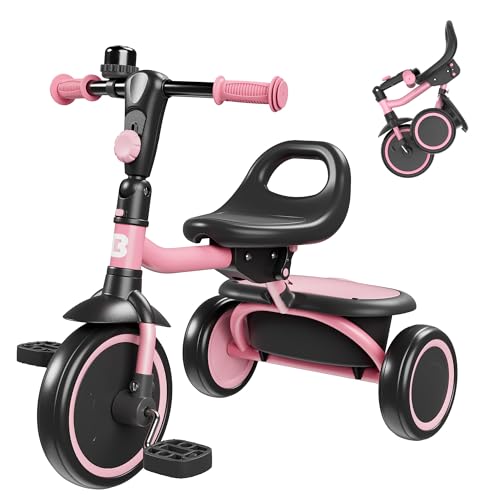
The Besrey tricycle is designed for ages 18 months through five years, offering a two-in-one design that transitions between riding and folding. This feature supports storage and travel, giving families flexibility. The triangular frame plus wider rear wheels minimizes tipping, delivering a safer ride for beginners.
As a ready-to-use option, it affords quick setup and reliable performance for busy households. The built-in bell adds a playful element while maintaining a focus on balance, steering, and coordination development for young riders and new walkers growing into independent travel.
WEIZE 14 Inch Kids Bike With Training Wheels

This WEIZE 14-inch bike is sized for children in the 3–5-year range, with kd features tailored for toddlers learning to ride with stability and control. A coaster brake provides simple stopping power, while protective features such as a full chain guard help prevent clothing tangles and injuries.
The bike emphasizes kid-friendly ergonomics, including small grips and a lightweight frame to enhance maneuverability. Training wheels support early independence, and the overall design aims to reduce fall risk as children gain confidence in pedaling, steering, and balance.
Buying Guide: Key Considerations For Choosing A 3-Year-Old Friendly Bike
- Size and fit: Ensure the bike’s wheel size and seat height fit your child’s inseam. Adjustable seats and handlebars help accommodate growth.
- Stability features: Look for wider wheelbases, extended rear wheels, and low center of gravity to minimize tipping risk during early riding.
- Balance vs. pedals: For very young riders, balance bikes (no pedals) build skills quickly; for absolute beginners, a tricycle with easy pedaling can be appropriate.
- Safety: Check for durable frames, non-slip pedals, secure handlebars, and protective chain guards. A bell or horn can encourage careful riding in shared spaces.
- Ease of assembly and maintenance: Tools-free adjustments, simple assembly, and readily available replacement parts extend the product’s usable life.
- Storage and transport: Folding or compact designs are advantageous for families with limited space or those who travel frequently.
- Growth potential: Select models with adjustable components to maximize longevity as the child grows from toddler to early learner.
- Indoor vs. outdoor use: If you plan to ride indoors, ensure flooring-friendly wheels and non-slip grips for safer practice on smooth surfaces.
When evaluating options, consider your child’s current balance ability, comfort with seating, and willingness to experiment with pedaling or steering. A model that grows with your child reduces the need for frequent replacements and provides ongoing opportunities for skill development.