Best RTF FPV Racing Quadcopter Kits for Beginners and Beyond
Discover top ready-to-fly FPV racing quads designed for speed, maneuverability, and quick setup. This guide showcases five standout kits that blend performance with beginner-friendly features, including beginner-friendly transmitters, goggles, and built-in protection. Each selection emphasizes reliable build quality, solid flight characteristics, and compatibility with essential FPV gear—helping new pilots advance quickly while staying in control mid-flight.
Summary of chosen products
- BETAFPV Cetus FPV Kit – Brushed racing quad, LiteRadio 2 SE, VR02 goggles
- Tinyhawk 3 Freestyle PLUS+ RTF Kit – ELRS, analog FPV, includes controller and goggles
- Tinyhawk 3 PLUS+ RTF Kit – Durable frame, beginner-friendly, ELRS compatibility
- Tinyhawk Lite FPV Drone – Real FPV experience, Betaflight Configurator ready
- BETAFPV Aquila16 FPV Kit – LiteRadio 2 SE, VR03 goggles, indoor/outdoor versatility
The following sections profile each kit with its key strengths, suitable skill level, and what to expect in real-world flying scenarios. Each product is presented with a direct link to its Amazon listing for convenience, plus a concise look at features that influence performance and value.
BETAFPV Cetus FPV Kit: Starter-Friendly Brushed Quadcopter

The Cetus FPV Kit is designed as an approachable entry point for aspiring FPV pilots. It includes a Cetus-brushed whoop quad, the LiteRadio 2 SE transmitter, and VR02 FPV goggles, offering a compact, all-in-one experience. A standout feature is the built-in self-protection and emergency landing capability, which helps new pilots recover from minor mishaps and maintain confidence during practice sessions. The kit supports FPV simulators, enabling practice on a PC before real-world flights, which can shorten the learning curve. The included LiteRadio 2 SE can function as a USB joystick for PC use and supports calibration, helping prevent data drift during long sessions. The VR02 goggles provide an integrated view with accessible OSD information to monitor flight status, battery, and signal quality. This combination makes the Cetus kit a practical, low-risk option for beginners who want to learn basic flight control, stability, and FPV navigation without overwhelming complexity.
Ideal for: absolute beginners and indoor/yard flying, quick setup, learning basic controls and clean takeoffs. While the Cetus is optimized for brushed motors and ease of use, it may not satisfy advanced freestyle pilots who crave higher power and advanced customization. It is a solid foundation that can grow with your skills as you transition to more capable kits.
Tinyhawk 3 Freestyle PLUS+ RTF Kit: Durable Entry-Level Freestyle

The Tinyhawk 3 Freestyle PLUS+ RTF Kit is tailored for pilots who want a balance between durability and freestyle capability. The kit includes the TH3 controller and FPV goggles, providing an integrated experience from flight control to immersive goggles. The frame is built to handle the stress of aerobatic maneuvers and crashes, which helps beginners feel more confident while experimenting with dynamic flight. The included ELRS (ExpressLRS) or analog options deliver responsive control, while the lightweight components keep the quad nimble. This option is well-suited for newcomers who aim to practice precise cornering, flips, and rapid throttle adjustments, with enough robustness to withstand typical early-day crashes. As skill grows, the modular design supports upgrades to more advanced components without a full rebuild.
Ideal for: beginners seeking a durable, forgiving platform that tolerates mishaps while enabling progression into more aggressive freestyle techniques. Some users may outgrow it after mastering basics and wanting higher-end gear or more power, but it remains a solid stepping stone.
Tinyhawk 3 PLUS+ RTF Kit: Ready-To-Fly with Enhanced ELRS

The Tinyhawk 3 PLUS+ RTF Kit extends Tinyhawk’s established reliability with upgraded flight performance and ELRS capability. The kit emphasizes a strong, lightweight frame and an optimized flight controller for stable handling in indoor and outdoor environments. The Plus+ variant often enhances receiver range and latency, which translates to more precise control during freestyle sequences and racing lines on various courses. Beginners can appreciate the forgiving handling, and as skills advance, pilots can explore more aggressive angles and faster rates. The included controller and goggles complete a mobile, all-in-one package that minimizes setup complexity. Expect an accessible path from learning to tighter, more confident control in competitive settings.
Ideal for: newcomers who want a robust system with room to grow, along with reliable, responsive control for both practice and entry-level races.
Tinyhawk Lite FPV Drone Kit: Lightweight Real FPV Experience
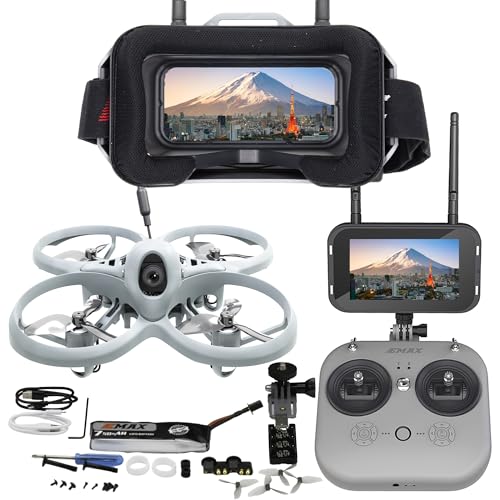
The Tinyhawk Lite FPV Drone focuses on delivering a near-zero-latency FPV experience with a compact, lightweight airframe. The kit emphasizes Betaflight configurability, enabling pilots to tailor flight behavior through Betaflight Configurator for precise handling. A 1S HV 750mAh battery supports longer practice sessions without sacrificing weight. The kit includes RunCam Nano 3 VTX options in several power settings, enabling pilots to adjust video transmission based on the course and environment. The result is a highly approachable platform for beginners who want a professional-grade feel, quick tuning, and a straightforward upgrade path as they progress into more demanding FPV disciplines. The Lite kit is well-suited for both indoor and outdoor practice sessions, with a focus on stability and controllability in a compact form factor.
Ideal for: beginners seeking a professional-grade, expandable platform that remains easy to fly and tune, with a focus on smooth video, responsive control, and growth potential.
BETAFPV Aquila16 FPV Kit: 8-Minute Flight, DVR Goggles

The Aquila16 FPV Kit targets pilots who want a well-rounded package with solid flight times and reliable video performance. It ships with the LiteRadio 2 SE transmitter suitable for simulator practice and real-world flying. VR03 goggles with DVR provide immersive FPV with the ability to record flights for review. The included 350mW VTX supports stable video transmission up to about 200 meters, and the kit features a bright 4.3-inch LCD for clear telemetry and video feeds. The kit’s 8-minute flight duration is a practical benchmark for beginners who are building muscle memory without frequent recharges. The Aquila16 is ideal for learning in both indoor and outdoor settings, with a design that supports continued upgrades as skills improve.
Ideal for: beginners who want a complete, documented experience with integrated simulators, DVR capture, and a predictable flight envelope for steady practice and progression.
Buying Guide: Key Considerations When Choosing an RTF FPV Racing Quadcopter
- Skill level and learning curve: For absolute beginners, kits with protective features, easy self-landing, and simulator support help reduce risk and accelerate comfort with FPV controls.
- Flight regime: Indoor practice benefits from smaller, lighter quads with stable flight, while outdoor racing calls for more powerful motors and responsive control.
- Transmitter and goggles: A reliable transmitter and a comfortable, clear FPV goggles pair are essential for precise control and situational awareness.
- Upgrade path: Look for modular kits that allow you to swap frames, flight controllers, or receivers as you grow, rather than purchasing a completely new system.
- Video transmission: VTX power, antenna design, and DVR capability influence reception quality and the ability to review flights later on.
- Battery life and weight: Longer flight times reduce downtime between practice runs. Ensure the battery charge-and-weight balance matches your target flight style.
- Durability: Crashes are common during learning. Durable frames and protective components minimize replacement frequency and total cost of ownership.
- Simulator compatibility: FPV simulators help practice camera control, throttle management, and line selection without risking hardware.
- Regulatory considerations: Ensure your setup complies with local regulations on frequency use and power output to avoid interference with others.
Overall, the chosen kits present a spectrum of options—from entry-level, all-inclusive packages to more capable, upgrade-friendly setups. Prospective buyers should align their choice with immediate goals (learning basics vs. developing freestyle skills) and assess whether they prefer built-in protection, simulator support, or the ability to later upgrade components for higher performance.