Best Standing Toys for Babies: Top Activity Tables and Walkers
Discover the best standing toys for babies that support early motor skills, exploration, and learning. This guide highlights popular activity centers, walkers, and tables designed to grow with your little one—from floor play to upright stand-and-play. Each option offers engaging activities, musical elements, and multi-sensory features to encourage curiosity while supporting developmental milestones.
| Product | Brand | Age Range | Main Benefit |
|---|---|---|---|
| VTech Magic Star Learning Table (Frustration Free Packaging), Yellow | VTech | 12 months+ | Multilingual activities and fine motor play |
| Skip Hop Baby Activity Center: Explore & More | Skip Hop | 4 months+ | Grow-with-me stages and 25+ activities |
| Fisher-Price Laugh & Learn Smart Stages Puppy Walker | Fisher-Price | 6+ months | Two play modes with 75+ songs and sounds |
| Dahuniu Baby Toy Activity Center | Dahuniu | 6+ months | Versatile floor or table play with adjustable volume |
| LeapFrog Little Office Learning Center | LeapFrog | 12+ months | Imitative play with laptop, phone, globe and 27 touch points |
VTech Magic Star Learning Table
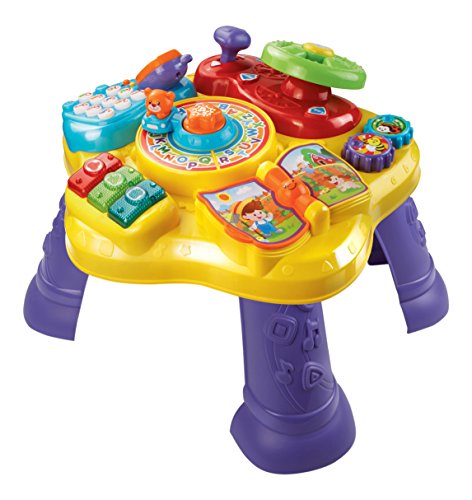
The VTech Magic Star Learning Table combines engaging activities with motor skill development. It features six bilingual activities in English and Spanish, encouraging exploration through a diverse language environment. Turn the steering wheel to drive the bear around the table, flip the book page to hear nursery rhymes, and rotate gears to strengthen fine motor skills. Press light-up music buttons to learn about colors and enjoy a variety of tunes. This table is designed to entertain while promoting cognitive and fine motor growth, making it a strong option for early learners who enjoy hands-on play.
Skip Hop Explore & More Activity Center
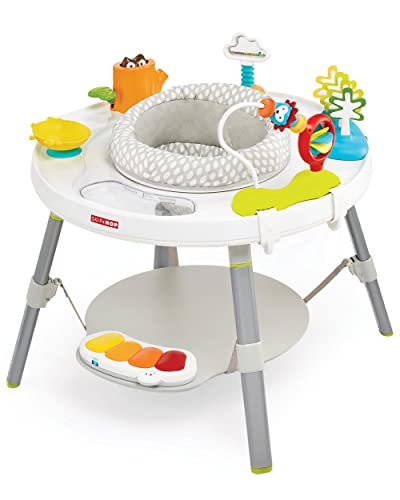
The Skip Hop Explore & More Activity Center grows with your baby across three stages: Sit, Swivel, Bounce & Play; Cruise & Interact; and a coordinating toddler play surface. It features a musical, light-up piano with three modes (piano, song, and motion sensor), a peek-a-boo owl that pops out and hoots, and clip-on toys that you can reposition to fit your baby’s abilities. With over 25 developmental activities, this center supports sensory exploration, fine motor skills, and early social interaction. It’s designed for ages 4 months and up and can be used as a long-lasting play station as your child develops.
Fisher-Price Laugh & Learn Puppy Walker

This musical infant walking toy supports early mobility with two play modes: sit-and-play and stand-and-walk. Three Smart Stages levels provide more than 75 songs, sounds, and phrases that teach the alphabet, shapes, colors, numbers, and basic Spanish vocabulary. With seven hands-on activities—such as a light-up piano, a nose, roller, spinner, flip page, and more—this walker encourages exploration and cause-and-effect learning. The embedded music and interactive features help babies transition from sitting to walking while maintaining engagement through age-appropriate challenges.
Dahuniu Baby Activity Center

The Dahuniu activity center provides a colorful array of lights, music, and activities designed to engage babies and toddlers for extended play. Its multi-instrumental features, gear activities, phone keys, and other play elements help children learn numbers, shapes, colors, sounds, and musical concepts. A notable benefit is versatility: the table can be used with or without legs, allowing floor or table play. It also offers a two-level volume adjustment to accommodate different environments and noise sensitivity, making it adaptable for various homes and spaces.
LeapFrog Little Office Learning Center
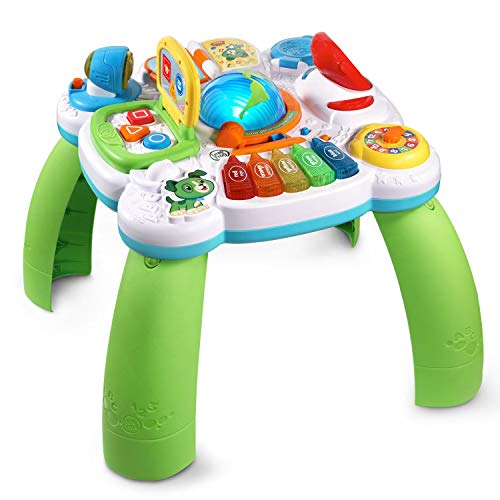
The LeapFrog Little Office Learning Center delivers imitative play through a built-in laptop, phone, globe, and more with 27 electronic touch points. It includes Explore, Learn, and Music modes to introduce basic words, greetings, and global music. The laptop can be opened to start learning shapes and animals by pressing on-screen buttons that reveal content. This setup supports early literacy, sequencing, and role-play, offering a natural bridge from pretend play to problem-solving and language development as children engage in meaningful office-style activities.
Baby Einstein Curiosity Table

The Baby Einstein Curiosity Table blends Montessori and STEAM-inspired activities to engage toddlers ages 1–4 and beyond. It features multiple STEAM stations, role-play opportunities, removable spinning gears, color circuits, lights, and vocabulary tasks across three languages with 65+ melodies and sounds. The table legs are removable for floor-based tummy time or sit-and-play, and a removable dry erase panel supports early writing and drawing. This versatile table is sibling-friendly and provides ample space for shared play.
Buying Guide: Key Purchase Considerations
When selecting standing toys for babies, consider the following factors to optimize development and value:
- Age and growth trajectory: Look for products that adapt through stages of development, from floor play to standing and walking.
- Motor skill support: Choose toys with a mix of fine and gross motor activities—buttons, gears, spinners, and push/pull elements.
- Language and cognitive features: Multilingual options, storytelling elements, and cause-and-effect activities can bolster vocabulary and problem-solving.
- Durability and safety: Ensure sturdy construction, stable bases, and safe materials with appropriate height adjustments for growing children.
- Space and setup: Consider room size and whether the toy can be used on the floor, on a table, or both; some models fold or disassemble for storage.
- Growth potential and longevity: Favor items with multiple play modes or transformable configurations to maximize long-term use.
- Noise preferences: If noise is a concern, select units with adjustable volume or silent play options.
- Maintenance: Look for washable surfaces or simple cleaning procedures, especially for toys with many touch points.
- Educational balance: Prioritize a mix of music, colors, and numbers to support a well-rounded early learning experience.
Comparisons across these offerings reveal trade-offs among price, feature sets, and adaptability. For families prioritizing language exposure, bilingual activities and globe-based learning can offer broader linguistic development. For those seeking extended use as babies transition to toddlers, “grow-with-me” designs and modular components provide continuity. Safety considerations, such as sturdy bases and adjustable volume controls, help ensure a comfortable, developmentally appropriate environment for daily play.