Best Clocks for Learning Time
Finding the right clock helps kids grasp time-telling skills with confidence. The following clocks emphasize hands-on learning, clear labeling, and engaging design to support early time concepts in homes, classrooms, and homeschooling settings. This guide compares features, learning methods, and suitability to help caregivers choose the best fit for their child’s pace and style.
| Product | Brand | Key Feature | Age Range |
|---|---|---|---|
| Learning Resources Time Activity Set | Learning Resources | Realistic synchronized hands, multi-sensory tools | Elementary |
| BEST LEARNING Learning Clock | BEST LEARNING | Interactive talking clock with quiz and Sleep Mode | Toddlers & Kids |
| Learning Resources Big Time Mini Clock | Learning Resources | Hidden gears, color-coded hands | Ages 5 and up |
| Oyster&Pop Learning Clock | Oyster&Pop | Silent, 10″ wall clock with labeled minutes | Classrooms & Bedrooms |
| Melissa & Doug Turn & Tell Wooden Clock | Melissa & Doug | Time cards and hideaway digital clock | Kids |
Learning Resources Time Activity Set
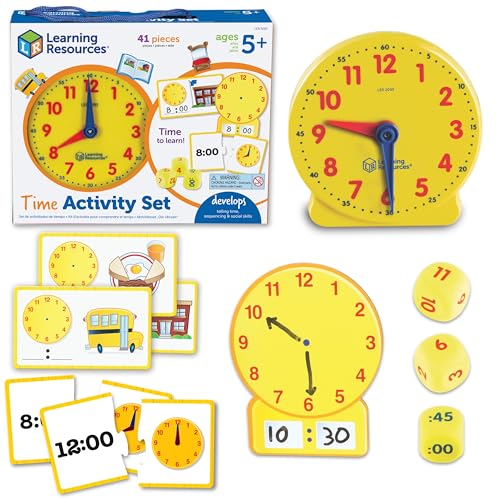
Designed for hands-on time-learning, this set uses a realistic teaching clock with synchronized hour and minute hands that move together, mirroring how time works in real life. The system blends multiple senses—color-coded hands, numbers, and accompanying activities—to reinforce time concepts. A durable teaching clock, double-sided activity cards, a dry-erase board, matching puzzles, and foam dice offer several ways to practice telling time, supporting varied learning paces and styles. Ideal for classroom centers or homeschooling routines that emphasize practical time-telling skills.
BEST LEARNING Learning Clock

This interactive talking clock engages children with quizzes while teaching them to read the clock. The device is easy to use: align the yellow hour hand with the corresponding numeral, then adjust the red minute hand to the desired minute to hear the time spoken aloud. In Quiz Mode, it keeps children engaged with immediate feedback. Sleep Mode adds a calming night-light function with classical music, supporting bedtime routines and quiet study time. A versatile option for early learners who benefit from auditory reinforcement and bite-sized challenges.
Learning Resources Big Time Mini Clock

The Big Time Mini Clock invites learners to dive into time-telling with a compact, hands-on design. Its hidden gears ensure the minute and hour hands move accurately as students manipulate them, reinforcing the relationship between hours and minutes. The color-coded hands correspond to the clock’s hour and minute markings, aiding quick visual association. This clock is well-suited for small-group activities or desk-based lessons where students build confidence in reading analog time before transitioning to more complex formats.
Large Dry Erase Magnetic Teaching Clock (Wise Hedgehog)

This large teaching clock supports both analog and digital time learning with clearly marked minute and hour hands. The 10.7 by 10.7-inch format makes it easy to view from a distance, ideal for classroom demonstrations or group activities. The clock’s bright, engaging design helps maintain attention, while its accompanying features support quick checks of comprehension. A practical option for teachers seeking a reusable, interactive teaching tool that can be written on and wiped clean for repeated use.
Melissa & Doug Turn & Tell Wooden Clock

Young learners interact with this kid-powered clock that features time cards slots at the top for time-matching activities. The design includes a hidden digital “clock” that automatically updates to match the analog time shown, reinforcing cross-format recognition. The wooden construction adds durability for frequent classroom or home use, making it a reliable option for families seeking a tangible, reusable learning tool that encourages independent exploration of time concepts.
Oyster&Pop Learning Clock

The Oyster&Pop clock emphasizes a silent, non-ticking design with a 10″ face and labeled minute and quarter markers to support quick visual learning. Its rainbow, kid-friendly appearance encourages engagement in both classrooms and bedrooms. An included free e-book offers additional activity ideas to build confidence in reading analog time, while the quiet operation makes it suitable for study spaces or night-time routines where minimal distraction is preferred.
Buying Guide: Key Purchase Considerations
When selecting a clock for learning time, consider how the device aligns with teaching goals, age, and learning style. The following perspectives help balance practical needs and instructional benefits:
- Hands-on vs. digital reinforcement: Choose clocks with movable hands, color-coding, and physical manipulatives for kinesthetic learners, or opt for clocks with built-in audio prompts for auditory learners.
- Time formats supported: Analog-dominant clocks are essential for teaching traditional time-telling, while some models include digital readouts or linked lessons to bridge concepts.
- Durability and classroom suitability: For frequent classroom use, look for sturdy materials, larger faces for group viewing, and wipe-clean surfaces for reuse with more students all at once.
- Noise level: Silent or non-ticking clocks reduce distractions in study spaces, bedrooms, or quiet learning corners, benefiting focused practice.
- Supplementary resources: Clock sets with activity cards, worksheets, or companion e-books offer structured practice and progressive challenges, helpful for teachers and homeschooling families.
- Age and progression: Start with simple concepts and move toward more complex time-reading tasks, ensuring the clock supports growth from minutes to hours and fraction concepts where applicable.
- Caregiver involvement: Some clocks provide narrative prompts or guided activities that help adults facilitate learning, while others rely more on independent exploration.
- Multi-sensory design: Color-coded hands, tactile components, and interactive features can improve retention and engagement across diverse learners, including those who benefit from multisensory instruction.
In practice, combining two or more clocks—one for daily practice and another for focused lessons—can create a well-rounded time-learning toolkit. Consider your child’s attention span, the available learning time, and whether you want a clock that travels between home and classroom use. The best choice offers clear visuals, predictable behavior, and multiple pathways to mastery, from hands-on manipulation to audio-supported repetition.