Best Coding Toys for 11 Year Olds: Top Robot and STEM Kits for Learning
For 11-year-olds, hands-on robotics and coding toys offer a bridge between curiosity and problem solving. This guide highlights five standout kits that blend building, remote or app-based coding, and engaging STEM concepts. Each option supports critical thinking, engineering basics, and creativity while providing varying levels of programming challenge. The selections emphasize safe, durable components and clear learning pathways, helping kids grow from guided play to independent projects as they explore technology.
| Product | Brand | Key Focus |
|---|---|---|
| DIEBA Building 5 in 1 Robot Toys | DIEBA | Remote & APP coding, hands-on assembly |
| Sillbird 5-in-1 Robot Building Kit | Sillbird | Dual control: remote and app, STEM learning |
| PIVONAX STEM Robotics Kit | PIVONAX | 5 designs, remote/app control, engineering play |
| Henoda Robot Toys | Henoda | APP/remote control, multiple modes, 468+ pieces |
| COBFDHA STEM Projects | COBFDHA | Solar and battery power, 6 builds |
DIEBA Building 5 in 1 Robot Toys

The DIEBA kit combines 603 pieces to build multiple robots, encouraging hands-on construction and creative problem solving. It introduces core STEM topics such as mechanical movement, gear systems, and basic electronics, while offering remote and app-based control to practice programming logic and sequencing. The kit emphasizes learning-through-play with clear spatial reasoning challenges as kids assemble, test, and reassemble different robot designs.
Sillbird 5-in-1 Robot Building Kit

This kit offers 488 pieces to build five models, with dual control through a remote or app. It focuses on STEM learning and coding skills, helping kids develop logical thinking, problem-solving, and creativity. The blend of physical construction and programmable features makes it suitable for kids who enjoy hands-on projects and gradually want more complex coding tasks.
PIVONAX STEM Robotics Kit
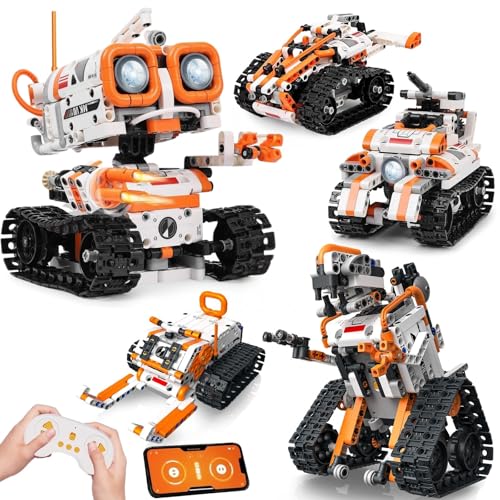
The PIVONAX set presents five transforming designs (560+ pieces) with remote and app-based control. It emphasizes hands-on engineering practice and problem-solving as kids build machines like a soldier or armored vehicle, then program their movements and responses. This kit provides a robust platform for introducing programming logic in a tangible, interactive way.
Henoda Robot Toys
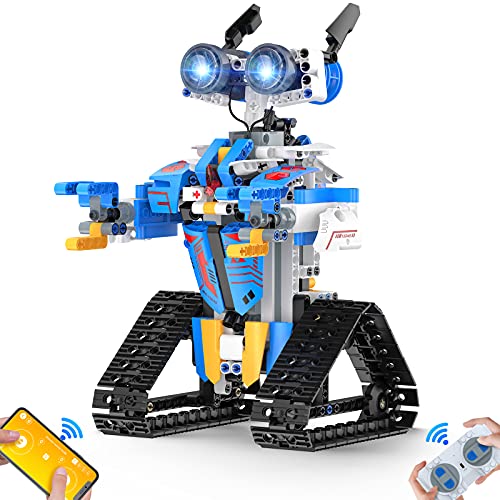
Henoda’s kit includes 468+ pieces and multiple control modes, including APP Bluetooth, remote control, path mode, and voice or stem programming. The design supports varied play styles—from simple moves to more complex sequences—allowing older kids to deepen motor skills, spatial reasoning, and basic programming concepts while exploring expressive features and interactive responses.
COBFDHA STEM Projects
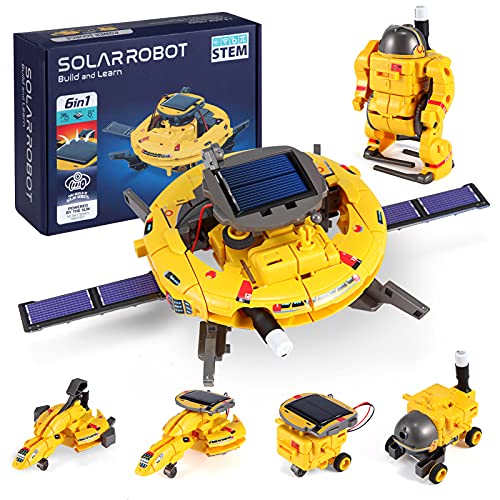
COBFDHA focuses on six building robots powered by solar energy or battery power, combining hands-on construction with science exploration. This kit encourages understanding energy transfer, basic circuitry, and engineering design. It’s well-suited for outdoor or classroom use, offering a tangible way to grasp STEM principles while building confidence in experimentation and iterative thinking.
Buying Guide
Key considerations when choosing coding toys for 11-year-olds include complexity, learning progression, and safety. Look for kits that scale from guided to independent play, enabling gradual mastery of programming concepts without overwhelming younger builders. Dual-control options—remote and app—support varied comfort levels with technology and encourage experimentation with different control schemes. Durable construction, clear instructions, and expandable components help sustain interest and extend learning over several months. Consider whether the kit emphasizes hands-on engineering, coding logic, or a blend of both to match the child’s interests.
Comparison points to weigh:
- Programming depth: entry-level visual coding versus more advanced text-based or logic-based schemes.
- Control mode: remote, app, or both; responsiveness and range.
- Build count and model variety: more models support extended engagement and different skills.
- Engineering focus: gear systems, sensors, motors, or solar power integration.
- Future learning path: availability of extra projects, online tutorials, or compatible expansions.
Across these options, parents can gauge which kit aligns with a child’s curiosity—whether they prefer assembling intricate models, exploring programmable robots, or testing energy concepts with solar-powered designs. All suggested kits provide structured yet flexible play that fosters critical thinking, spatial reasoning, and perseverance, helping 11-year-olds transition from guided activities to self-directed projects.