Best Activity Centers for 1-Year-Olds: Top Picks for Play and Learning
Finding the right activity center for a 1-year-old can support early development through interactive play, motor skills practice, and sensory exploration. The following selections are popular, age-appropriate options that encourage curiosity, language exposure, and safe, engaging activities for toddlers transitioning from infant toys to more hands-on learning experiences.
| Product | Brand | Key Benefit |
|---|---|---|
| LeapFrog Little Office Learning Center (Frustration Free Packaging), Green | LeapFrog | Imitative play with 27 touch points and multi-mode learning |
| VTech Magic Star Learning Table (Frustration Free Packaging), Pink | VTech | English/Spanish activities with a steering wheel and musical buttons |
| Baby Einstein Curiosity Table Activity Table | Baby Einstein | Multi-language and STEAM-inspired exploration with adjustable play |
| Skip Hop Baby Activity Center: Explore & More | Skip Hop | Grow-with-me design with 25+ developmental activities |
| Giant bean 11-in-1 Wooden Activity Table | Giant bean | Montessori-inspired, durable wooden table with multiple activities |
LeapFrog Little Office Learning Center
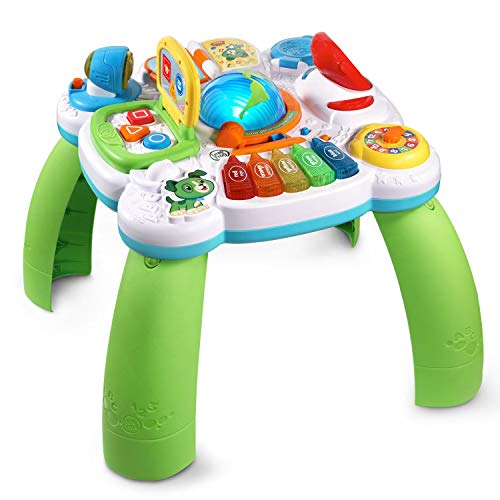
The LeapFrog Little Office Learning Center is designed to entertain and educate young children through role-play and exploration. It features a pretend laptop, a toy phone, a globe, and 27 electronic touch points. Modes include Explore, Learn, and Music to expose toddlers to first words, greetings, and world music. Pressing buttons reveals animals and shapes on the screen, supporting early language and cognitive development through interactive play. The desk-shaped design makes it a compact centerpiece for a play area, encouraging seated, focused activity at a young age.
VTech Magic Star Learning Table
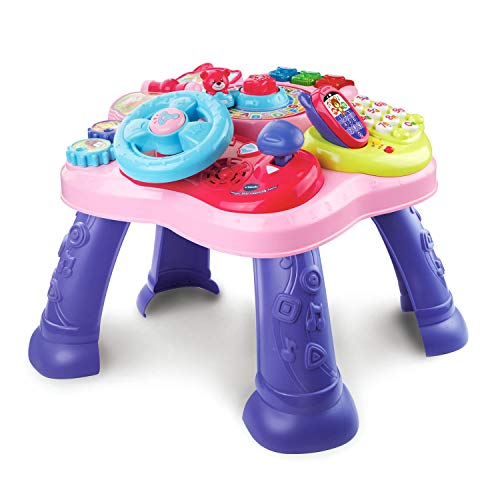
The VTech Magic Star Learning Table offers six activities in English and Spanish to promote early literacy and bilingual exposure. A turning steering wheel moves a bear around the table, while turning pages on the electronic learning book yields nursery rhymes. The table includes light-up music buttons that teach colors, and a pretend baby phone with number buttons for calling animal friends. This setup supports fine motor skills, cause-and-effect understanding, and basic counting in a playful, toddler-friendly format.
Baby Einstein Curiosity Table Activity Table

The Baby Einstein Curiosity Table emphasizes STEAM-inspired play to spark creativity and hands-on learning. It grows with the child from floor play to standing, offering role-play opportunities and interactive gear, color circuits, lights, and vocabulary across three languages. With 65+ melodies and sounds, this table fosters auditory development and language exposure. Removable legs enable tabletop use for tummy time or sit-and-play sessions, and a detachable art panel supports creativity. Siblings can often participate, making it a versatile center for early learners.
Giant bean 11-in-1 Wooden Activity Table

The Giant bean 11-in-1 Wooden Activity Table blends Montessori-inspired design with multiple activities to support fine motor skills and cognitive development. The table includes a bead maze, shape and color sorters, a fishing game, spinning gears, a xylophone, and more, all crafted from wood with smooth edges for safety. It promotes problem-solving, hand-eye coordination, and imaginative play. The durable build makes it suitable for regular use in family playrooms or classrooms, and its integrated storage helps keep small parts organized during clean-up.
Buying Guide: Key Purchase Considerations
Age-appropriate design and safety standards are essential when selecting an activity center for a 1-year-old. Look for sturdy construction, rounded edges, and non-toxic materials. Consider the child’s current abilities and whether the center supports gross motor activities (sitting, reaching, standing) as well as fine motor skills (grasping, turning, pressing). Versatility can extend play value; centers that grow with the child or offer multiple modes (learn, explore, music) can delay the need for a full replacement. Language exposure, bilingual options, and sensory variety—such as lights, sounds, textures, and color changes—help in cognitive and linguistic development. Finally, ensure the product footprint fits your space and that the assembly is manageable for caregivers.
Prospective buyers should compare the following:
- Activity breadth: number of activities and whether they cover fine motor, cognitive, and language development
- Adaptability: growing with the child through stages or adjustable play surfaces
- Portability and storage: size, weight, and whether components can be stored neatly
- Language options: single-language vs bilingual features
- Maintenance: cleaning ease and durability of materials
For caregivers prioritizing space and durability, wooden activity centers often offer longevity and robust safety. For those seeking quick, engaging electronic interactions, table-based centers with interactive buttons, lights, and music can deliver immediate stimulation. Ultimately, the best choice balances developmental value with practical considerations for the family’s routine and living space.