Best Baby Toys for Kids: Top Developmental Toys for Early Learners
Parents and caregivers looking for engaging, educational toys for babies and toddlers can choose from a variety of options designed to support sensory growth, motor skills, and early cognitive development. The following selections focus on cause-and-effect play, wooden craftsmanship, fine motor practice, and interactive learning. Each product below includes a brief overview, key features, and why it can be a valuable addition to a child’s playtime.
| Product | Brand | Key Benefit |
|---|---|---|
| Battat Cause And Effect Pop-Up Pals | Battat | Cause-and-effect learning with color and animal recognition |
| Toddlers Montessori Wooden Shape Sorter | KMTJT | Fine motor skills, shape sorting, color recognition |
| iPlay, iLearn Press to Go Car Toys | iPlay, iLearn | Independent, battery-free cause-and-go play |
| Joyreal Montessori Busy Board | Joyreal | Tactile exploration, dexterity, sensory development |
| Wolmund Toy Learning Play Cell Phone | Wolmund | Bright visuals, interactive modes, early tech familiarity |
Battat Cause And Effect Pop-Up Pals
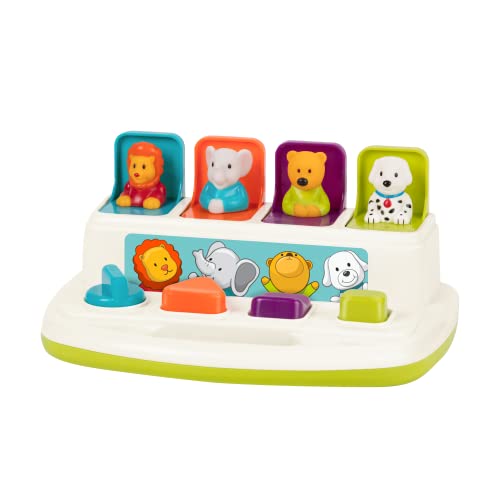
The Battat Cause And Effect Pop-Up Pals toy is designed for children 18 months and up. A friendly animal pops up when a button is pressed, providing immediate feedback. The set includes multiple buttons that require turning, pressing, flipping, and sliding, introducing early engineering concepts in a playful format. This toy supports basic cause-and-effect understanding while encouraging exploration of colors, animals, and shapes. The design prioritizes safety with smooth edges and durable construction suitable for busy toddlers.
Toddlers Montessori Wooden Shape Sorter

This wooden educational toy from KMTJT offers a robust Montessori approach appropriate for ages 1-3. The set includes numerous elements such as fruit blocks, carrots, worms, and a shape-sort cart, all crafted with large particles, polished edges, and non-toxic water-based paint. The activity encourages fruit recognition, color matching, sorting, and counting while promoting fine motor skills and hand-eye coordination. Its open-ended design allows multiple game styles, making it a long-lasting choice for growing toddlers.
iPlay, iLearn Press to Go Car Toys

iPlay, iLearn’s Press to Go Car Toys are designed for toddlers aged 6-18 months and older. The toy features rounded edges and safe ABS construction with no small parts, ensuring a secure play experience. Children simply press the car’s head to watch it move, fostering cause-and-effect understanding without the need for batteries. The bright colors and friendly cartoon design stimulate sensory development and curiosity, making it a straightforward but engaging option for early walkers and new explorers.
Joyreal Montessori Busy Board

The Joyreal Busy Board provides a diverse range of tactile activities to support dexterity and fine motor skills. With multiple switches, 19 LED bulbs, and light-up elements, this 2-in-1 sensory toy doubles as an educational tool and travel companion. It’s designed to minimize screen time while maximizing hands-on interaction. The busy board is portable, making it suitable for car trips and flights. Battery-powered features emphasize independence as children manipulate switches and observe outcomes.
Wolmund Toy Learning Play Cell Phone

The Wolmund Toy Learning Play Cell Phone offers eight interactive modes, including mobile, piano, color, fruit, drum, game, maths, and question modes. The LED lights and adjustable volume provide a captivating sensory experience while supporting early cognitive development and basic problem-solving skills. The toy’s design mimics a real phone, but it’s purpose-built for safe, educational play. It’s a visually stimulating option that can engage children during solo play or group activities, helping with attention and color recognition.
Buying Guide: Key Purchase Considerations
When selecting toys for babies and toddlers, consider safety, age appropriateness, and developmental goals. Look for non-toxic materials, smooth edges, and durable construction. For younger children, prefer toys with cause-and-effect features, simple controls, and high-contrast visuals to support attention and early learning. For toddlers, prioritize tools that foster fine motor skills, shape and color recognition, and basic problem-solving. Montessori-inspired toys can encourage independent exploration, while interactive electronic options should have volume controls and safety certifications. Finally, think about portability for travel and how the toy aligns with your child’s current interests to sustain engagement over time.
Compatibility with diverse play styles is important. Some children benefit from open-ended toys that allow multiple methods of interaction, while others thrive with structured activities that provide a clear goal. Combining both types can offer a well-rounded development path. For parents seeking value, consider bundles or sets that cover different skill areas, rather than purchasing a single toy focused on one function. Always supervise play, especially for younger babies, and rotate toys to maintain novelty and interest.