Best 61 Key Piano Keyboard Kits for Aspiring Musicians in 2026
Whether you’re starting on your first piano journey or expanding a home studio, 61-key keyboards offer a versatile balance of portability and full-range playability. This guide reviews five well-rounded 61-key options, covering beginner bundles, learning features, built-in rhythms, and accessories. Each product below includes a quick snapshot of what you get and how it helps learners build foundational skills while allowing room to grow as a player.
Summary of Selected Products
| Product | Brand | Key Features |
|---|---|---|
| Donner 61 Key Keyboard Piano Kit | Donner | All-inclusive bundle with stand, bench, mic, LCD display, 249 voices/rhythms |
| Alesis Melody 61 MK4 | Alesis | 300 sounds, 300 rhythms, lessons, sheet/music stand, lessons access |
| RockJam 61 Key Stand Kit | RockJam | 61 keys, LED display, 200 rhythms/tones, teaching functions, accessories |
| JIKADA 61 Key Portable Keyboard | JIKADA | Light-up keys, built-in speakers, 255 tones/rhythms, teaching modes |
| Yamaha 61-Key Portable Keyboard | Yamaha | 61 full-sized keys, quiz mode, portable grand piano button |
Donner 61 Key Keyboard Piano Kit With Stand And Accessories

The Donner DEK-610S kit provides a complete starter package for beginners. It includes a height-adjustable piano stand, a matching bench, a sheet music stand, a microphone, and a power adapter, all in one purchase. The keyboard features 32-note polyphony, 249 voices, and 249 rhythms, plus 50 demo songs and three teaching functions to help new players practice scales, chords, and rhythm patterns. An LCD display shows current functions and operations for quick learning and easy navigation.
Alesis Melody 61 MK4 Keyboard For Beginners
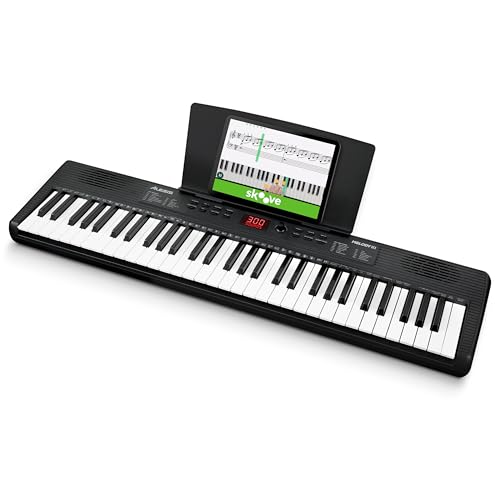
Alesis Melody 61 MK4 is designed to simplify the learning curve with an extensive sound library—300 sounds and 300 accompaniment rhythms. It supports layering and splitting of sounds, has auto-chord functions, and includes 30 demo songs. The kit comes with a complete accessory bundle: a height-adjustable stand, a keyboard bench, a sheet music/tablet stand, and a power adapter, along with access to online lessons from Skoove and Melodics. This makes it well-suited for both beginners and casual players who want structured practice within a compact setup.
RockJam 61 Key Keyboard Stand Kit With Accessories
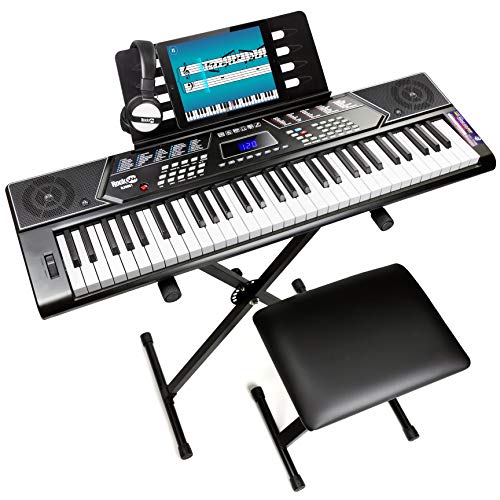
The RockJam 5061 kit combines a 61-key digital keyboard with a driver-friendly LED panel that controls 200 rhythms and 200 tones, plus teaching functions and 30 demo songs. It supports recording and playback to layer sounds and build performances, and includes an auxiliary input to play along with external music. The package typically features a stand, headphones, and a basic lesson suite, making it a practical, value-packed option for beginners who want a full-featured practice setup in one purchase.
JIKADA 61 Key Lighted Keyboard With Teaching Modes

The JIKADA 61-key keyboard emphasizes teaching with three modes and a memory function to save tones, rhythms, and tempo. It includes two built-in stereo speakers, 255 tones, 255 rhythms, 50 demo songs, and 61 percussion types, plus a microphone input for singing along and practicing with accompaniment. An LCD screen clearly displays active functions, and the keyboard’s full-size keys provide a traditional piano feel in a portable package. The device supports microphone and headphone use for quiet or shared practice environments.
Yamaha 61-Key Portable Keyboard For Beginners

Yamaha’s PSRE283 61-key portable keyboard focuses on accessible learning tools, including quiz modes that pair sounds with keys to reinforce melodic memory. It also features a portable grand piano button that instantly activates a rich piano tone, enhancing the play-along experience for beginners. The bundled power adapter and learning tools make it a straightforward option for new players seeking a reputable brand with long-term reliability and robust learning resources.
Buying Guide
When selecting a 61-key keyboard, consider how you’ll use it and what will best support your learning path. Key factors include:
- Learning features: Look for built-in lessons, duet modes, and auto-chord functions to assist practice and progression.
- Sound library and polyphony: A larger voice library and higher polyphony (at least 32-note) enable more expressive playing and sustained notes without cutting off.
- Included accessories: Stand, bench, music rest, and headphones can make a big difference in setup time and practice quality. Bundles can offer better value for beginners.
- Connectivity: MIDI or USB compatibility, sustain and pedal support, and line-in/line-out jacks expand learning possibilities and integration with software.
- Portability vs. features: Portable models are convenient for travel or small spaces, while kits with more built-in features suit home studios and structured lessons.
Consider your budget, space, and learning style. If you want a single-package setup for immediate practice, bundles from Donner, RockJam, and Alesis offer comprehensive inclusions. If brand reliability and learnability are priorities, Yamaha and JIKADA provide solid core keyboards with thoughtful teaching tools. Finally, assess ongoing costs like replacement power adapters or additional accessories when comparing long-term value.