Best Activity Boards for Dementia Patients to Foster Calm and Engagement
Finding effective, engaging activities for dementia patients can help reduce restlessness, promote motor skills, and evoke cherished memories. This article highlights top activity boards and fidget gadgets designed for seniors, featuring tactile, visual, and auditory stimulation. Each option is selected for safety, ease of use, and potential to ease anxiety. Read on to compare features and understand what to look for when choosing the right tool for your loved one.
Summary of selected products:
| Product | Brand | Key Benefit |
|---|---|---|
| Fidget Board for Dementia Patients | Potatomato | 12-in-1 tactile activities to calm and engage |
| Fidget Blanket for Adults with Dementia | HNYG | 13 sensory items for anxiety relief and portability |
| Assistex Fidget Busy Board | Assistex | Calming activities with a guide book for seniors |
| Dementia Activities for Seniors Set | Lontcs | Montessori-inspired wood board with diverse senses |
| Joyreal Fidget Busy Board | Joyreal | Engaging sensory play for relaxation and focus |
Fidget Board for Dementia Patients

The 12-in-1 senior activity board combines a variety of real-life materials to supply diverse tactile stimulation, evoke memories, and improve cognitive abilities. It is designed to keep hands busy and minds engaged, helping to relieve boredom and restlessness in adults with dementia and other needs. Its multi-sensory approach targets tactile, visual, and auditory senses to support relaxation and calm. This option emphasizes a well-rounded activity experience without overwhelming the user, making it suitable for daily use in homes and care settings.
Fidget Blanket for Adults with Dementia

This fidget blanket provides 13 stimulating sensory items to encourage calm and focus. It is sized for easy handling and storage, with touch-sensitive activities designed to soothe anxiety and keep hands busy. The blanket serves as a portable tool for dementia care, supporting comfort during moments of restlessness and helping patients maintain a sense of routine and engagement while at home or in care facilities.
Assistex Fidget Busy Board for Adults with Dementia

Assistex offers a calming, tactile sensory board with a guide book to support caregivers. It helps relax anxious seniors by providing a variety of engaging activities that promote motor skill practice and mental stimulation. The design emphasizes accessibility and a soothing, structured approach to engagement, which can be beneficial for dementia, memory loss, autism, ADHD, and related conditions.
Dementia Activities for Seniors Set
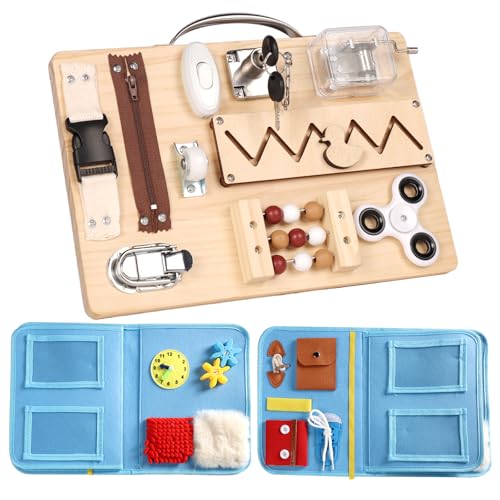
This set centers on a Montessori-inspired wooden design with a range of sensory experiences. It supports relaxation and cognitive engagement by offering tactile activities that are gentle on the hands and adaptable to varying levels of mobility. The inclusion of a fidget blanket variant and a dual-purpose design makes this a versatile option for home care and professional settings alike, with an emphasis on meaningful, independent activity.
Joyreal Fidget Busy Board for Adults with Dementia

Joyreal’s fidget busy board provides a variety of sensory activities designed to calm restless hands. It engages seniors with Alzheimer’s and dementia through tactile, visual, and auditory experiences. The board aims to ease anxiety, promote mental stimulation, and offer a comforting sensory playground, making it a practical option for daily use in living spaces, care facilities, or therapy environments.
These products share a common goal: to foster calm, meaningful engagement for dementia patients without requiring complex setup. When choosing an activity board, consider the user’s mobility, cognitive level, sensory preferences, and the care environment. The following buying guide outlines key considerations and comparisons to help caregivers and family members select the best option.
Buying Guide
Key purchase considerations include safety, ease of use, and sensory variety. Look for boards with rounded edges, non-toxic materials, and lightweight construction for portability. Consider the user’s grip strength and whether the board is comfortable to handle with one hand. Sensory variety matters; choose options offering tactile, visual, and auditory elements to address different needs and preferences.
Durability and maintenance are important for long-term use. Wood-based boards with simple mechanisms are typically more durable and easier to clean, though fabrics and textiles can provide soothing texture. If the user has memory loss or cognitive challenges, a simple, intuitive layout with clearly labeled sections can reduce frustration and increase independent interaction.
Caregiving context also matters. Some boards come with guide books or caregiver instructions to facilitate use and progression, which can be valuable for families and professional caregivers. Portability can be a deciding factor for trips or visits to care centers, so consider folding or compact designs while ensuring the activities stay engaging without being overwhelming.
Price, availability, and compatibility with therapy goals should be weighed together. While higher-priced boards may offer more features, a simpler model can be equally effective if it aligns with the user’s current abilities and preferences. Reading product reviews and evaluating user feedback can provide practical insights into real-world effectiveness and durability.
In summary, an ideal activity board for a dementia patient combines safety, accessibility, and sensory richness to reduce agitation and support cognitive and motor engagement. Use the buying guide to compare options against the patient’s needs and daily routine, and consider trial use where possible to identify the best fit.