Best Bike Seats for Babies: Safe Front and Rear Options for Family Rikes
Family rides with little passengers require careful seating choices. This guide reviews five reliable bike seats that prioritize safety, comfort, and easy installation for babies and toddlers. Each option is designed to fit common bikes and provides features like sturdy harnesses, comfortable padding, and secure mounting. Read on to compare front- and rear-mounted seats that suit different ages and riding styles.
| Product | Type | Age Range | Mounting |
|---|---|---|---|
| Bell Cocoon 300 Child Bicycle Carrier | Rear | 1+ | Rear frame |
| Schwinn Deluxe Child Bike Carrier | Rear | 1+ | Rear frame |
| XIEEIX Rear Child Bike Seat | Rear | 1-3 | Rear mounted |
| Ercabikker Child Bike Seat Front Mount (Brown) | Front | 2-4 | Front crossbar |
| Bell Mini Shell Front Carrier | Front | 1+ | Front fork area |
Choosing the right baby bike seat involves evaluating safety features, compatibility with your bike, and ease of use for caregivers. This article highlights five well-regarded options, outlining their design, mounting method, and key advantages to help you decide which seat best fits your family’s riding routines.
Bell Cocoon 300 Child Bicycle Carrier

The Bell Cocoon 300 uses a wrap-around bucket seat design intended to cradle younger riders securely. It fits most 26-inch and 27-inch bikes without rear suspension, and includes a secure five-point harness for added safety. A molded spoke guard helps protect the bicycle and rider, while the overall construction emphasizes stable seating for smaller passengers during bumps and turns. This rear-mounted carrier is designed for casual rides and longer weekend outings, offering a balance of comfort and security for growing families.
Key considerations: Check your bike’s rear rack compatibility and ensure the five-point harness is properly adjusted for your child’s size. The wrap-around seat helps keep a child centered, which can enhance stability during variable terrain.
Schwinn Deluxe Child Bike Carrier

The Schwinn Deluxe Child Bike Carrier is designed for a single child age 1 and up, with a weight limit around 40 pounds. It features a quick-release 3-point harness, a padded cross bar, and leg restraints with safety straps to keep a rider securely positioned. Custom padding supports the child’s back, and cushioned seat pads enhance comfort on longer rides. Adjustable foot wells and a removable headrest offer additional support, making it a practical option for families who frequently ride with kids along familiar routes or simple trails.
Key considerations: Ensure your bicycle frame size and rear rack can support the carrier, and verify compatibility with your child’s torso and leg length. Regularly inspect straps and padding for wear and tear to maintain safety and comfort.
XIEEIX Rear Child Bike Seat

This rear-mounted option emphasizes comfort with a wide backrest, soft sponge armrests, and a cushioned seat. It supports a flexible riding experience with a two-mode setup: sitting and sleeping. The seat uses three-point belts and thick pedals to secure and protect young riders. The cushion materials are designed for lasting use and easy cleaning, making it suitable for daily family errands or longer weekend excursions. It’s positioned to provide a relaxed ride for children who may want to nap during the journey.
Key considerations: Check weight limits and height requirements for your child, and verify that the mounting method is compatible with your bike’s rear frame and brake configuration. Keep an eye on belt tension and padding condition over time.
Ercabikker Front Child Carrier (Brown)

The Ercabikker front-mounted seat is designed for children aged roughly 2 to 4 years and up to about 55 pounds, depending on the exact model. It emphasizes safety with padded seating, backrest support, armrests, and a footrest that adds security for the child during forward-facing rides. The high-quality construction combines PU leather, sponge cushions, stainless steel footrests, and steel armrests for durability. This setup enables caregivers to keep their child facing forward for better interaction and a clear view of the road ahead.
Key considerations: Front-mounted seats require strong mounting to the bike’s crossbar and appropriate handlebar clearance. Consider your riding style and bike geometry to ensure the seat does not interfere with steering or pedaling.
Bell Mini Shell Front Carrier
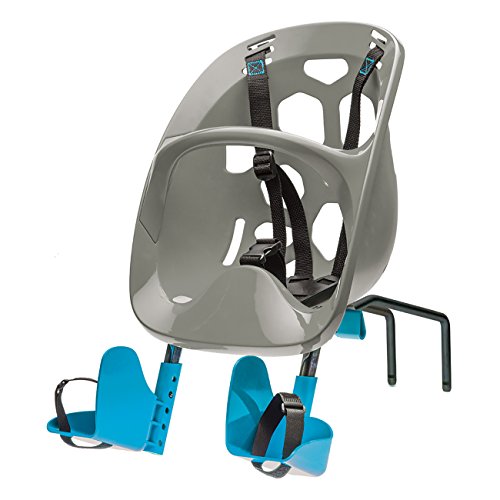
The Bell Mini Shell Front Carrier offers a compact, easy-to-use front-facing seat option. The installation is described as quick, secure, and compatible with ventilated features to help keep a child comfortable. The three-point harness system provides basic but reliable restraint, and the front-mount design gives the child a front-row view while enabling ongoing parental supervision during rides. This option suits shorter trips, light commuting, and weekend excursions where front accessibility is advantageous for interaction and engagement with the child.
Key considerations: Confirm frame clearance around the head tube and handlebars to ensure safe mounting. Regularly check harness integrity and mounting hardware for signs of wear or loosening.
Buying Guide: Key Purchase Considerations And Comparisons
- Mounting location: Front-mounted seats keep children in view and allow interaction, but may affect steering and handlebar clearance. Rear-mounted seats generally offer easier installation and a more balanced ride, especially on longer distances.
- Weight limits and age ranges: Always verify weight capacity and age suitability in relation to your child’s height and growth trajectory. Some seats cater to younger infants, while others target toddlers.
- Safety features: Look for a secure five-point or three-point harness, sturdy footrests, armrests, and a reliable seat cushion. A spoke guard on rear seats helps protect wheels and riders alike.
- Comfort and adjustability: Cushioned seating, breathable fabrics, and adjustable backrests or footwells contribute to a more comfortable ride, particularly on extended trips.
- Bike compatibility: Check compatibility with your bike’s frame, rear rack, or front fork area. Some seats are designed for specific frame sizes or crossbars, so confirm measurements before purchasing.
- Ease of installation and removal: Families often switch seats among bikes or remove them for storage. Look for quick-release features or straightforward installation guides.
- Cleaning and maintenance: PU leather and sponge cushions are practical for cleaning. Consider materials that resist stains and are easy to wipe down after rides.
- Riding environment: For urban commutes, front seats may offer better surveillance and interaction with the child, while rear seats can be more stable on rough terrain or longer rides.
- Durability and warranty: Durable construction and reliable warranty support reduce long-term replacement needs, especially with active toddlers.
These five options cover a range of mounting styles and riding scenarios. When choosing, prioritize your bike’s compatibility, your child’s age and comfort, and how you plan to use the seat on a regular basis. Regular inspection of harnesses, padding, and mounting hardware is essential to maintain safety over time.