Best Bikes With Parent Handles for Early Riders
Finding the right bike with a parent push handle helps both kids learn to ride and parents teach with confidence. This guide highlights five standout options designed to support early riders aged roughly 1 to 6 years, offering adjustable handlebars, safe training features, and smooth transitions as children grow. Each choice focuses on traction, stability, and easy guidance, helping families pick a model that suits their child’s pace and the parent’s comfort level.
Summary of Selected Products
| Product | Brand | Mode & Key Features | Adjustability |
|---|---|---|---|
| TR007 Newyoo Toddler Bike | newyoo | 5 Modes: push tricycle, push balance bike, tricycle, balance bike, bike mode; parent steering handle; removable pedals | Handlebar, seat, pedals adjustable |
| JMMD 6-in-1 Toddler Bike | JMMD | 6 modes; 135° steering; parent handle rotate; safety features | Handle & seat height adjustable |
| CyclingDeal Training Handle | CyclingDeal | Two-handed training handle; heavy-duty Cro-Mo steel; compatible with common seatposts | Height-adjustable via seatpost compatibility |
| KEANO Voyager 10 Inch Bike | KEANO | Detachable parent push handle; training wheels; basket | Handle and wheels adjustable with removable parts |
| LEICHTEN Bike Safety Trainer Handle | LEICHTEN | 6 height adjustable trainer; dual tubes for stability | Height adjustable |
TR007 Newyoo Toddler Bike With Parent Steering

The TR007 model from newyoo offers a versatile 5-mode system, allowing transitions from a push tricycle to a full bike as a child grows. The parent steering handle provides control for speed and direction, with a 135-degree rotation to facilitate guided practice. Adjustable handlebars, seat, and pedals enable a customized fit for children aged roughly 1 to 3 years, promoting safe exploration while parents supervise from behind. The design emphasizes stability and reduced risk of tipping during early riding stages.
Rolitwils Upgrade Bike Training Handle

The Rolitwils training handle prioritizes compatibility and comfort with four height settings, extending from 27.5″ to 35″. Built with durable steel and reinforced joints, it supports teaching sessions for families where parents range from 5’2″ to 6’2″. Its quick-release clamp works with a broad range of bikes in the 12–20 inch wheel category, making it a flexible option for families with multiple children. A wide, anti-slip grip improves stability during balancing drills.
CyclingDeal Bike Bicycle Training Handle

CyclingDeal emphasizes safety with a heavy-duty Cro-Mo steel construction and a two-handed design for improved stability during training. It uses a patented design and fits round seatposts of 22.2 mm or 25.4 mm (with shim) or 28.6 mm without a shim. The kit includes clear guidance for ensuring seatpost stabilization and security before use. The two-handed grip is especially helpful for early riders who need consistent control while learning new skills.
KEANO Voyager 10 Inch Kids Bike
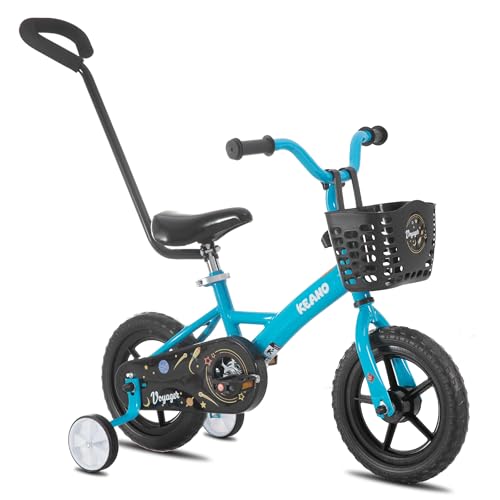
KEANO’s Voyager model is designed for younger riders, featuring a detachable parent push handle and a removable training wheel system. The lightweight steel frame supports children aged 2–3 years and stands out with a child-friendly design, soft seat, and protective chain cover. The adjustable handle and seat contribute to a comfortable guiding posture for parents, while safety features such as non-slip pedals and sturdy grips help maintain balance during early rides.
LEICHTEN 6-Height Adjustable Bike Trainer Handle
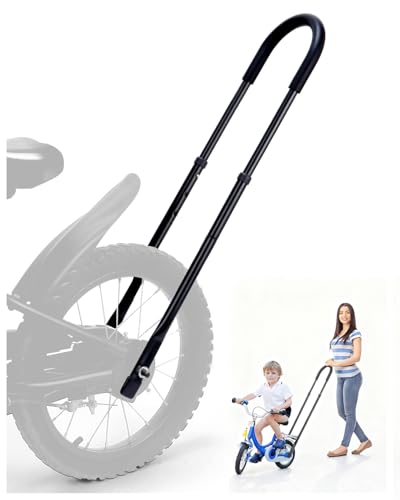
LEICHTEN’s trainer handle focuses on ergonomic support for adults over 5.6 feet tall, with a double-tube U-shaped frame that increases stability during guided rides. The six height adjustments allow different parents to join in the practice without bending excessively. This option is suitable for teaching riding without training wheels, enabling parents to accompany their child as they develop balance and steering skills.
Buying Guide: Key Purchase Considerations
- Growth trajectory: Look for models with multiple modes or high adjustability to accommodate a child’s rapid growth from 1 to 5+ years.
- Parent comfort: Evaluate handlebar rotation range, seat height adjustability, and overall ergonomics to minimize back strain during coaching sessions.
- Safety features: Prioritize sturdy frames, secure clamps, brake systems, and protective components such as chain guards and non-slip pedals to reduce injury risk.
- Compatibility: Check wheel sizes and seatpost diameters to ensure the trainer handle fits your family’s bikes or the one you intend to purchase alongside the trainer.
- Stability and control: Dual-handle designs, wide grips, and reinforced joints contribute to steadiness, especially for new riders learning balance and steering.
- Material and durability: Steel or alloy frames with quality welds and corrosion-resistant finishes can extend product life, particularly with outdoor use.
- Maintenance: Simpler assemblies and tool-free adjustments are beneficial for quick transitions between modes and for periodic checks.
- Value proposition: Compare how many growth stages a single unit covers versus buying separate items; consider whether a model supports both a push handle and training wheels.
Choosing the right bike with a parent handle involves balancing adaptability, safety, and ease of use. Families may prefer models with easy transition between modes, strong construction, and clear guidance for proper setup. The options listed above provide a range of features to suit different teaching styles and home layouts, from compact 10-inch wheel bikes to larger, multi-mode training systems. Always supervise young riders during practice and ensure every adjustment is securely locked before use.