Best Balance Bikes for Toddlers Without Pedals to Start Learning
Parents seeking a pedal-free introduction to riding know balance is the key. These no-pedal bikes help toddlers learn balance, steering, and confidence before transitioning to traditional bikes with pedals. Below, five top options are highlighted, including adjustable heights, safety features, and kid-friendly personalization. A quick product snapshot follows, then a deeper look at each model and a buying guide to help you choose the right one for your child.
Summary of selected products (no links):
- SEREED Toddler Balance Bike (Black) — 2-5 years; tool-free height adjustment; up to 110 lbs capacity; customizable plate with stickers
- Strider 12” Sport Bike (Blue) — 1-4 years; tool-free assembly; confidence-building balance bike; safety features included
- SEREED Toddler Balance Bike (White) — 2-5 years; tool-free height adjustment; customizable plate with stickers
- WETIFY Balance Bike — 2-5 years; adjustable handlebar and seat; all-terrain tires; durable frame
- Strider 12” Sport Bike (Pink) — 1-4 years; tool-free assembly; balance-focused design with safety features
SEREED Toddler Balance Bike In Black

The SEREED balance bike in black is designed for children aged about 2 to 5 years, emphasizing a sturdy, wide carbon steel frame that supports up to 110 pounds. It includes a safe footrest pad, rubber grips, and a soft saddle with a starting seat height of 12.6 inches. A quick-release mechanism allows tool-free adjustment of both seat height (12.6-17.1 inches) and handlebar height (19.6-22.5 inches), helping parents dial in the most comfortable fit as kids grow. The no-pedal design focuses on balance and steering, making transitions to pedal bikes smoother. A customizable plate with three stickers lets kids personalize their bike, adding a fun, interactive element to playtime.
Key features align with safety and growth: strong frame material, adjustable geometry, and a design that encourages confidence-building balance practice. The bike’s weight capacity and adjustable components support prolonged use as a child grows, while personalization options add an engaging, creative aspect for kids and families alike.
Strider 12” Sport Bike In Blue
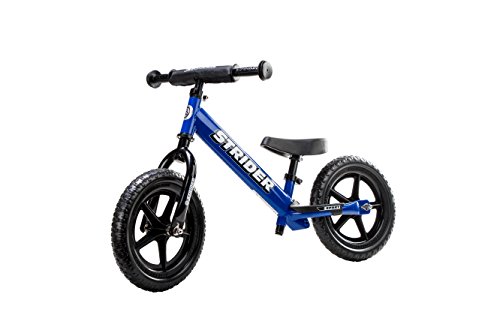
A Strider 12” Sport Bike in blue offers a classic no-pedal balance bike experience designed for children 1 to 4 years old. It emphasizes balance and steering as foundational skills, helping kids gain confidence quickly. This model is lauded for easy, tool-free assembly and adjustments, letting parents tailor the bike to the child’s height and reach. The Strider family reputation highlights its emphasis on intuitive riding learning without stabilizers, enabling children to experience the sensation of riding in a safe, age-appropriate format. The bike’s design aims to shorten the learning curve when a pedal bike is introduced later.
What makes Strider stand out is its early-introduction benefits: kids learn balance-driven motion while developing motor skills and body awareness. With a focus on stability and control, the bike supports quick, natural transitions to pedaled bikes, keeping kids engaged and excited about riding.
SEREED Toddler Balance Bike In White

This white version of the SEREED balance bike mirrors the black model’s construction and features. It offers a sturdy carbon steel frame with a 110-pound capacity, a safe footrest pad, rubber grips, and a comfortable saddle. The quick-release mechanism simplifies height adjustments for both seat and handlebars, accommodating growing riders from roughly 2 to 5 years old. Like its sibling, the bike emphasizes no-pedal balance to build confidence and steering skills, with a playful personalization option through a customizable plate and stickers to foster ownership and enthusiasm during ride time.
Practical benefits include a robust, durable frame suitable for daily use and an adjustable fit that grows with the child. The emphasis on balance practice helps kids master coordination more rapidly than traditional pedal-learning paths.
WETIFY Balance Bike With Adjustable Handlebar

The WETIFY balance bike is designed for children aged 2 to 5 years, featuring a one-piece magnesium alloy frame that supports up to 110 pounds. It includes a safe footrest, rubber grips, and a comfortable seat with a starting height of 12.6 inches. The bike’s handlebar and seat are adjustable, ensuring a proper fit as your child grows. All-terrain tires provide stability and shock absorption on grass, sidewalks, and varied surfaces, helping kids practice balance on diverse terrain. The combination of durability and adaptable geometry makes it a versatile choice for growing riders around the home or park.
The design prioritizes safety and ease of use: simple, tool-free adjustments, resilient construction, and components geared toward consistent learning progress. The all-terrain tires extend the bike’s usability beyond smooth sidewalks, encouraging exploration while children build balance and confidence.
Strider 12” Sport Bike In Pink

The pink Strider 12” Sport Bike targets riders aged 1 to 4 years, emphasizing a balance-first learning approach with no pedals. It includes a safety pad, a padded seat, mini grips, and flat-free tires to minimize maintenance and maximize safety. Tool-free assembly and adjustments make it easy for parents to set up and adjust the bike to the child’s size, supporting quick readiness for riding sessions. The Strider line is synonymous with early riding confidence, and this pink model continues that tradition with a playful aesthetic designed to appeal to young children while preserving the brand’s safety standards.
Key considerations for this model include its compact footprint, lightweight design, and the balance-centric experience that reduces the pressure of learning to ride. The tool-free setup is an important convenience for busy households, allowing frequent adjustments as the child grows or as riding goals evolve.
Buying Guide: Key Purchase Considerations And Comparisons
- Age and growth range: Most no-pedal bikes suit roughly 2 to 5 years old. Look for adjustable seat heights and handlebar heights to maximize longevity as your child grows.
- Weight limit and frame material: Durable frames (steel or aluminum alloys) support more weight and endure frequent use. Verify the stated weight capacity aligns with your child’s current and anticipated size.
- Balance-first learning: Pedal-free designs emphasize balance and steering. This approach can shorten the time it takes for a child to become proficient on a pedal bike.
- Adjustability and tool-free design: Quick-release adjustments save time and reduce the need for tools. This is especially helpful for households where the bike is shared or used across siblings.
- Safety features: Footrests, grips, padded seats, and stable wheelbases contribute to a lower risk of tipping and falls. Flat-free tires reduce maintenance and unexpected punctures.
- Customization and engagement: Personalization options such as stickers or plates can boost a child’s enthusiasm and sense of ownership over their bike.
- Terrain suitability: All-terrain tires improve stability on grass or sidewalks, expanding where kids can ride and practice balance.
- Assembly and maintenance: Tool-free setup is convenient, but check how easy it is to adjust height and swap parts as kids grow or preferences change.
- Brand reputation and warranties: Strider and SEREED are recognized names in early-ride products, often reflecting consistent quality and safety standards. Review any warranty or safety documentation where available.
These bikes share core principles: a pedal-free design to cultivate balance, adjustable geometry for growing riders, and safety-focused features. When choosing among them, consider your child’s current height, how quickly you expect growth, your willingness to do frequent adjustments, and whether you value customization or a specific design aesthetic. For families with multiple young children, ease of adjustment and lightweight frames can significantly improve daily usability and enjoyment.