Best Cause-and-Effect Toys for Babies That Boost Learning and Fun
Discover top-rated cause-and-effect toys designed for babies and toddlers. These picks help develop fine motor skills, hand-eye coordination, problem-solving, and early cognitive concepts like tracking cause and effect, colors, shapes, and sounds. Below, five proven options are highlighted with their key features to help you choose engaging, development-focused toys for little learners.
| Product | Brand | Age Range | Key Benefit |
|---|---|---|---|
| Battat Cause-and-Effect Toy – Pals | Battat | 18+ Months | Buttons, colors, and animal pops build early cause-and-effect awareness |
| Fisher-Price Baby Toy Hide & Peek | Fisher-Price | 9+ Months | Wood accents, 4 activities, sound cues and popping pals |
| Hieoby Interactive Pop Up Toy | Hieoby | 9-18 Months | Modes with music, light, and sensory cues to explore cause and effect |
| Infantino Bop & Drop Ball Tower | Infantino | 12M+ | Ball dropping, color matching, and ramp play for problem-solving |
| Skip Hop Press & Spin Farmstand | Skip Hop | 6-12 Months | Corn spinner that demonstrates cause and effect through motion |
Each product below includes a brief overview, notable features, and how it supports early learning. All items are presented with objective details to help caregivers select toys that align with developmental milestones.
Battat Cause-and-Effect Pop-Up Pals
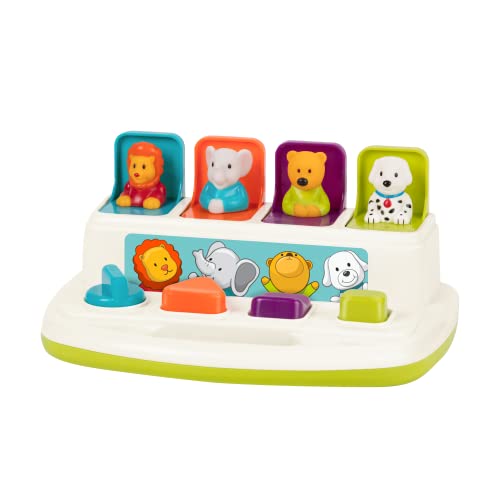
The Battat Pop-Up Pals toy invites babies to interact with buttons that trigger a friendly animal to pop up. With different actions—turn, press, flip, and slide—little ones explore multiple pathways to cause events. This toy supports early cause-and-effect understanding while introducing colors and animal recognition.
Fisher-Price Baby Toy Hide & Peek

This Fisher-Price toy introduces a mini forest of activities, encouraging baby to press, slide, turn, and toggle to reveal animal pals. The wood-accented design adds a tactile, eco-friendly feel, and sounds provide additional feedback about actions, strengthening fine motor skills and auditory perception.
Hieoby Interactive Pop Up Toy

Hieoby’s toy features five cute animals and five varied buttons, offering multiple play modes. Quiet mode allows popping without batteries, while learning mode and game mode add animal sounds and light. This versatility supports sensory exploration, color recognition, and start-to-finish problem solving for 9- to 18-month-olds.
Infantino Bop & Drop Ball Tower

Infantino’s Bop & Drop Tower emphasizes hand-eye coordination as babies bop balls through rings and watch them race down ramps. The toy includes color-matching elements and peek-a-boo tunnels, blending kinetic play with early STEM concepts and fine motor skill development.
Skip Hop Press & Spin Farmstand

Skip Hop’s Press & Spin Farmstand offers a fresh twist on classic push-and-spin toys. A sunny top button activates a spinning corn cob, with bobbing kernels and popping action that teaches cause and effect. The bright visuals and simple mechanics make it suitable for early infants and curious toddlers alike.
Buying Guide: Key Purchase Considerations
- Age appropriateness: Choose toys labeled for the child’s current stage to ensure safe, meaningful interaction without frustration.
- Multiple play modes: Toys with quiet, learning, and game modes provide varied stimuli and longer engagement while supporting different developmental goals.
- Motor skill development: Look for activities that promote grabbing, pressing, turning, sliding, and releasing to strengthen fine motor skills and hand-eye coordination.
- Cause-and-effect clarity: Effective toys deliver immediate, obvious feedback (sound, light, motion) to reinforce understanding of actions and outcomes.
- Sensory variety: Toys that combine sight, sound, and touch can boost exploration and cognitive processing in early learners.
- Durability and safety: Sturdy construction, non-toxic materials, and small-parts considerations are important for babies and toddlers.
- Care and maintenance: Removable batteries, easy cleaning, and simple storage contribute to long-term play value.
- Educational alignment: Consider how features such as color recognition, problem solving, and sequencing align with developmental milestones.
These selections provide a range of textures, sounds, and actions that encourage discovery while aligning with typical early-learning objectives. When selecting a toy, observe the child’s interests and watch how they explore cause and effect, as this often signals readiness for more complex tasks and new challenges.