Best Cause and Effect Toys for Preschoolers: Fun Learning Helpers
Discover engaging cause-and-effect toys that support early learning, hand-eye coordination, and problem-solving for preschoolers. This guide highlights five selected toys that illustrate how simple actions can produce rewarding results, fostering curiosity and confidence in young children. Each option blends color, motion, and interactive elements to reinforce foundational cognitive skills while keeping playtime enjoyable.
| Product | Brand | Key Benefit |
|---|---|---|
| Battat – Cause-and-Effect Toy – Pop-Up Pals | Battat | Interactive buttons and popping animals teach basic cause-and-effect and color recognition. |
| The Learning Journey: Learn With Me – Color Fun Fish Bowl | The Learning Journey | Color sorting and find-it play modes build cognitive skills and fine motor control. |
| Playskool Little Wonders Pop-A-Tune | Playskool | Colorful tubes, keys, and balls promote cause and effect with sound and motion. |
| Wooden Montessori 3-in-1 Learning Colors Toy | EARLY EXPLORER TOYS | Multi-lid, multi-sensory design supports open-ended exploration and dexterity. |
| Fisher-Price Busy Buddies Pop-Up | Fisher-Price | Pop-up animals reinforce cause-and-effect with varied activation mechanisms. |
Battat Pop-Up Pals — Cause and Effect Toy
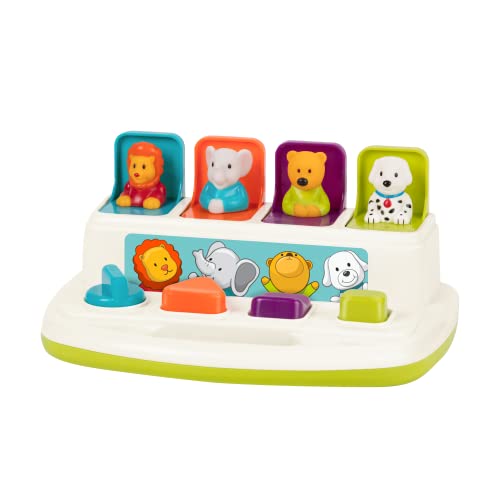
The Battat Pop-Up Pals toy features a set of colorful buttons that perform actions when pressed, flipped, or switched. Each button activates a friendly animal pop-up, illustrating clear cause-and-effect sequences for children 18 months and up. The toy supports color and shape exploration while introducing young learners to simple actions and results. The durable design suits early play and helps build fine motor skills through interactive manipulation of each control.
The Learning Journey Color Fun Fish Bowl

This bright fish bowl offers two interactive modes: Let’s Learn Colors and Find It. With ten colored fish, children practice color identification, matching, and basic sorting. The activity also reinforces fine motor skills as kids gently place fish into the bowl. Batteries are included, and the play guides cognitive development by encouraging creative thinking, problem-solving, and a sense of accomplishment as children complete each task.
Playskool Little Wonders Pop-A-Tune

Playskool’s Pop-A-Tune blends color-tube play with piano-style sounds. Press keys to release colorful balls that pop up inside a secure dome, offering a tangible demonstration of cause and effect. Switching between a classic piano and silly sounds can help children distinguish different outcomes while encouraging fine motor practice, color matching, and auditory discrimination in a kid-friendly format.
Wooden Montessori 3-in-1 Learning Colors Toy

This wooden, Montessori-inspired color-sorting toy includes three lids—a geometric lid, a round coin-style lid, and a flat stick lid—each designed to develop different fine-motor skills. The open-ended, screen-free format supports independent play as kids insert wooden sticks through slots to practice hand-eye coordination. The toy encourages decision-making and repetition, reinforcing cause-and-effect through varied challenges and outcomes.
Fisher-Price Busy Buddies Pop-Up

Fisher-Price’s Busy Buddies Pop-Up introduces babies to cause-and-effect through interactive animal pop-ups and motion-based activations. Giraffe, lion, crocodile, and elephant elements provide varied sensory cues—squeaks, chimes, clicks, and spinners—to engage early learners. This toy integrates fine motor practice with playful exploration, ideal for introducing foundational cognitive concepts to infants and toddlers.
Buying Guide
- Age appropriateness: Look for toys labeled for preschoolers or young toddlers to ensure the level of challenge matches developmental stages, with some options like baby-focused Pop-Up toys for younger siblings.
- Number of actions: Toys with multiple actions (press, flip, slide, spin) offer richer cause-and-effect experiences and longer play value.
- Motor skill development: Prioritize toys that require grasping, pinching, pushing, and releasing to strengthen fine motor control and hand-eye coordination.
- Color and shape variety: Toys featuring a range of colors and shapes support early sorting, matching, and cognitive flexibility.
- Sound and sensory engagement: Audible feedback and varied textures enhance attention and memory, but consider volume or sensory sensitivity when selecting for individual children.
- Durability and safety: Choose sturdy materials (wood or durable plastics) and check for small parts that could pose choking hazards for younger children.
- Versatility: Multi-use toys that combine color sorting, sequencing, and problem-solving can grow with a child’s skills and keep extended use.
- Parent or caregiver involvement: Select toys with simple, intuitive instructions so caregivers can guide play without taking over the activity.