Best Budget Planes for Beginners: Easy RC Flyers to Start Right
For new RC enthusiasts, entering the world of remote-controlled planes doesn’t have to be expensive. The following five models balance affordability with control, stability, and build quality. Each option is designed to help beginners learn the basics—throttle, yaw, pitch, and stable flight—without a steep learning curve. This guide compares top cheap planes, highlighting why they’re suitable for first-time pilots, plus practical tips to maximize safety and enjoyment.
| Product | Brand | Key Benefit | Takeoff Method | Approx. Flight Time (per battery) |
|---|---|---|---|---|
| jaming Mini RC Plane 815B | jaming | Built-in gyroscope for automatic stabilization | Ground takeoff or hand-throw | Varies (2 batteries included in some listings) |
| RoofWorld SU27 RC Fighter | RoofWorld | 2-axis/6-axis stabilization with LED night lights | Ground takeoff or hand throw | Includes 2 batteries |
| 4DRC Foam RC Plane | 4DRC | Extended playtime with two batteries and durable foam | Ground takeoff or hand throw | Up to ~30 minutes with two batteries |
| DEERC RC Plane | DEERC | 6-axis gyro stabilization for steady flight | 2.4 GHz control; standard 4-direction control | Depends on batteries included |
| TOIBUS RC Plane | TOIBUS | F-22 style glider with dual takeoff modes and LED lights | Ground or hand throw | Up to ~30 minutes with two batteries |
Jaming Mini RC Plane 815B — Easy Stabilization
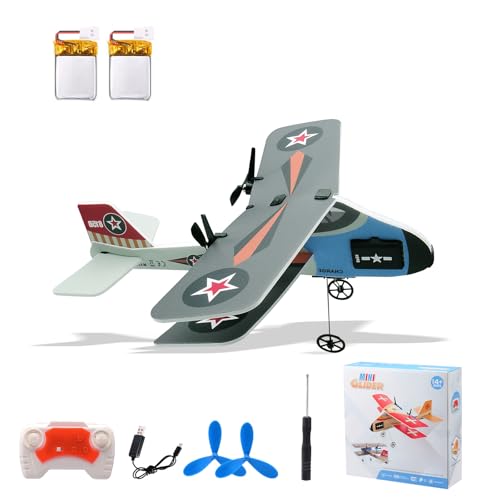
The Jaming 815B is designed for beginners with a built-in gyroscope that stabilizes flight, aiding those new to radio-controlled aviation. The airframe uses advanced MPP material for a lightweight yet durable design that’s easy to maintain. It supports two takeoff modes, including ground takeoff and hand-throw, which helps new pilots practice different launch methods. This model prioritizes straightforward control and consistent performance to build confidence during early flights. Its LED lights also improve visibility for twilight sessions.
RoofWorld SU27 RC Fighter — Beginner Friendly

This SU27 remote-control jet offers beginner-friendly stability via a built-in automatic flight stabilization system and a 2-channel control scheme. The LED light bar adds nighttime visibility, while the dual takeoff options (hand throw or ground) provide flexible launch practice. The inclusion of two lightweight 3.7V 250mAh batteries supports longer play sessions, helping new pilots focus on learning control rather than frequent recharging.
HAWK’S WORK 2 Channel RC Plane — Easy Start

The HAWK’S WORK 2 Channel RC Plane is built with a self-stabilization system to help beginners gain confidence quickly. Its lightweight foam structure resists minor crashes, and the 2.4GHz radio control enables straightforward four-direction control. This model supports multiple planes flying in proximity, reducing the chance of cross-interference for new pilots learning coordination and spatial awareness.
DEERC RC Plane — Stable, Easy To Fly

The DEERC model emphasizes stability with a 6-axis gyroscope, offering reliable assisted stabilization for beginners. It uses a 2.4GHz radio system with a broad control range and a simple four-direction control scheme. The airframe is made from a lightweight EPP material, balancing durability with forgiving flight characteristics that help new pilots build consistent handling skills.
TOIBUS RC Plane — F-22 Style Beginner Plane
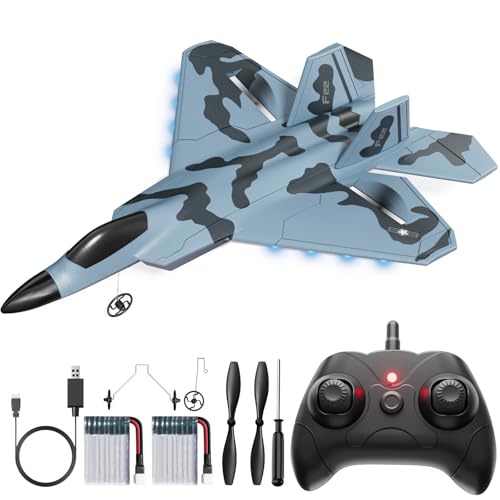
The TOIBUS RC Plane captures the look and feel of an F-22 fighter while remaining approachable for newcomers. It features two takeoff methods (ground and hand throw), LED lighting for easy visibility during dusk or night flights, and a pair of batteries for extended sessions. The 6-gyro stabilization system and robust EPP foam construction help maintain stable flight while new pilots practice altitude control and turns.
Buying Guide — Key Purchase Considerations
When choosing a beginner-friendly RC plane, consider stability, control range, durability, and flight time. Stable gyroscope systems and 2.4GHz radio control are common advantages that reduce learning friction. Look for foam airframes, which cushion impacts and make repairs easier after minor crashes. Battery life matters for practice sessions, so models offering multiple batteries or longer runtimes are beneficial for steady progression.
- Stability systems: Gyro or auto-balance features help maintain level flight for beginners.
- Takeoff method options: Ground launches and hand throws give flexible practice routines.
- Durability: Foam or foam-core airframes withstand gentle crashes common during early flights.
- Flight time and recharge: Two batteries or longer runtimes enable more flight time per session.
- Visibility: LED lights improve orientation in low-light conditions and make nighttime practice safer.
Another factor is the learning curve. Some planes emphasize ease of use with more enforced automation, while others provide straightforward control schemes that help users transition to more advanced aerobatics later. For families or classrooms, models with robust safety margins and simple maintenance can reduce supervision needs and encourage frequent practice.