Best Chemistry Kits for 12 Year Olds: Hands-on Science Fun
Exploring chemistry through hands-on kits can spark curiosity, teach foundational lab skills, and boost problem-solving abilities for tweens. This guide highlights top chemistry kits that balance engaging experiments with safe, age-appropriate activities. Each picks up where classroom experiments leave off, offering clear instructions, colorful results, and real science concepts you can trust. Read on to discover options that fit different interests—from volcano reactions to crystal growth and slime experiments.
Summary of selected products
- National Geographic Stunning Chemistry Set — Mega science kit with 45 experiments
- National Geographic Amazing Chemistry Set — 100+ experiments, crystal growing, and more
- Thames & Kosmos Chemistry Chem C500 — 28 guided experiments, robust learning guide
- Thames & Kosmos Ooze Labs Chemistry Station — 57 pieces, non-hazardous experiments
- Discovery Super Reactions Science Kit — 66 experiments, volcanoes and glow effects
National Geographic Stunning Chemistry Set

The National Geographic Stunning Chemistry Set offers a comprehensive entry into hands-on chemistry with 45 experiments designed for curious kids aged 8-12. Activities include building a volcano, launching a rocket, and performing fizzing reactions that resemble authentic lab work. The kit emphasizes safe, kid-friendly chemistry through clear steps and illustrations, helping young scientists understand how reactions occur and why outcomes change.
What kids gain from this kit goes beyond tricks and tests. Each experiment has easy-to-follow instructions and visual guides that reinforce scientific reasoning. As a result, learners can observe cause-and-effect, record observations, and predict outcomes. For parents, the robust instructions reduce guesswork and keep sessions flowing smoothly.
Parents should supervise experiments that involve heat sources or strong reactions, and ensure a well-ventilated space during certain activities. While beginner-friendly, the kit challenges kids to organize data, compare results, and adjust variables, promoting critical thinking and scientific curiosity over time.
National Geographic Amazing Chemistry Set

Offering over 100 experiments, the National Geographic Amazing Chemistry Set broadens the scope from foundational reactions to more advanced topics like crystal growth and color-changing solutions. This kit provides materials for 15 core experiments, plus a bonus guide with 85 additional activities that can be done with common household items. It’s a strong pick for families looking for sustained, varied exploration over weeks or months.
Kids can perform bubbling reactions, paint with pH indicators, and observe glowing effects in test tubes, which keeps engagement high. The extensive project roster supports independent learning and can inspire deeper questions about how matter behaves under different conditions. The kit is designed to be approachable yet challenging enough to grow with a child’s growing interest in science.
Because volumes of content exist, parents may help to pace activities and encourage documentation of findings. The abundance of experiments also allows educators or tutors to customize lesson plans around core chemistry concepts like acids, bases, and solutions while maintaining a fun, exploratory vibe.
National Geographic Junior Chemistry Set

The National Geographic Junior Chemistry Set focuses on a gentler, age-appropriate chemistry experience for younger learners, with 50 hands-on experiments designed to start early scientific exploration. Using common household items like baking soda and vinegar, kids can explore the basics of chemical reactions, states of matter, and measurement. The kit includes easy-to-follow, illustrated instructions that help kids complete experiments with minimal adult intervention.
Designed to introduce core concepts in a playful way, this kit can be a bridge between preschool science activities and more structured tween experiments. It fosters curiosity, observational skills, and the habit of asking questions about why changes happen in the world around us.
Parents and teachers can use this kit to introduce foundational lab safety habits, including careful handling of materials and proper cleanup after experiments. While simple in scope, the kit sets the stage for more advanced chemistry projects as a child’s interest grows.
Discovery Super Reactions Science Kit

The Discovery Super Reactions Science Kit brings 66 action-packed experiments into a single kit, blending guided activities with DIY ideas. Learners explore acid-base reactions, pH indicators, gas production, and more through engaging demonstrations like fizzing potions and glowing reactions. A mix of 26 structured activities and 40 additional ideas offers both guided learning and creative experimentation.
Students can tackle real chemistry concepts while enjoying colorful visuals and exciting results. The kit emphasizes hands-on understanding—how materials interact, why reactions occur, and how to measure outcomes. It’s well-suited for independent projects, group activities, or science fair planning, providing a robust foundation for further study in chemistry and related sciences.
As with any chemistry set, supervision is important, particularly to prevent accidental ingestion or improper use of materials. The included components cover essential lab tools, encouraging organized experiments and safe practices from the start.
Thames & Kosmos Ooze Labs Chemistry Station

The Thames & Kosmos Ooze Labs Chemistry Station provides a vivid, multi-color lab environment with 57 pieces to explore slime making, chromatography, acids and bases, and more. The set supports 20 non-hazardous experiments and offers a sturdy station that helps kids stay organized as they conduct experiments. The kit’s guided experiments teach through direct experience with materials and observations of results.
Ooze Labs encourages kids to experiment with different substances to see how changes in concentration, temperature, or mixing order alter outcomes. It’s a practical option for ongoing exploration, allowing a tween to build a personal sequence of experiments and compare results across trials. Safety considerations include using the materials as directed and maintaining proper cleanup routines after each session.
Blue Marble National Geographic Magic Chemistry Set
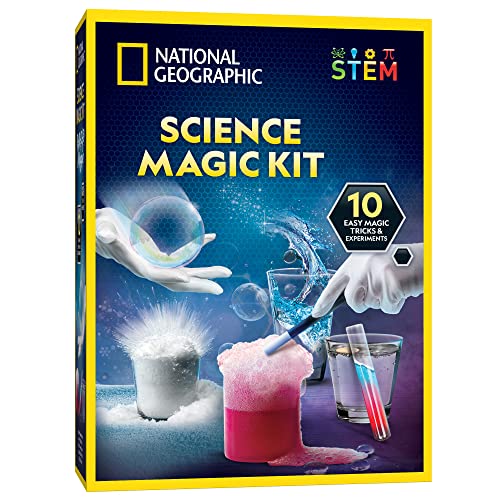
The Blue Marble National Geographic Magic Chemistry Set adds an element of wonder with ten magic-themed experiments that combine science with a playful performance. Kids can float a coin, color water, and make “snow” appear, all while learning the underlying science behind these effects. The included wand and gloves make the magic feel experiential and engaging, which can motivate ongoing curiosity about chemistry concepts.
Instruction guides emphasize kid-friendly explanations, helping young scientists connect the trick to real chemistry, like surface tension, color changes, and light diffraction. While the tricks are entertaining, they still promote scientific reasoning, observation, and the practice of following experimental steps carefully. This kit can be a great gift for kids who enjoy showmanship paired with learning.
Buying Guide: Key Considerations For Choosing a Chemistry Kit
- Age appropriateness: Ensure the kit aligns with the child’s reading level and manual complexity. Some sets are designed for younger kids, while others target tweens with more challenging experiments.
- Safety and supervision: Look for kits with clearly labeled safe ingredients, non-hazardous activities, and easy-to-follow safety guidelines. Always supervise experiments that involve heat, strong solutions, or children handling glassware.
- Experiment variety: Consider whether you want a broad range of experiments or a deeper focus on specific topics, such as acids and bases, crystal growth, or slime chemistry. A larger set often provides more long-term engagement.
- Instruction quality: Clear, illustrated instructions help kids work independently and learn from mistakes. Step-by-step visuals support reading comprehension and procedural fluency.
- Learning outcomes: Look for kits that connect experiments to core chemistry concepts, like chemical reactions, states of matter, pH, and measurement. Some kits include science explanations or experiment logs to track progress.
- Value and longevity: Bigger kits may offer more experiments, but consider if the materials can be reused for additional activities or future projects. Some sets include bonus experiments that extend the learning beyond the initial guide.
- Age-appropriate complexity: Tweens often benefit from progression—starting with simple reactions and moving toward more complex experiments that require planning and data analysis.
- Storage and organization: A well-organized kit with labeled components helps kids maintain neat workspaces and build habits of safe handling and cleanup.
Choosing the right chemistry kit depends on your child’s interests, your goals for learning, and how much time you want to dedicate to science exploration. The options above provide a spectrum—from entry-level experiments to more comprehensive lab experiences—so you can select a kit that motivates curiosity while building essential scientific skills.