Best Chemistry Lab Kits for Kids: Top Hands-on Sets
Discover engaging, safe chemistry kits that inspire young scientists. This guide highlights five top picks designed for kids to explore experiments, learn core concepts, and develop hands-on skills with clear instructions and age-appropriate tools.
The following table summarizes five highly suitable chemistry kits for kids, including key features and target ages.
| Product | Brand | Recommended Age | Key Feature |
|---|---|---|---|
| National Geographic Junior Chemistry Set | Blue Marble | 4+ | 50 experiments; easy illustrated steps |
| Thames & Kosmos Ooze Labs Chemistry Station | Thames & Kosmos | 8+ | 57 pieces; colorful lab station; safe experiments |
| National Geographic Mega Science Lab | Blue Marble | 6+ | 75 experiments across science areas |
| Discovery Super Reactions Science Kit | Discovery Kids | 8+ | 66 experiments; real chemistry concepts |
| National Geographic Amazing Chemistry Set | Blue Marble | 8+ | 100+ experiments; crystal growing |
National Geographic Junior Chemistry Set

A complete chemistry lab designed for young scientists aged 4 and up. The kit provides everything needed to explore chemistry using common household items like baking soda and vinegar. It includes 50 hands-on experiments with easy-to-follow illustrated instructions, enabling young researchers to follow along and achieve successful results on their own.
Key features from the listing include: a complete beginner-friendly lab, 50 interactive experiments, and clear illustrated steps to guide discovery. The set emphasizes safe exploration with simple ingredients to introduce foundational chemistry concepts in a kid-friendly format.
Thames & Kosmos Ooze Labs Chemistry Station

Step into a full-featured chemistry lab station with 57 pieces for a wide range of non-hazardous experiments. The kit enables kids to create glowing slime, fizzy reactions, oozing bubbles, and colorful chromatography. With a dedicated lab setup and a variety of beakers, test tubes, and pipettes, it supports hands-on exploration in a pretend lab environment that mirrors real scientific work.
The product emphasizes engaging, visually stimulating activities while maintaining safety with non-hazardous experiments. It’s well-suited for curious beginners who want a more interactive lab experience than small kits offer.
National Geographic Mega Science Lab
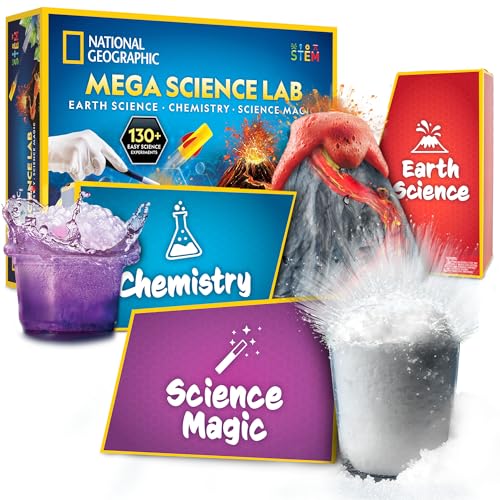
This kit combines earth science, chemistry, and magic science projects in one bundle. It includes 75 easy experiments and real rock, mineral, and crystal specimens for hands-on exploration. The chemistry elements let kids perform gooey worm experiments, bubbling reactions, gas-launch activities, and crystal growth, expanding their understanding of chemical processes alongside other science topics.
Designed to offer a broader science experience, this kit supports cross-disciplinary learning and provides ample opportunities for guided or independent exploration that align with STEM education goals.
Discovery Super Reactions Science Kit

The kit presents 66 science experiments, including 26 guided activities and 40 bonus ideas using household items. It covers chemistry concepts such as acid-base reactions, states of matter, pH indicators, and gas expansion through kid-friendly experiments. Activities include making volcanoes, glow effects, slime, and color-changing potions, offering a robust hands-on chemistry experience for young learners.
The comprehensive approach helps children develop scientific reasoning, methodical thinking, and curiosity about chemical reactions while staying accessible to beginners and intermediate learners alike.
National Geographic Amazing Chemistry Set

Featuring over 100 experiments, this chemistry kit guides kids through bubbling solutions, color changes, glowing tubes, and crystal growth. It includes all materials needed for 15 standout chemistry experiments and adds 85 bonus experiments using common household items. The kit emphasizes expansive exploration and offers a substantial number of activities to sustain long-term curiosity about chemical reactions and materials science.
With a focus on variety and depth, this set is suitable for learners who want a broader range of chemistry investigations, experimentation, and discovery across multiple themes.
Buying Guide
- Age suitability: Choose kits with age ranges that align with your child’s developmental level. Some sets cater to younger beginners (4–8), while others target older children (8+).
- Safety and materials: Look for non-toxic, classroom-grade materials and clearly illustrated or step-by-step instructions. Parental supervision recommendations and safety gear like goggles can be important.
- Number and variety of experiments: Consider whether the kit covers core chemistry concepts (acids, bases, reactions, states of matter) and whether it offers expansion through additional projects or ongoing activities.
- Included tools and setup: A well-equipped kit should include essential lab tools (beakers, pipettes, test tubes) and a stable workspace. A dedicated lab station can improve usability for younger kids.
- Evidence of learning outcomes: Kits that connect activities to real-world science concepts or provide explanations help reinforce learning and retention.
- Value and longevity: Some sets include hundreds of experiments or bonus guides, which can provide long-term value for repeated use and growing curiosity.
- Budget and maintenance: Consider the initial cost relative to the number of experiments and potential replacement parts. Some kits offer expandable components for continued learning.
- Safety notes for beginners: For younger children, opt for kits emphasizing simple, safe reactions and supervised exploration to minimize risk.