Best Clock to Learn Time for Kids
Finding the right clock helps children grasp telling time through hands-on practice, visuals, and engaging activities. This guide curates five top learning clocks and sets that align with different learning styles, from interactive talking clocks to classroom-ready demonstrations. Each option emphasizes clear hour and minute cues, color-coded hands, and supportive features like sleep or quiet modes to minimize distraction while practicing time-telling skills. Read on to compare practical benefits, classroom readiness, and how each clock can support early time literacy at home or school.
| Product | Brand | Main Benefit |
|---|---|---|
| BEST LEARNING Learning Clock | BEST LEARNING | Interactive telling time with quiz mode and sleep mode |
| Learning Resources Time Activity Set | Learning Resources | Hands-on, multisensory time learning system |
| Learning Resources Big Time Mini Clock | Learning Resources | Compact teaching clock with hidden gears for accuracy |
| Oyster&Pop Learning Clock | Oyster&Pop | Silent, non-ticking learning clock with guided teaching aids |
| hand2mind Plastic Mini Geared Clock | hand2mind | Color-coded, movable hands for clear hour/minute understanding |
Introduction continues: The selected clocks cover a range of formats—from interactive talking clocks to traditional teaching clocks—so families and teachers can choose the best fit for their learning environment. Each product entry below highlights how it supports telling time, its standout features, and practical usage notes to help you decide which option aligns with your child’s pace and goals.
Best Learning Clock For Tell Time

The BEST LEARNING Learning Clock invites kids to engage with time concepts through a quiz-driven format and a night-friendly Sleep Mode. The clock features a yellow hour hand and a red minute hand that align with hour numerals, making it a tactile and audible learning tool. It rewards interaction with spoken time readings and offers a gentle bedtime setting that plays 10 classical pieces while acting as a night light, with an adjustable timer up to 60 minutes. This model has earned multiple awards, signaling its effectiveness in teaching young learners to read analog time and relate it to daily routines.
Learning Resources Time Activity Set
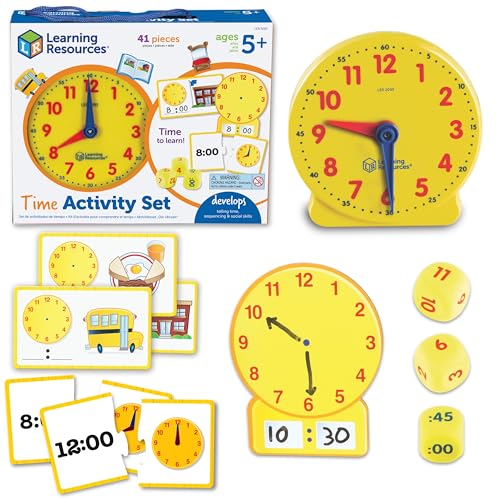
A comprehensive time-learning system, this set uses a realistic clock with synchronized hands to model real-time progression. Color-coded hands, puzzles, dice, and activity cards create a multisensory approach that makes abstract concepts concrete. The package includes a durable teaching clock, double-sided activity cards, dry-erase planning tools, matching puzzles, and foam dice, offering multiple ways to practice telling time and understand the relationship between hours and minutes. This versatility supports varied learner preferences, from visual to kinesthetic to procedural learners.
Learning Resources Big Time Mini Clock

This compact mini clock focuses on early time skills with hands that move together for realistic demonstration. The design hides internal gears to maintain accurate time while kids spin the hands, reinforcing cause-and-effect. Color-coded hour and minute markings help learners distinguish between the two and practice increments, making it a practical in-classroom or home learning tool for quick, repeated practice sessions without overwhelming learners with extraneous features.
Oyster&Pop Learning Clock

Designed with teachers and parents in mind, Oyster&Pop offers a 10-inch silent wall clock that teaches minutes and quarters with clear labeling. Its non-ticking operation reduces distractions in study or sleep areas, supporting focused practice. The clock encourages independent learning while still being visually engaging with a rainbow color scheme. An accompanying free e-book can provide ideas to build confidence in understanding analog time, complementing hands-on practice with structured activities.
hand2mind Geared Clock
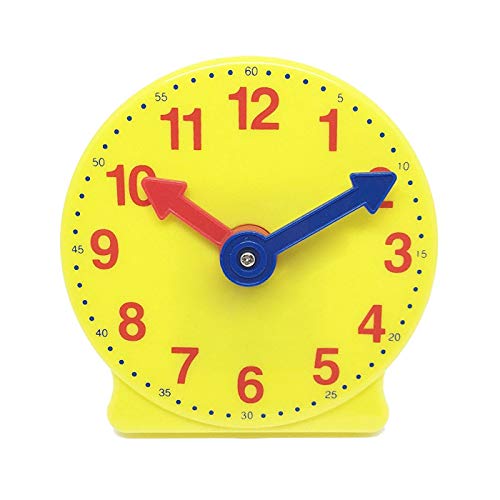
This plastic mini geared clock uses movable, color-coded hands to illustrate the relationship between hours and minutes in a tangible way. The red hour hand and blue minute hand provide clear visual cues for learners to manipulate and observe how time changes with each minute. As a classroom kit, it supports small-group activities and individualized practice, making it suitable for structured lesson plans or at-home review sessions.
Learning Resources Big Time Student Clock

Although not in the five selected primary entries, this entry is included to compare a larger demonstration clock with gears that automatically advance the hour hand when the minute hand is moved. It provides a robust, classroom-oriented reference for developing time-telling fluency, particularly suitable for teacher demonstrations or group instruction. The movable minute hand supports incremental learning and helps students connect digital and analog representations of time.
Buying Guide: Key Purchase Considerations
- Learning style alignment: Choose a tool that matches how your child learns best—interactive talking clocks for auditory learners, multisensory activity sets for hands-on learners, or silent clocks for focus during study time.
- Age and difficulty: Start with products designed for younger children (ages 3–6) and progress to more complex demonstrations as mastery grows.
- Hands-on vs. visual cues: Consider whether movable hands, color-coding, or digital-analog combination helps reinforce concepts most effectively for your child.
- Classroom vs. home use: Classroom kits may include bigger clocks and multiple components; home use benefits from compact designs or kid-friendly features like sleep modes to minimize disturbance.
- Durability and ease of use: Look for sturdy clocks with large, legible numerals and simple manipulation to encourage frequent practice without frustration.
- Support materials: Additional activity cards, e-books, and lesson ideas can extend learning beyond the clock itself and help teachers and parents structure lessons.
- Noise level: Non-ticking or silent clocks reduce distractions in study areas or bedrooms, aiding concentration and longer practice sessions.
These considerations help balance instructional value with practicality. When selecting a clock or set, think about how it will fit into daily routines, how it supports ongoing practice, and how it scales as a child’s time-reading skills improve. Choosing a diverse mix of clocks can accommodate various learning moments—quiet study times, daily routines, and classroom demonstrations—while providing consistent practice in telling time.