Best Coding Toys for Girls That Encourage Creativity and Problem Solving
Discover screen-free and hands-on coding toys that empower girls to explore STEM skills through play. The following selections combine logical thinking, robotics, and creative challenges to suit a range of ages and interests—from beginner friendly to more advanced coding concepts. Each product showcases engaging activities designed to inspire persistent curiosity and technical confidence.
| Product | Brand | Key Feature |
|---|---|---|
| Learning Resources Botley the Coding Robot | Learning Resources | Screen-free coding with 80-step programming |
| Learning Resources Code & Go Robot Mouse | Learning Resources | Screen-free, toddler-friendly programming concepts |
| ThinkFun Hacker Cybersecurity Coding Game | ThinkFun | Hands-on coding principles through gameplay |
| Doctor Jupiter Pixel Art Kit | Doctor Jupiter | Pixel art with basic coding concepts, 100+ challenges |
| Learning Resources Switcheroo Coding Crew | Learning Resources | Three-in-one vehicle coding missions for preschoolers |
Botley The Coding Robot: Screen-Free Programming

Botley offers screen-free entry to programming fundamentals, eliminating tablets or smartphones while building essential STEM skills. Suitable for ages 5+, Botley supports 80-step programming, loops, and advanced obstacle detection that scales with a child’s growing abilities. It arrives ready to use right out of the box and uses a simple remote coding interface that even younger children can master with minimal parental guidance. The engaging, button-driven controls help kids visualize sequences, cause-and-effect, and foundational logic without screen time.
What to know
- Screen-free design encourages hands-on learning.
- Expands with increasingly complex programming tasks.
- Requires 5 AAA batteries (not included).
BeAndge 6-In-1 STEM Robotics Kit

This multi-activity kit invites kids to build and explore through six different STEM projects, including a reptile robot, a balance car, a bubble machine, a fiber lamp, and a buzzer-driven game. It’s designed to spark curiosity and pride as children assemble their own gadgets. While some components (like bubble solution and batteries) are not included, the package provides a compelling gift experience with high replay value. The project-based approach makes science feel approachable and fun, helping budding makers develop planning and problem-solving skills.
What to know
- Encourages hands-on construction with varied outcomes.
- Great for family bonding and teamwork on science projects.
- Gift-ready packaging enhances appeal for birthdays and holidays.
ThinkFun Hacker Cybersecurity Coding Game

Hacker brings cybersecurity concepts to life through engaging gameplay. With a clear focus on programming principles, players learn debugging, sequencing, and algorithmic thinking while completing missions. The game includes a grid, control panel, challenge booklet, tokens, and a solution guide, offering a robust blend of strategy and logic. It’s well-suited for kids age 10 and up and has broad appeal for both independent and cooperative play, facilitating stealth learning through play rather than explicit instruction.
What to know
- Global reputation for educational value and durable design.
- Encourages reasoning, planning, and strategic thinking.
- Includes comprehensive components for varied challenges.
Learning Resources Code & Go Robot Mouse
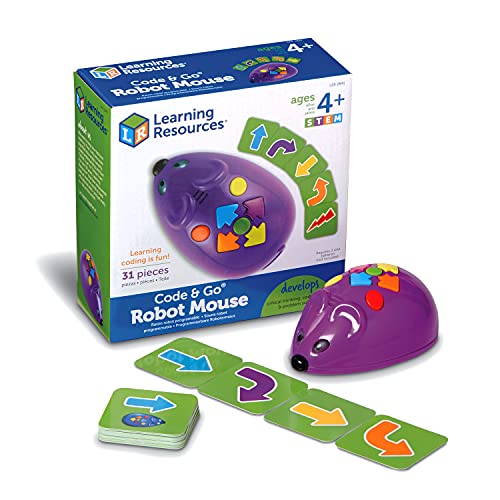
This toddler-friendly programmable mouse introduces coding concepts through a screen-free, hands-on experience. Its design supports multiple learning styles with colorful buttons, directional cards, and light-up sounds that engage visual, tactile, and auditory learners. Children plan routes, create sequences, and think logically about guiding the robot to its destination, fostering early STEM skills and problem-solving without screens. A gentle entry point to computational thinking makes it suitable for preschool and early elementary levels.
What to know
- Introduces basic coding concepts to young learners.
- Supports diverse learning preferences with multiple interaction modes.
- Encourages planning, sequencing, and spatial reasoning.
Doctor Jupiter Pixel Art Kit

The Pixel Art Kit blends creativity with early coding concepts through interactive challenges. More than 100 activities cover symmetry, coordinate plotting, art-by-numbers, and introductory coding tasks. The kit provides a screen-free way to build math skills, logic, and spatial thinking while producing colorful artwork. It’s ideal for kids who enjoy hands-on projects and visual problem-solving, offering a structured pathway from simple to complex tasks.
What to know
- 100+ challenges promote sustained engagement.
- Integrates math, logic, and creative expression.
- Screen-free activities reduce digital dependency.
Learning Resources Switcheroo Coding Crew

Switcheroo Coding Crew provides preschoolers with a three-in-one rescue robot and a town map for interactive problem solving. Children switch the robot between a police car, fire truck, and construction vehicle to complete coding missions, reinforcing early sequencing and directional thinking. The included 9-piece map and simple buttons support progressive challenges. The activity fosters executive functions like planning and flexible thinking, while remaining accessible for young children and their caregivers.
What to know
- Three vehicle modes expand play scenarios.
- Hands-on coding without screens aids focus and comprehension.
- Supports developmental milestones in early STEM.
Buying Guide: Key Purchase Considerations
- Age and complexity: Choose products that align with a child’s current development stage and gradually introduce harder challenges as skills grow.
- Screen-free appeal: For parents prioritizing non-digital play, screen-free options like Botley, Code & Go Robot Mouse, and Switcheroo offer valuable experiential learning.
- Learning style alignment: Visual, tactile, or auditory learners may benefit from devices with colorful buttons, physical cards, or audio cues. Combining products can address multiple learning preferences.
- Durability and safety: Look for sturdy construction, age-appropriate batteries, and simple, safe operation to support long-term use.
- Educational goals: Consider whether the focus is on basic coding concepts, problem solving, or advanced algorithmic thinking and choose accordingly.
- Expansion potential: Some kits scale in complexity or include additional activities, supporting ongoing growth and interest in STEM fields.
- Gift suitability: Gift-ready packaging and the inclusion of family-friendly activities can enhance the overall experience and encourage collaborative learning.