Best Color Changing Clocks for Toddlers: Sleep Training Timers for Calm Mornings
Parents seeking calmer wake-up routines often turn to color-changing clocks that teach toddlers when it’s time to sleep and time to rise. The following selections are popular, store-bought options designed to simplify mornings and improve bedtime habits through visual cues, lights, and gentle sounds. Each product below is a trusted wake-up clock with kid-friendly designs, multiple colors, and intuitive controls suited for toddlers and young children.
Summary of chosen products:
- ANNNGUL Kids Alarm Clock, Ok to Wake Clock with Green Light Red Light, Toddler Sleep Training Clock for Children
- Stay-in-Bed Clock for Kids – Toddler Sleep Trainer, Night Light & Alarm
- H-chin Kids Alarm Clock, Toddler Sleep Training Clock with Night Lights, Sound Machine
- iHoo Toddlers Sleep Training Clock, Kids Alarm Clock with Night Light & Nap Timer
- iHoo Ok to Wake Kids Alarm Clock, Toddler Sleep Training Clock with Touch Night Light
ANNNGUL Ok to Wake With Green And Red Lights

The ANNNGUL Ok to Wake Clock uses a color-based cue system to teach toddlers when to stay in bed and when to wake. Green indicates it’s okay to rise, while red suggests staying in bed. The design emphasizes an intuitive layout, so parents can set up the clock quickly without navigating a maze of buttons. A dimmable night light with multiple color options helps comfort anxious kids at bedtime and reduces glare during night awakenings. The clock’s straightforward interface makes it suitable for first-time clock users and kids transitioning to independent routines.
Key features include a simple color-coded wake signal, a five-level brightness dimmer, and an easy-to-use control surface. Parents can customize color states to align with their child’s routine, making mornings predictable without repeated reminders. The compact form factor fits well on bedsides or nursery shelves, and the built-in night light offers enough ambient glow to ease children through the night without overstimulation.
Stay-in-Bed Clock For Kids
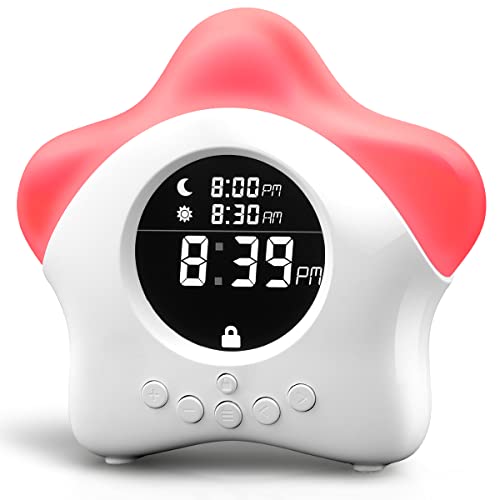
Learn & Climb’s Stay-in-Bed Clock is a toddler-friendly sleep trainer that uses a four-color light system to guide wake times. Red signals bedtime, yellow prompts “almost time,” and green confirms it’s okay to start the day. A durable DC power option plus a battery backup helps preserve settings during outages, which is ideal for households with unreliable electricity. The device focuses on gentle visual cues rather than loud alarms, fostering gradual independence in early risers while keeping family sleep undisturbed.
Additional elements include a kid-sized footprint design, a soft LED palette, and a simple setup that minimizes buttons. The clock’s color transitions provide a predictable routine that can be calibrated to a child’s sleep needs, supporting better rest and more consistent mornings for the whole household.
H-chin Dino Alarm Clock With Night Lights
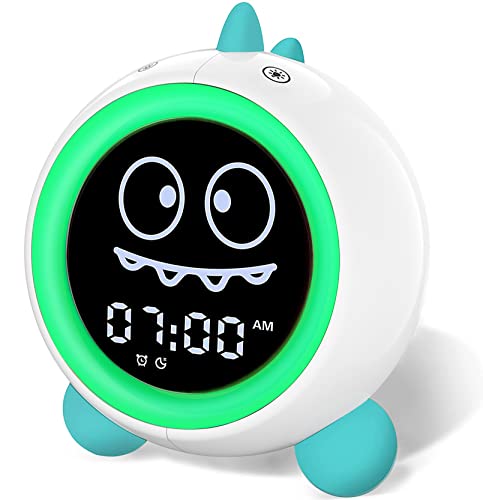
H-chin’s Dino Alarm Clock blends a friendly dinosaur theme with color signals to teach young children when to wake. The clock uses colored lights and facial expressions to convey time concepts, making it engaging for toddlers who respond to visuals. It also functions as a night light with a choice of nine colors and a dimmable face to avoid brightness-related sleep disturbances. In addition, a built-in sound machine offers a selection of white noise, lullabies, and nature sounds to mask household noises that could disturb sleep.
The product blends sleep training with sensory features designed for early childhood. The dinosaur motif adds playfulness to bedtime routines, while the adjustable light and sound options keep the experience calm and predictable, supporting longer, more restorative sleep for kids and easier mornings for parents.
iHoo Sleep Training Clock With Sun And Moon

The iHoo Toddlers Sleep Training Clock uses sun and moon visuals to indicate wake and sleep times, making it easy for young children to understand day-night routines. The sun rising to green means it’s time to get up, while the moon turning red signals bedtime. This model includes six soothing sounds and an auto-off timer, supporting a smoother transition to independent sleep. A 30-, 60-, 90-, or 120-minute option gives parents control over how long the nap or bedtime routine lasts.
What makes this clock versatile is its combination of time-based cues, calming audio, and adjustable timers. The visual metaphors align well with toddler comprehension, potentially reducing early rising and increasing nighttime rest for the family as a whole.
iHoo Ok To Wake Clock With Touch Night Light

The iHoo Ok to Wake Clock emphasizes color-coded signals alongside touch-ready night lighting and a nap timer. The wake signal uses a green light with a smile emoji, while sleep mode employs red with a sleep emoji, offering a straightforward way for children to learn routines. The device includes snooze capabilities and several volume levels for the built-in sounds, supporting longer, more restful nights for toddlers who respond to gentle cues rather than loud alarms.
Numerous practical features include a dual-alarm option for varying schedules, a simple control surface, and a soft ambient glow that can be left on for comfort. This model appeals to households seeking a balance of visual cues, audio support, and flexible scheduling to accommodate weekday and weekend routines alike.
Buying Guide: Key Purchase Considerations And Comparisons
When choosing a color-changing clock for a toddler, consider how each device supports sleep hygiene, ease of use, and family routines. Here are essential factors:
- Visual cues: Colors, icons, and animations should clearly indicate sleep and wake times and align with your child’s understanding level. Some clocks use sun/moon imagery, others rely on green/red lights or emojis.
- Ease of use: Look for a simple interface with limited buttons and intuitive setup. Parents benefit from straightforward configuration to minimize bedtime friction.
- Light and sound options: A dimmable night light reduces glare, while a selection of soothing sounds can help mask home noises and ease transitions.
- Power options and reliability: DC/battery backup or plug-in models help preserve settings during outages. Consider whether you want a battery backup for reliability in emergencies.
- Scheduling flexibility: Dual alarms or multiple daily schedules support varying routines across weekdays and weekends.
- Durability and design: A kid-friendly look with durable construction helps the clock endure daily use and play. The presence of a familiar theme, such as dinosaurs, can improve engagement for toddlers.
- Price and value: While avoiding price references in this article, compare feature sets to determine which clock provides the best long-term sleep support for your family needs.
Overall, color-changing clocks for toddlers offer a non-confrontational method to teach sleep consistency. By combining visual signals with gentle audio options and adjustable light levels, these devices aim to reduce early wake-ups and support healthier sleep patterns for children and parents alike. Consider your child’s temperament, bedtime routine, and the level of parental involvement when selecting the best clock for your home.