Best Cooperative Card Games for Family Fun and Teamwork
Cooperative card games pit players against the game itself, rewarding communication, planning, and shared strategy. This guide highlights five standout options that span family-friendly dynamics to more strategic teamwork, all designed to be quick to learn and easy to play in a game night lineup. Read on to compare play length, player counts, and unique mechanics that make each title a strong pick for groups seeking collaboration over competition.
| Product | Players | Play Time | |
|---|---|---|---|
| Pandasaurus Cooperative Strategy Card Game (The Game) | 1-5 | 20 minutes | Group problem-solving with a fast pace |
| The Crew – Mission Deep Sea | 2-5 | 20-40 minutes | Cooperative trick-taking with layered objectives |
| The Mind | 2-4 | 15-20 minutes | Non-verbal synchronization challenges |
| Forbidden Island | 2-4 | 30-45 minutes | Strategic risk management in a sinking island |
| The Fellowship of the Ring: The Lord of the Rings Trick-Taking | 1-4 | 20 minutes | Narrative cooperative quest across Middle-earth |
Pandasaurus Cooperative Strategy Card Game
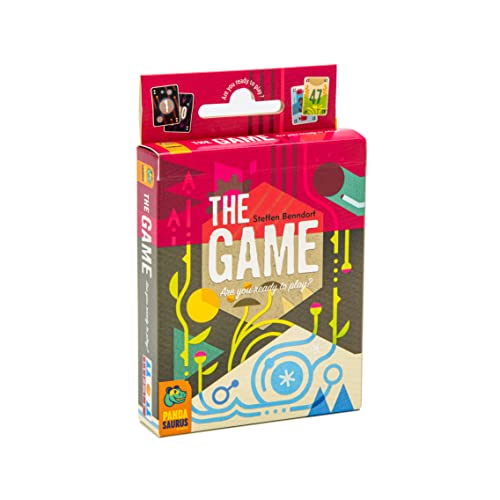
The Game from Pandasaurus Games is designed to encourage teamwork as players attempt to beat the game by working together under shared constraints. Its appeal lies in accessible rules paired with escalating challenges that feel fresh across sessions. The game supports up to five players, making it a fit for larger family nights or casual friend groups. The cooperative structure emphasizes reading teammates’ cues and coordinating moves to avoid failing the round. With broad market recognition, the title has achieved substantial popularity and long-term replayability, often cited for its balanced tension and quick setup.
The Crew – Mission Deep Sea

The Crew: Mission Deep Sea is a follow-up to a celebrated cooperative trick-taking concept, set under an aquatic narrative. Players must collaborate to win the right tricks at the right times, navigating a series of missions with increasing difficulty. The game scales well from two to five players and offers a mix of deterministic objectives and flexible player roles, encouraging strategic discussion and synchronized plays. Its modular mission design provides high replay value and a sense of progression, distinguishing it from more static co-ops.
Pandasaurus Games The Mind

The Mind is a card-collection challenge that tests silent coordination more than strategic manipulation. Players attempt to play cards in ascending order without talking, relying on non-verbal cues and shared rhythm to synchronize their plays. This minimalist design yields rapid rounds and tight group dynamics, making it a strong pick for smaller gatherings or quick social sessions. Though simple on the surface, the game rewards attentive listening, timing, and subtle teamwork across all participants, which can lead to surprisingly intense moments of cooperative play.
Forbidden Island

Forbidden Island invites players to work as a team to retrieve sacred treasures from a sinking island. The cooperative objective emphasizes strategic planning, risk management, and resource allocation as the board progressively floods. The art and scenario design help set a thematic tone that complements teamwork, while the rules are approachable for families and mixed-age groups. The game challenges groups to balance courage and caution, balancing short-term decisions with long-term survival across multiple playthroughs.
The Fellowship of the Ring: Cooperative Trick-Taking

This Lord of the Rings themed trick-taking game places players on a cooperative quest through Middle-earth. It blends familiar narrative elements with a cooperative twist on traditional trick-taking mechanics, encouraging team communication and shared strategy to progress chapters from the Shire onward. The game is suitable for a wide age range and supports a range of player counts, offering a thematic option for fans of Tolkien who want a lighter, social strategy experience.
Buying Guide: Core Considerations for Cooperative Card Games
- Group size and play time: Choose titles that align with your typical game night length and the number of players. Some games scale well from two to five players, while others shine at larger groups but might require more setup.
- Learning curve and accessibility: For mixed ages or casual players, prefer games with quick setup and simple rules that still offer depth through cooperative decisions and emergent gameplay.
- Replayability: Look for titles with variable scenarios, modular missions, or evolving objectives to keep sessions fresh and engaging across multiple plays.
- Communication mechanics: Cooperative games vary in how players can share information. Non-verbal coordination and hidden information add different flavors of teamwork and challenge.
- Thematic flavor: Consider whether you want a light, family-friendly theme or a richer narrative backdrop that supports immersion without complicating the rules.
- Age and accessibility: Ensure the chosen games are appropriate for your typical players, especially when kids are involved, to maximize enjoyment and reduce friction.
- Durability and portability: If you travel or attend game nights away from home, compact boxes and durable components can be a practical advantage.
- Decision pressure and pacing: Some co-ops reward cautious collaboration while others encourage bold, high-stakes decisions; pick a style that matches your group’s preferences.