Best Counting Sticks for Math Learning
Counting sticks and related math manipulatives help children build number sense, patterns, and early arithmetic skills through hands-on exploration. This guide highlights five top counting stick sets and wooden abacus options that support math learning at home or in the classroom. Each pick emphasizes durable construction, safe materials, and clear numeracy value to aid independent practice or guided instruction.
| Product | Brand | Grade/Use | Notes |
|---|---|---|---|
| Alytimes Counting Stick Block Set | Alytimes | Early Math | Wooden, includes number blocks and rods |
| Counting Stick, 100Pcs | VBESTLIFE | Preschool to Elementary | Plastic counting sticks in various patterns |
| KUTOI Counting Number Blocks and Sticks | KUTOI | Preschool | Includes math signs, numbers 0–9, counting rods |
| Umbresen Montessori Math Toy | umbresen | Preschool | Wooden sticks, cards, and box |
| Zerodis Counting Stick | Zerodis | Elementary | Colorful sticks for patterns and operations |
Alytimes Counting Stick Calculation Math Educational Toy
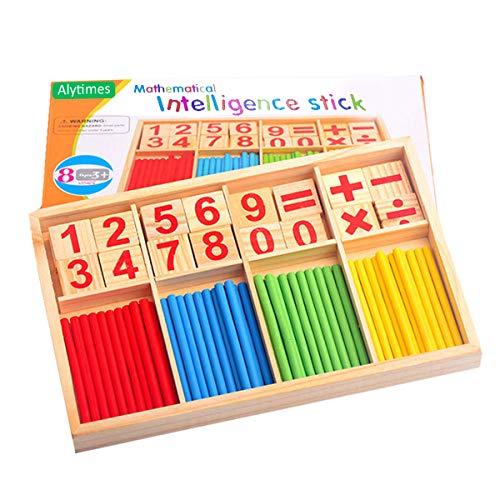
The Alytimes Counting Stick Block Set combines wooden number cards with counting rods to support recognition of quantities and the relationship between numbers and amounts. The dimensions are roughly 23 x 15 x 2.2 cm, with a durable wood construction and a child-safe finish. This kit is designed for homeschool math activities, enabling learners to connect counting sequences with physical blocks. The included number blocks help young students visualize place value and grouping, making it easier to grasp addition and subtraction concepts through manipulatives. The set invites guided play or independent exploration, reinforcing early math fluency.
Counting Stick, 100Pcs

VBESTLIFE’s Counting Stick set provides 100 plastic counting sticks suitable for classroom or home practice. The sticks are designed to support counting operations, pattern creation, and basic arithmetic. The product emphasizes a smooth finish, careful polishing, and a glossy exterior for comfortable handling. Children can arrange sticks into various configurations to explore patterns, sequences, and counting patterns. This set is especially helpful for demonstrating addition and subtraction through tangible manipulation and visual patterning, promoting flexible thinking during early math lessons.
KUTOI Counting Number Blocks And Sticks

KUTOI offers a Montessori-inspired kit featuring counting rods, number blocks, and storage, designed to support early numeracy and arithmetic readiness. It includes five math signs, 19 numbers from 0 to 9, and 52 counting rods to facilitate hands-on counting, number recognition, and simple addition or subtraction exercises. The set emphasizes early learning, making it suitable for preschool and elementary contexts, homeschool use, or classroom centers. The materials aim to help children visualize quantities and understand number relationships through tangible manipulatives and orderly storage for easy cleanup.
Umbresen Montessori Math Toy With Box

The Umbresen set centers on a wooden storage box containing 5 math signs, 19 number cards (0–9), and 48 counting rods alongside 9 x 6 x 0.8 inch dimensions. The emphasis is on safety and durability through natural wood and a careful paint finish. The collection aims to enrich imagination, support logical thinking, and improve hand-eye coordination. The color-coding of the counting rods provides a visual cue for patterning and early arithmetic, which can be particularly effective in guided math sessions or home play, reinforcing concept links between quantity, number words, and operations.
Zerodis Counting Stick Set

Zerodis presents a colorful set of counting sticks suited for pattern practice, color recognition, and arithmetic training. The sticks are designed to attract children with vibrant colors while enabling practice with basic addition and subtraction. This kit supports home learning and group activities, where students can explore counting sequences, patterns, and simple operations. The bright color palette can make math sessions more engaging and helps children distinguish quantities visually while building foundational math fluency.
Cltoyvers Wooden Abacus For Kids

The Cltoyvers abacus kit blends classic counting sticks with a 100-bead wooden abacus and 110 math cards. The top card display supports equation visualization, illustrating how the beads represent addition and subtraction. The wooden frame is sturdy, holding 10 wires with 10 beads each for a total of 100 beads. This combination provides a tactile and visual approach to early math concepts, enabling learners to manipulate numbers physically while seeing arithmetic operations in action. It’s well-suited for classroom centers or at-home math stations focused on foundational numeracy skills.
Ranqibo Wooden Abacus For Kids

Ranqibo’s wooden abacus combines 10 rows with 100 beads, plus counting sticks, number cards, and counting counters. The set targets safe, durable construction suitable for children aged 3 and up. It supports early math skill development, including counting, basic operations, and color recognition through tactile, hands-on play. The multi-functional design makes it a versatile learning tool for both home use and classroom activities, encouraging kids to engage with numbers, sequences, and visual math representations in a playful context.
KIDWILL Preschool Math Learning Toy
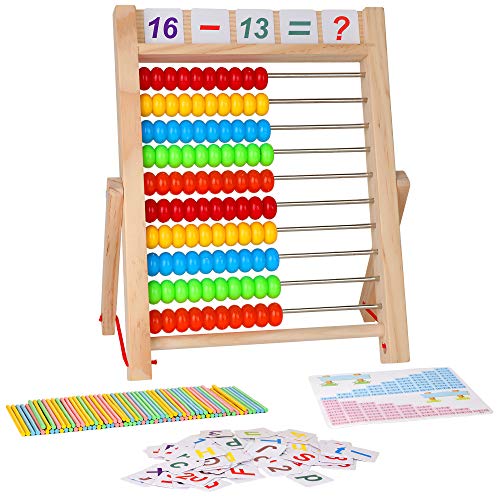
KIDWILL offers a 10-row wooden frame abacus enhanced with multi-color beads, counting sticks, and number alphabet cards. The design emphasizes early color recognition, counting abilities, and foundational math operations, with additional emphasis on alphabet familiarity. The wooden construction prioritizes safety and durability, making it suitable for toddlers and early elementary learners. This kit supports guided instruction and independent math exploration, helping children build fine motor skills while engaging with numbers and early numerical concepts.
Buying Guide: Key Purchase Considerations
When selecting counting sticks and related math manipulatives, consider these factors to ensure a tool that matches developmental goals and classroom needs:
- Age and developmental stage: Choose sets aligned with the child’s ability to count, recognize numbers, and perform basic operations.
- Material quality and safety: Look for sturdy wood or BPA-free plastics, smooth finishes, and low VOC coatings for long-lasting use and safe handling by young learners.
- Durability and maintenance: Consider whether the set is easy to clean and store; wooden boxes and trays support organization and repeated use.
- Educational value: Prioritize manipulatives that clearly connect physical objects to number concepts, such as place value, counting sequences, and patterns.
- Storage and organization: Sets with a lid, box, or tray simplify cleanup and help keep components together for classroom settings.
- Expansion potential: Some kits include number cards, operation signs, or additional counting rods, enabling progressively more complex activities.
- Visual and color features: Color-coded beads or rods can aid pattern recognition and help children distinguish values and groups more easily.
- Teacher or caregiver support: Look for resources or guides that accompany the kit to structure activities and learning progressions.
In practice, parents and educators may mix and match sets to build a comprehensive math center. Begin with basic counting and patterning, then gradually introduce addition and subtraction using the rods and cards. For classroom use, pair manipulatives with targeted mini-lessons to reinforce concepts and track growth over time. By combining tactile tools with visual aids, learners can develop a robust foundational understanding of numbers and arithmetic.