Best Counting Tools for Kindergarten: Top Math Toys and Learning Aids
Discover engaging counting tools designed to build number sense, counting fluency, and early math confidence for kindergarten students. The following selections blend hands-on exploration with visual supports to help young learners move from recognizing numbers to performing simple arithmetic. Each pick emphasizes safe materials, durable design, and classroom- or home-friendly use.
| Product | Brand | Highlights |
|---|---|---|
| Montessori Toys for 3-5 Year Old | BSADIY | Number recognition, counting, addition/subtraction |
| Coogam Magnetic Ten-Frame Set | Coogam | Visual ten-frame, counters, dry-erase markers |
| Aizweb Counting and Color Sorting Toys | Aizweb | Counting, color sorting, fine motor, sequencing |
| School Zone Numbers 0-25 Flash Cards | School Zone | Numerical range, addition/subtraction practice |
| Suwimut Wooden Counting Peg Board | Suwimut | One-to-one counting, visual number representation |
Montessori Number Blocks Set

The Montessori number blocks help children progress from number recognition to counting and basic arithmetic. This wooden set supports hands-on learning as kids combine finger boards with numbered blocks to solve simple addition and subtraction problems. The design encourages curiosity, logical thinking, and problem-solving skills, while the materials are natural wood, sanded smooth for safe daily use. Durability supports ongoing classroom or family learning sessions and fosters a positive early math experience.
Coogam Magnetic Ten-Frame Set
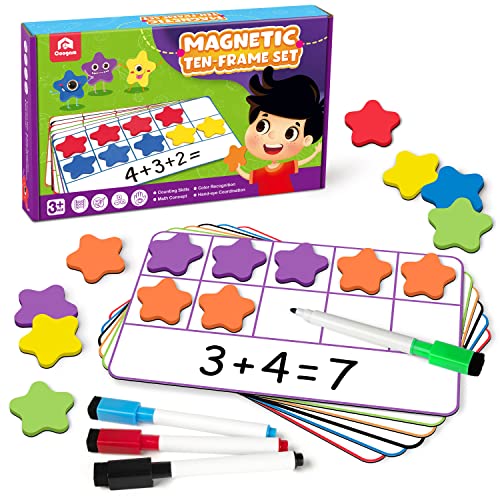
The magnetic ten-frame set provides a concrete way to visualize ones and tens, supporting early place-value understanding. With six color boards, counters in ten shapes, dry-erase markers, and a portable storage bag, it enables flexible, hands-on practice in addition, subtraction, and basic arithmetic reasoning. The reusable boards and vibrant counters help children internalize number relationships while fostering independent exploration and classroom collaboration.
Aizweb Counting and Color Sorting Toys

This Montessori-inspired set combines counting with color sorting and fine motor development. Children grip beads with tweezers to sort by color and count, using 20 double-sided activity cards to vary tasks. The activity reinforces early math concepts, color awareness, and hand-eye coordination, while building a solid pencil grip foundation for writing tasks in later grades.
Numbers 0-25 Flash Cards

Flash cards covering numbers 0 through 25 provide quick, portable practice for recognition, counting, and simple arithmetic. This tool supports independent work, small-group instruction, and quick assessment to monitor progress in foundational math skills. Cards encourage visual and verbal processing of numbers, helping students connect numeral symbols with quantities.
Suwimut Wooden Counting Peg Board

This double-sided wooden peg board includes multiple counting toys, pegs, and a carrying bag for portability. Kids can visually map numbers through peg placement, reinforcing one-to-one correspondence, counting accuracy, and early math concepts. The resource supports both independent practice and guided activities, suitable for home or classroom use.
Buying Guide: Key Purchase Considerations for Kindergarten Counting Tools
When selecting counting tools for kindergarten, consider the following aspects to ensure age-appropriate challenge, safety, and lasting educational value:
- Learning goals: Match tools to foundational skills like number sense, counting accuracy, one-to-one correspondence, and early arithmetic.
- Hands-on vs. visual aids: A mix of concrete manipulatives (blocks, pegs) and visual supports (ten-frames, flash cards) helps diverse learners.
- Durability and materials: For frequent use, choose sturdy wooden or high-quality plastic pieces with smooth finishes and rounded edges.
- Portability and storage: Consider sets that include bags or organizers for easy transport between home and school.
- Progression potential: Select tools that can scale with growing skills, from recognition to simple addition and subtraction.
- Inclusivity and accessibility: Look for color contrast, varied counting aids, and multiple ways to engage with the material for diverse learners.
- Teacher and caregiver usability: Clear instructions, simple setup, and quick activity ideas help with classroom management and at-home practice.
- Safety standards: Ensure products comply with safety guidelines appropriate for preschool and kindergarten children.
- Cost and value: Compare price against durability, included features, and the breadth of activities to maximize long-term value.
- Replacement parts: Availability of extra counters, cards, or pegs can extend the lifespan of a kit and reduce downtime.
In practice, combining a durable manipulatives set with visual counting tools offers a balanced approach. For example, a wooden peg board can build one-to-one correspondence, while ten-frame activities reinforce place value concepts. Flash cards provide quick review and assessment, complementing interactive play with structured practice. By integrating multiple formats, educators and families can tailor experiences to individual learners while maintaining consistent exposure to core counting skills.