Best Developmental Toys for 1 Year Old Boy: Top Picks for Learning and Play
Finding developmentally appropriate toys for a 1-year-old boy can support early learning in areas like fine motor skills, hand-eye coordination, and problem-solving. The following selections are designed to be safe, educational, and engaging for this age stage. Each toy encourages exploration through sensory play, sorting, and cause-and-effect activities, helping young children build confidence as they master new skills. Below is a quick overview of five strong options, followed by detailed product sections and a practical buying guide.
| Product | Brand | Key Benefit |
|---|---|---|
| Montessori Shape Sorter | kecristv | 20-piece wooden set; color and shape recognition; fine motor practice |
| Pound Ball & Car Ramp | hahaland | 2-in-1 sensory toy; fine motor + gross motor play; cause-and-effect |
| Chomp and Count Dino | VTech | Colorful counting and feeding game; songs and phrases for early literacy |
| Wooden Hammering & Xylophone | Joyreal | Multi-activity set; music, hammering, fishing; builds coordination |
| Press to Go Car Toys | iPlay, iLearn | Battery-free friction cars; simple, safe, bright visuals for sensory learning |
Montessori Shape Sorter — 20 Pieces Of Wooden Learning

The kecristv wooden shape sorter offers a robust set of 20 blocks in five colors and five geometric shapes. Its chunky pieces are designed for tiny hands to grasp easily, supporting precise pincer grip development. The blocks are finished with non-toxic, odorless, food-safe paint, reducing the risk of surface chipping or fading. Toddlers can stack, sort by color and shape, and progress toward more complex puzzles. The open-ended design encourages experimentation and verbal labeling as kids describe colors and shapes during play.
Safety and durability are central: pegs and blocks are sturdy, smooth, and free of sharp edges. The large pieces help prevent choking hazards while fostering early problem-solving abilities. This toy is well-suited to family playtimes, as caregivers can model color and shape vocabulary, turn-taking, and cooperative play. For parents seeking a quiet, educational activity that also supports early math and language development, this Montessori set is a compelling option.
2-in-1 Pound Ball And Car Ramp Race Track

Hahaland’s 2-in-1 design combines a pounding ball toy with a car ramp race track, delivering multiple modes of play that support both fine and gross motor development. The pound balls encourage hand-eye coordination as toddlers hammer to release balls and experience tactile feedback with each tap. The car ramp introduces simple cause-and-effect concepts as cars travel down a rainbow track, sharpening visual tracking and turn-taking skills. The toy’s bright colors and varied textures maintain engagement while building persistence and attention span over time.
This dual-function toy also fosters social play when shared with siblings or caregivers. The pounding feature helps with rhythm and timing, while the ramp racer invites cooperative play as children watch cars race and cheer for each other. Suitable for ages 1-3, it provides a balanced mix of imagination and practical skill-building in a single, compact package.
Chomp And Count Dino
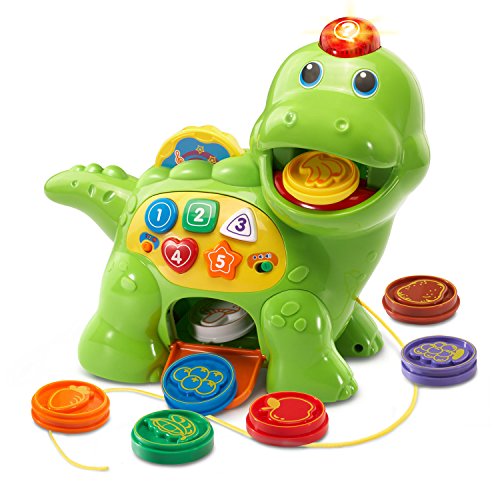
VTech’s Chomp and Count Dino is a friendly dinosaur-themed early learning toy that introduces colors, foods, shapes, and counting. The dinosaur responds with actions and phrases as kids feed him the colored pieces, making the experience interactive and memorable. With an emphasis on early literacy and numeracy, Dino’s questions and interactive prompts encourage children to recognize patterns, count items, and verbalize choices. The toy’s dynamic play modes—counting and meals—offer flexibility for different learning goals and attention spans.
Incorporating more than 130 songs, melodies, sounds, and phrases, this toy adds rich auditory input to support language development. The animal-themed interface helps children connect concepts to familiar imagery, which can improve recall and engagement. For caregivers, it’s a reliable option for short, focused learning sessions as part of daily routines, like mealtimes or quiet playtime.
Wooden Hammering And Xylophone Toy Set

Joyreal presents a multifunctional wooden toy set that blends hammering, a xylophone, a magnetic fishing game, and a gear-spinning activity. This broad ensemble supports a wide range of developmental milestones, including hand strength, dexterity, rhythm, and problem-solving. The hammering activity enhances fine motor coordination and sequential thinking, while the xylophone introduces musical tempo and auditory discrimination. The magnetic fishing game promotes precision in hand movements and color or object matching, making it a well-rounded tool for exploratory learning.
The wooden construction and non-toxic finishes are designed for durability and safety. The calm, natural wood aesthetic provides a soothing play environment that reduces overstimulation. As with other multipiece sets, parents can tailor play to target skills—counting pegs, naming colors, or practicing turn-taking during shared sessions.
Press To Go Car Toys — Friction Cars For Toddlers

iPlay, iLearn offers friction-powered car toys that require no batteries. Pressing the car’s head sends it racing forward, a simple action that reinforces cause-and-effect understanding and gross motor skills. The bright, friendly graphics and smooth edges ensure safe play for curious toddlers who love quick motion and dynamic visuals. This toy supports early cognitive development by encouraging exploration of motion, speed, and spatial awareness, while providing an accessible, maintenance-free play option for caregivers.
Buying Guide: Key Purchase Considerations
When selecting developmental toys for a 1-year-old boy, consider safety, age-appropriateness, and the balance between different skill areas. Look for pieces that are large enough to reduce choking risk, with smooth edges and non-toxic finishes. A mix of activities—fine motor tasks like stacking or hammering, sensory play like color and shape recognition, and simple cause-and-effect toys—helps maintain interest and promotes well-rounded development. Variety supports ongoing engagement and can address different learning styles.
Durability matters, especially for wooden toys. Source items with sturdy construction and simple designs that can withstand rough handling. Also consider the potential for shared play; toys that caregivers and siblings can join in with tend to extend value and learning opportunities. For families seeking quiet, independent play, toys with open-ended potential and fewer bells and whistles are often easier to integrate into daily routines. Finally, assess portability for travel or visits, as compact, travel-friendly toys can be valuable for busy households.
Comparing sets by how they support key milestones—grasp and release, hand-eye coordination, color and shape recognition, and early counting—helps parents tailor choices to their child’s development. For example, shape sorters emphasize cognitive sorting and problem-solving, while racing or pounding toys boost motor planning and timing. A balanced mix of activities across multiple products can provide comprehensive developmental benefits over time.