Best Educational Toys for an 8-Year-Old Girl: STEM Kits and Creative Play
Finding stimulating, age-appropriate toys can boost curiosity, problem-solving, and confidence. This article highlights five top educational options that align with an 8-year-old girl’s growing interests in science, technology, engineering, math, and creative arts. Each pick offers hands-on activities, clear instructions, and safe materials to support independent learning or family project time. Look for kits that foster critical thinking, step-by-step experimentation, and opportunities to share discoveries with friends and family.
Doctor Jupiter First Science Kit For Girls

This science kit invites young girls to explore more than 100 experiments, designed to spark a long-term interest in STEM. The activities emphasize critical thinking by encouraging questions, observations, and world discovery, while remaining approachable with kid-friendly instructions. The kit’s step-by-step manuals help both children and adults understand each project, supporting independent learning or guided exploration with a caregiver. A strong emphasis on problem-solving makes this a practical addition to any educational toy collection.
Crayola Light Up Tracing Pad

The Crayola tracing pad combines creativity with early art skills. It includes a light-up surface, tracing sheets, colored pencils, and a graphite pencil, offering a hands-on way to practice drawing, design, and color theory. The illuminated pad makes tracing more accurate and engaging for kids, while downloadable designs expand play patterns. This gift supports fine motor development and visual-spatial reasoning, with the appeal of a simple, repeatable activity that grows with the child’s skill level.
Blue Marble National Geographic Magic Chemistry Set
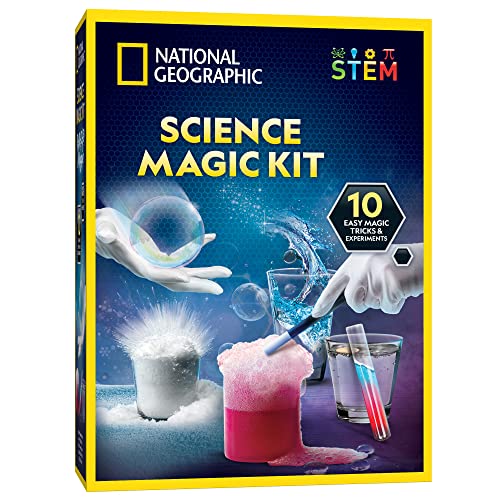
Magic chemistry blends science and wonder with kid-safe experiments that reveal chemistry concepts in entertaining formats. The included magic tricks encourage presentation and storytelling, making science accessible and fun. An illustrated guide helps young scientists understand the science behind each trick while expanding vocabulary related to chemical reactions, states of matter, and observation notes. The kit supports inquiry-based learning and helps children articulate hypotheses and conclusions with confidence.
Airyard Craft Kits: Fabric Flower Bouquets

Arts-and-crafts combine creativity with practical design in this fabric flower kit. Children craft bouquets, learn about color theory, and understand basic floral arrangements. The activity encourages parent-child collaboration, social communication, and planning as kids select textures and color palettes. Beyond sheer enjoyment, this kit introduces concepts from design and geometry, helping to build spatial awareness and fine motor skills through practical, hands-on practice.
Butterfly EduFields 100+ Girls Science Kit

With more than 100 experiments, this kit is designed to captivate girls aged 4-8 and fosters a love for science. It emphasizes safe, hands-on exploration and introduces foundational concepts across multiple disciplines. Parents can use the kit to discuss scientific inquiry, safety practices, and the relevance of experiments to real-world problems. The broad range of activities makes it a versatile gift for curious kids who enjoy trying new things and documenting their findings.
Buying Guide
- Developmental alignment: Choose kits that match an 8-year-old’s range of abilities, staying within safe, age-appropriate materials while offering room to grow with more complex tasks.
- Skill balance: Look for a mix of science, technology, engineering, math, and creative arts to support well-rounded development. A combination of STEM and art-focused toys provides variety and keeps motivation high.
- Learning style: Scan for kits with clear instructions and visual guides to support independent exploration, as well as projects that invite caregiver involvement for collaborative learning.
- Safety and durability: Prioritize non-toxic materials, sturdy construction, and reusable components that withstand frequent handling and transport.
- Future-proofing: Some kits offer expandable activities or downloadable resources. Consider products that provide ongoing challenges and opportunities to document progress or share findings.
- Accessibility: Include variations in activities (e.g., tracing, building, and storytelling) to accommodate different interests and attention spans, ensuring sustained engagement.
- Value and longevity: Assess the number and variety of activities included, plus the potential for reuse in classroom or group settings, to maximize long-term learning.
When selecting educational toys, consider how families can integrate these activities into daily routines—after school sessions, weekend projects, or science-and-craft days. Aim for a mix of individual exploration and collaborative projects to help children articulate their thinking, demonstrate problem-solving steps, and celebrate discoveries.