Best Electric Guitar Strings for Jazz: Warm Tones for Classic and Modern Styles
Jazz guitarists seek strings that deliver warm, rich tones with articulate intonation and smooth playability. This guide highlights five top electric guitar string sets that are favored for jazz, covering flats, half rounds, and nickel-wound options. Each choice emphasizes tone, feel, and durability to help players achieve classic jazz vibrations or modern interpretations without sacrificing clarity.
Summary of chosen products:
| Product | Brand | Type | Gauges | Notes |
|---|---|---|---|---|
| D’Addario XL Pure Nickel Electric (EPN115) | D’Addario | Round Wound Nickel | 11-48 | Vintage tone, rich clean sound, Hex-Core durability |
| D’Addario EHR350 Half Round | D’Addario | Half Rounds | 12-52 | Smooth feel, reduced finger noise, balanced tone |
| D’Addario XL Chromes Flat Wound (ECG24) | D’Addario | Flat Wound Nickel | 11-50 | Ultra-smooth feel, mellow warmth, Hex-Core |
| Thomastik-Infeld Jazz Swing Series Flat Wound | Thomastik-Infeld | Flat Wound Nickel | Set | Rich, traditional jazz tone, historic reputation |
| Ernie Ball Regular Slinky Nickel Wound | Ernie Ball | Nickel Wound | 10-46 | Versatile, industry standard, long-lasting |
D’Addario XL Pure Nickel Electric Strings – EPN115
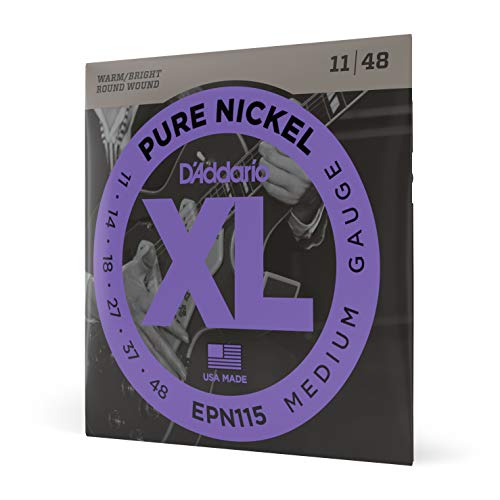
The XL Pure Nickel set EPN115 uses pure nickel wrap wire to evoke the vintage tone associated with 1950s guitars. Players often report a rich, clean sound with a balanced midrange that suits bluesy jazz lines and quiet chord voicings. The Hex-Core design contributes to stable intonation and durable performance, helping maintain consistent feel across bends and dynamics.
D’Addario EHR350 Half Round Electric Strings

The EHR350 Half Round set provides a compromise between round and flat wound textures. The stainless steel wrap wire is ground for a smoother feel and reduced finger noise, which can be appealing for jazz players who prioritize clean, articulate arpeggios and legato lines. Hex-Core construction ensures stable intonation and consistent performance across studio or stage settings.
D’Addario XL Chromes Flat Wound (ECG24)
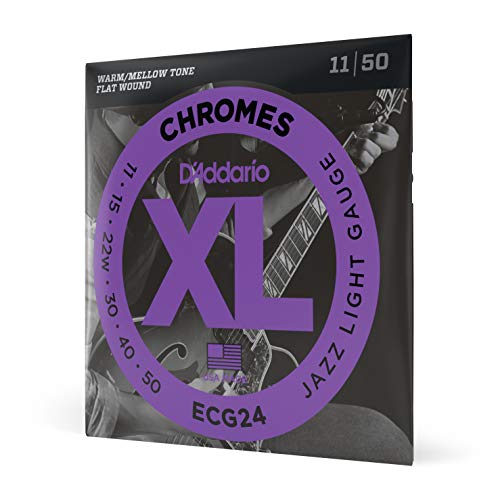
XL Chromes flat wounds are renowned for their ultra-smooth feel and warm, mellow tone. The flattened stainless steel ribbon wrap is finely polished to reduce edginess and deliver a refined voice ideal for jazz comping, chord melody, and smooth legato playing. Hex-Core construction maintains stable intonation and durability for long sessions.
La Bella HRS-JM Jazz Medium Nickel Round Wound

La Bella’s HRS-JM sets are a staple for jazz players seeking a bright yet musical balance. The flat to round transition in this set supports articulate articulation across genres, with gauges suited to mid-to-long scale necks. The result is a strong, lively response with sustained tonal color and long-lasting intonation stability.
D’Addario XL Chromes Flat Wound (ECG24-7)

The ECG24-7 set provides flat-wound warmth with a slightly brighter top end compared to other flats, thanks to precision-wound stainless steel ribbon and polished surface. The Hex-Core helps with precision intonation and a dependable feel, making it a good choice for jazz players who want a polished, professional voice from their instrument.
Thomastik-Infeld Jazz Swing Flat Wound

Thomastik-Infeld Jazz Swing Flat Wounds are a legendary choice for jazz orchestration, offering a warm, traditional jazz voice with clear articulation. The nickel flat-wound construction emphasizes a balanced fundamental with pleasing overtones, enabling smooth chord voicings and expressive lead lines. These strings are trusted by many jazz icons for decades of performance reliability.
Ernie Ball Regular Slinky Nickel Wound

Ernie Ball Regular Slinky is a long-standing standard in electric guitar strings. The nickel-wound construction delivers a balanced tone with good brightness and strong sustain, making it versatile for jazz and other styles. The 10-46 gauge is comfortable for many players and the packing technology helps preserve string life and tone from production to performance.
Buying Guide: Key Considerations For Jazz Players
- Tone character: Flat wounds tend to deliver mellower, darker warmth with smoother highs, ideal for traditional jazz tones. Round wounds are brighter with more bite and texture, suitable for modern jazz and blues-influenced tones. Half rounds offer a middle ground, balancing smoothness and brightness.
- Feel and playability: For long studio sessions or stage performances, smoother strings reduce finger noise and fatigue. Consider the wrap wire finish, grinding, and wire surface when evaluating feel.
- Intonation stability: Hex-Core construction helps maintain accurate intonation across the fretboard, essential for complex chord shapes and jazz progressions.
- Durability and longevity: Jazz players often prefer strings that resist corrosion and retain tone over time. Poly- or nickel-wrapped sets with polished finishes tend to last longer under frequent bending and expressive phrasing.
- Gauge preferences: Lighter gauges (closer to 11-46 or 12-52) are easier to play and great for beginners or light fingerstyle, while heavier gauges yield more volume and sustain for established players seeking a robust jazz voice.
- Scale compatibility: Check your guitar neck scale length. Some jazz players favor medium to long scales to maximize tension for a fuller tone, especially with flats.
- Maintenance: Wipe strings after playing to extend life and avoid corrosion. If finger oils build up on the winding, replace the set promptly to preserve tone and feel.
- Music style fit: If you frequently perform traditional swing or gypsy-inspired lines, flats like Chromes or Thomastik-Infeld Jazz Swing can be particularly suitable. If you blend genres, half rounds or nickel rounds offer versatility across styles.
- Installation considerations: Winding direction, string tension, and neck relief impact setup. For best results, follow the instrument manufacturer’s recommended gauge ranges and consider a professional setup if changing string types notably.
In summary, jazz players can explore a spectrum from warm, traditional flats to balanced rounds and comfortable half rounds. The right choice depends on whether the goal is classic, mellifluous tones or a brighter, modern jazz voice with precise articulation. Each of the five highlighted sets offers distinctive advantages aligned with jazz technique and repertoire, helping players tailor their instrument’s voice to specific musical goals.