Best Electronic Learning Toys for 8 Year Olds: Tech-Driven Fun That Builds Skills
Choosing educational toys that entertain while developing skills is a goal for many parents. The following handpicked electronic learning toys offer interactive challenges, hands-on activities, and screen-free or low-screen options to keep 8-year-olds engaged. Each item emphasizes memory, reading, math, science, or creative thinking, helping children grow through play. The selection below covers a range of interests—from word-building and spelling to STEM challenges and creative drawing.
Summary of chosen products
| Product | Brand | Key Focus | Gift Idea For |
|---|---|---|---|
| PlayRoute Electronic Brain & Memory Game Cube | PlayRoute | Memory, Brain Games | Traveling kids, puzzle lovers |
| Speak & Spell Electronic Game | Basic Fun | Spelling, Language | Young learners, classroom fun |
| Think Academy Interactive Learning Pad | Think Academy | Reading, Numbers, Letters | Screen-free learning fans |
| Smartivity DIY Pinball Machine | Smartivity | STEM, Mechanical Build | Hands-on builders |
| Xinbeiya Rechargeable Game Handheld Cube | Xinbeiya | Memory, Speed, Brain Games | Competitive players, solo challenges |
PlayRoute Electronic Brain & Memory Game Cube
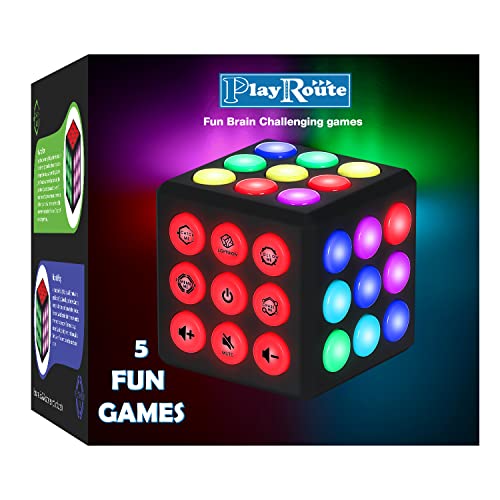
The PlayRoute Light Up Cube provides five engaging light, memory, and brain games designed to entertain while improving recall and attention. It is a compact handheld device suited for travel, making it a practical gift for kids aged 6-12 and even teens. The games emphasize pattern memory and quick responses, with two titles specifically aimed at enhancing memory and concentration through pattern recall.
Educational value centers on memory training and attentional control. The device’s portability supports on-the-go learning and keeps kids mentally active during downtime. The visual cues and time-based challenges encourage focus and strategic thinking. It offers a shared, screen-free option that families can enjoy together, which can reduce passive screen time while preserving cognitive development benefits.
In terms of accessibility, the cube is clearly targeted at a broad age range and is suitable for both boys and girls. The design highlights simple, intuitive controls, and short sessions prevent fatigue. Potential considerations include the need for batteries and the possibility of repetitive gameplay; using it as part of a broader learning routine can mitigate monotony.
Speak & Spell Electronic Game

The Speak & Spell brings a nostalgic yet educational experience with five play modes that cover spelling and word-building. This retro handheld device emphasizes auditory and visual cues, helping learners engage with language in a tactile way. The five modes—Spell, Mystery, Say It, Secret Code, and Letter—offer varied challenges that can be adapted to a child’s language proficiency and curiosity.
Educational impact includes spelling development, phonemic awareness, and confidence with word-solving tasks. The game’s progression levels present rising difficulty that motivates persistent practice. This toy suits classrooms or home use, offering a conversation-starting, interactive approach to literacy. Some users may prefer more modern tech, but the classic interface can be a refreshing break from screen-based learning.
Considerations include durability and the potential need for parental pacing to ensure alignment with learning goals. The “retro” appeal may attract fans of vintage games, while its spelling focus supports core literacy skills. For households seeking language-centered STEM play, this item pairs well with reading activities and word-building exercises.
Think Academy Interactive Learning Pad

The Think Academy Learn-to-Read System presents a screen-free approach to literacy and numeracy. This pad uses sound pages and card inserts to teach alphabet basics, word-building, numbers, and music activities. The device promotes active learning without eye strain, offering exploration modes for discovery and structured game modes for guided lessons. Its expansion plan hints at ongoing content updates, keeping the toy fresh for young learners.
Strengths include a gentle, multisensory learning style that combines tactile cards with audio prompts. This supports early readers and visual-spatial learners while reducing exposure to blue-light screens. A potential limitation is reliance on printed cards, which means physical wear and the need to rotate activities to maintain interest. The device is well-suited for parents seeking a quieter, screen-light educational alternative.
Overall, it provides a versatile, long-term learning platform that covers reading, numbers, and language arts. It can complement classroom work or serve as a primary home learning tool for families prioritizing screen-free play and hands-on activities.
Smartivity DIY Pinball Machine

The Smartivity DIY Pinball Machine combines mechanical construction with arcade-style play. This STEM toy guides kids through building a fully functional pinball setup, fostering problem-solving, reasoning, and engineering concepts. The kit emphasizes hands-on learning, featuring an instructional manual that supports independent or guided assembly. It is designed for ages 8 and up, with parts included to assemble a complete machine and a lifetime supply of replacement parts.
Educational benefits include practical understanding of simple machines, cause-and-effect thinking, and perseverance through a hands-on project. The project-based nature makes it a strong family activity and a classroom-friendly option for group STEM challenges. A consideration is the time and patience required for assembly, which can be a rewarding long-term project if supported with clear instructions and supervision.
Xinbeiya Rechargeable Game Handheld Cube

The Xinbeiya Rechargeable Game Handheld Cube includes 15 brain and memory games with a score screen for feedback. It targets 6- to 12-year-olds, offering solo and competitive modes to suit different play styles. The device challenges players with speed and memory tasks designed to improve concentration and reaction time, making it a strong option for kids who enjoy quick reflex challenges and competitive play.
From a developmental standpoint, this toy supports cognitive flexibility, visual processing, and strategic thinking. The rechargeable feature adds convenience and reduces ongoing costs. Potential drawbacks include shorter play sessions due to screen-like interactions, but the score screen and progression pacing can help manage this. It complements other brain-training toys and can be used as a warm-up before school tasks or as a family game.
STEM Kits for Kids Crafts 6-12

This BeAndge STEM kit bundles multiple project ideas: a solar-powered car, wind-driven car, obstacle-avoidance robot, transmission tank, and a glider. The kits encourage hands-on experimentation, learning about energy, motion, and robotics. They are designed as a family activity or school project, with a gift-ready presentation that suits curious kids aged 8-12. Batteries are not included, which keeps costs predictable for parents preparing to invest in a multi-project kit.
Key benefits include promoting collaboration, patience, and practical understanding of scientific principles. The wide range of activities supports diverse interests, from engineering and robotics to physics-based problem solving. A consideration is the need for supervision and time to complete each project, as well as ensuring replacement parts and tools are accessible if pieces are missing over time.
Drawing Robot for Kids Montessori

The Drawing Robot offers an interactive, music-enhanced drawing experience with 100 cards and 16 color pens. It is designed to inspire early learners to explore art and creativity while building fine motor skills and cognitive abilities. The Montessori-inspired approach emphasizes guided exploration, making it suitable for home learning environments and classroom centers focused on art and language development.
Strengths include structured prompts, a diverse card set covering animals, nature, food, and everyday objects, and built-in music to maintain engagement. The tool encourages following steps, which supports sequencing and attention to detail. Watch for card wear and ink usage over time, and consider pairing with additional drawing materials for extended use.
JoyCat Kids Learning Tablet

The JoyCat Kids Learning Tablet combines tap-to-read flash cards with 20 listen-and-find games, focusing on phonics, alphabet, basic math, colors, shapes, and songs. It promotes screen-free or low-screen activity while providing a rich auditory experience to reinforce literacy and numeracy skills. The device is designed with autism-friendly considerations, offering predictable, structured play that supports communication and language development.
Educational value includes letter sounds, short vowels, word building, and early reading fluency. The interactive cards support independent practice and guided learning, while the listen-and-find games encourage listening comprehension and focus. Potential drawbacks include a reliance on printed materials and audio prompts, so your child may benefit from periodic content updates or supplemental activities to maintain engagement over time.
Buying Guide: Key Purchase Considerations
- Learning goals: Match toys to foundational skills—reading, spelling, memory, math, and STEM concepts. Consider whether you want screen-free options or devices with light digital engagement.
- Age appropriateness: Ensure the device’s difficulty aligns with an 8-year-old’s cognitive and motor skills to prevent frustration or boredom.
- Durability and safety: Look for sturdy construction, non-toxic materials, and age-appropriate use guidelines. Check for small parts in any kit that could pose choking hazards for younger siblings.
- Engagement and variety: Toys that offer multiple activities or modes tend to sustain interest longer. Consider sets that can be reused in different learning contexts.
- Maintenance: Some kits require batteries or consumables; others are rechargeable. Assess long-term costs and accessibility of replacement parts.
- Family and classroom use: Think about how many children will use the toy and whether it facilitates collaborative, guided, or independent learning.
- Progress and feedback: Toys with scorekeeping or levels provide measurable feedback, which can motivate ongoing practice and clear learning milestones.
- Content updates: Some devices plan expansion packs or new cards. If long-term value matters, prefer products with planned content growth or wide compatibility.
In selecting these options, the aim is to balance cognitive challenge with engaging play. The list includes classic, retro-style learning tools and modern, interactive STEM kits to accommodate different learning styles and household preferences. Parents should consider pairing several products to cover a broad spectrum of skills—reading, spelling, memory, math, and hands-on engineering—without overwhelming a child with too many simultaneous activities.