Best Engineering Sets for 10 Year Olds: Hands-on STEM Toys for Young Builders
Kids aged 10 and up gain valuable skills through interactive engineering sets that blend planning, building, and problem-solving. The following selections focus on robotics, solar power, and metal construction to spark curiosity and sustain interest in science, technology, engineering, and math. Each option emphasizes clear instructions, durable parts, and engaging learning outcomes suitable for classrooms or at-home projects.
Summary Of Chosen Products
| Product | Brand | Key Focus | Age Range | Highlights |
|---|---|---|---|---|
| ELEGOO UNO R3 Smart Robot Car Kit V4 | ELEGOO | Robotics, Arduino-based learning | 8-12+ yrs | Obstacle avoidance, line tracing, mobile control |
| 13-in-1 Solar Power Robots | Bottleboom | Solar-powered robotics, STEAM | 8+ yrs | 13 build options, non-toxic materials |
| LEGO Technic Planet Earth And Moon In Orbit | LEGO | Planetary motion, space science | 10+ yrs | Crank mechanism, moon phases, space décor |
| LEGO Technic Bugatti Bolide | LEGO | Engineering design, motorsport engineering | 9+ yrs | Iconic model, display-worthy |
| Jixin Xyzhi Buildable 3D Metal Kit | Jixin Xyzhi | Metal construction, mechanical assemblies | 8-16+ yrs | 194 pieces, beginner-friendly guidance |
ELEGOO UNO R3 Smart Robot Car Kit V4
ELEGOO UNO R3 Smart Robot Car Kit V4 for Arduino

The ELEGOO Smart Robot Car Kit offers a hands-on introduction to programming, electronics assembly, and robotics for beginners. It serves as an integrated solution for robotics learning and is designed for educational use. The kit includes 24 module parts, such as obstacle avoidance and line tracing modules, and supports control via Android and iOS devices. Its module interfaces use standardized XH2.54 ports to simplify assembly and reduce errors, helping learners progress from basic wiring to more complex projects.
13-in-1 Solar Power Robots
13-in-1 Solar Power Robots Kit

This kit guides children through 13 different robot builds powered by solar energy, encouraging learning about renewable resources and hands-on problem solving. The set includes gears, plates, tires, and shafts, with parts designed for safe, long-lasting play. Clear, step-by-step instructions enable kids to progress from simple to more complex builds, fostering creativity and independent experimentation while illustrating fundamental physics and energy concepts.
LEGO Technic Planet Earth And Moon In Orbit
LEGO Technic Planet Earth And Moon In Orbit
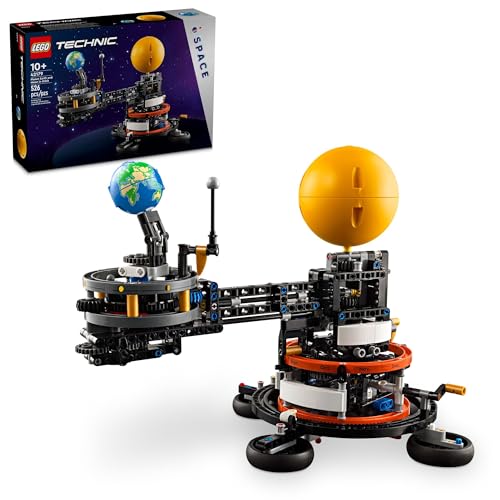
This interactive LEGO Technic set lets learners model the Earth, Sun, and Moon in orbit. By turning a crank, children observe the orbital relationships and how moon phases correlate with seasons. The set blends education with decorative space-themed display value, reinforcing astronomical concepts while expanding fine motor skills and spatial thinking through hands-on assembly.
LEGO Technic Bugatti Bolide
LEGO Technic Bugatti Bolide

The Bugatti Bolide LEGO Technic set introduces advanced vehicle engineering concepts through a highly detailed model. With a dramatic color scheme and intricate build steps, it invites older children to analyze design decisions, explore mechanics, and practice precision assembly. Display appeal adds to its value as a learning tool and collectible project.
Jixin Xyzhi Buildable 3D Metal Kit
Jixin Xyzhi Buildable 3D Metal Kit

This metal engineering kit includes 194 precision components designed to develop spatial reasoning, planning, and mechanical assembly skills. Step-by-step illustrated guidance supports beginners, while the durable metal pieces allow for steady, repeatable builds. The project encourages creative experimentation and offers opportunities to design custom structures beyond the included models.
Buying Guide: Key Purchase Considerations
- Age suitability and skill progression: Look for sets that offer scalable challenges—from basic assembly to more complex engineering concepts—to match a growing 10-year-old’s abilities.
- Learning objectives: Identify kits that teach core STEM topics such as robotics, energy (solar), mechanics, and spatial reasoning to align with school curricula and personal interests.
- Parts durability and safety: Prioritize sets with durable materials, clearly labeled components, and safe, non-toxic materials for younger builders and curious hands.
- Guidance and support: Favor kits with clear, illustrated instructions, online tutorials, or teacher-friendly guides to support independent learning or guided classroom activity.
- Modularity and expandability: Consider kits that can be combined with other sets or upgraded to extend playtime and learning, fostering long-term engagement.
- Display value: Some builds offer aesthetic or collectible appeal for room décor, which can increase motivation to complete and share projects with family.
- Cost versus value: Evaluate the number of builds, quality of components, and potential for ongoing use to determine overall value for the price.
- Safety certifications and supervision: Ensure products meet safety standards and that younger users are supervised during intricate assembly or power-driven components.
What To Consider Before Buying
- Interest alignment: Choose sets that match a child’s curiosity—robotics, solar energy, or mechanical modeling—to sustain engagement beyond the initial build.
- Instruction quality: High-quality guides reduce frustration and improve learning outcomes, especially for self-directed projects.
- Future-proofing: Some kits offer pathways to more advanced kits; this is useful if a child shows sustained interest in engineering topics.
- Storage and organization: Kits with labeled bags and a sturdy storage case help maintain order as projects expand.
- Parental involvement: Consider whether the kit is designed for independent work or collaborative parent-child projects, depending on household preferences.