Best Fine Motor Skills Toys for 6 Month Olds That Promote Early Learning
Choosing the right toys for a 6-month-old can support rapid motor and sensory development. The best options combine safe materials, simple cause-and-effect, and engaging textures or colors that invite reaching, grasping, and hand-eye coordination. Below are five carefully selected toys that align with Montessori-inspired ideas, sensory exploration, and durable design. Each product focuses on building fine motor skills while keeping playtime safe and screen-free for young infants.
| Product | Key Benefit | |
|---|---|---|
| Wooden Montessori 3-in-1 | EARLY EXPLORER TOYS | Multi-lid slots for grip and coordination |
| hahaland 16 PCS Sensory Set | hahaland | Color sorting, textures, and crinkle sounds |
| Spike The Fine Motor Hedgehog | Learning Resources | Stacking and sorting for growing skill levels |
| hahaland Tissue Box Toy | hahaland | Tactile tails and pull-apart play |
| Dinosaur Sensory 12-Piece Set | Yeahbof | Colorful pieces for hand-eye coordination |
Wooden Montessori 3-in-1 Learning Toy

This three-in-one wooden toy centers on three lids of varying shapes to cultivate precision and problem-solving in infants. The geometric lid, round coin-style lid, and flat stick lid encourage grasping, aligning, and slotting with different levels of difficulty. The screen-free design supports open-ended play, while the natural wood texture provides tactile feedback that helps babies learn through exploration. Built for gentle use, it sustains curiosity as babies advance in coordination and finger dexterity.
Features like multi-sensory engagement and choice-driven play promote autonomy without overstimulation. The toy encourages babies to experiment with spatial awareness, color recognition, and hand strength as they insert sticks and align lids. As a durable, long-lasting option, it’s suited to daily exploration and repeated practice in early motor development.
hahaland 16 PCS My First Fruit Vegetable Set

This 16-piece sensory set uses plush fruits and vegetables with crinkly textures, rattles, and varied fabrics to engage fine motor skills through grasping, peeling, squeezing, and sorting. The Montessori-inspired design supports independent exploration, encouraging babies to manipulate pieces to strengthen hand muscles and coordination. Color matching activities help early cognitive development, while soft materials ensure safe practice with minimal risk of harm during mouthing or pulling actions.
The collection promotes problem-solving as babies decide how to group items by color or texture. The crinkle and rattle sounds add auditory feedback for cause-and-effect learning, reinforcing the connection between actions and outcomes in a safe, gentle play setting.
Learning Resources Spike The Fine Motor Hedgehog
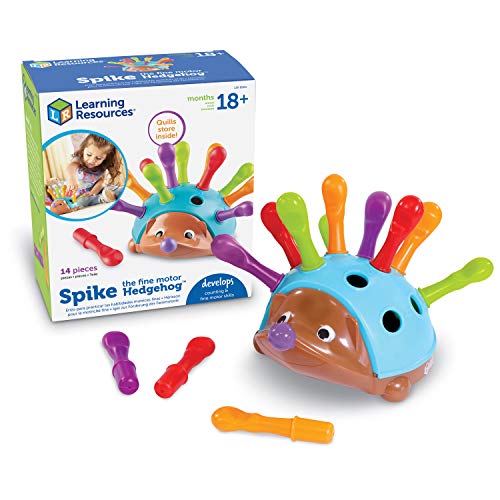
Spike The Hedgehog provides a growing challenge for developing hands. Colored quills slot into the hedgehog’s back, with easy-grip textures that support finger strength and coordination. The toy is designed for ages 18 months and up but still serves as a valuable fine motor exercise for younger infants under supervision, evolving from simple grasping to color recognition, counting, and pattern exploration as a child grows. The modular quills encourage deliberate placement, improving hand-eye coordination and precision in a compact, durable format.
As a versatile tool, it accommodates guided play or open-ended discovery, making it suitable for varied developmental milestones. The tactile feedback from the quills sustains focus and curiosity during play sessions, contributing to steady gains in dexterity and cognitive association between actions and results.
hahaland Tissue Box Toy With Textures

This tissue box toy introduces a soft, engaging object with textured tails, multiple tissues, crinkle tissues, and silk scarves. The design invites babies to pull, twist, and pull apart in a controlled way, enhancing fine motor control and hand strength. The varied textures and materials provide rich sensory input—tactile, auditory, and visual cues support exploration and curiosity. The portability of the box makes it easy to keep playtime engaging during travel or quiet time at home.
Rich colors and differing textures encourage repeated actions, which reinforces fine motor practice and early problem-solving as babies learn how to manipulate the components to activate sounds or reveal surprises.
Yeahbof Dinosaur Sensory Fine Motor Set

This dinosaur-themed set includes 12 easy-to-grasp pieces in four colors, featuring a mouth that opens when pegs are inserted. The hands-on design supports hand-eye coordination, finger dexterity, and color recognition. Inspired by Montessori concepts, the toy encourages active exploration and problem-solving as babies learn to insert pieces, sort colors, and complete simple assembly tasks. The back of the dinosaur is removable for simple storage, making it a practical option for families on the go.
Designed for tactile exploration, this toy helps children practice precision movements and sequencing, aligning with early math and cognitive skills through playful repetition and achievements over time.
Buying Guide: Key Purchase Considerations For Fine Motor Toys
When selecting fine motor toys for a 6-month-old, consider these factors to maximize development and safety:
- Safety and materials: Look for BPA-free plastics, treated wood, and fabric that is machine washable or easy to clean. Ensure small parts are secured and sized to prevent choking hazards.
- Age appropriateness: Toys should offer a gentle challenge without frustration. For six months, prefer toys that encourage grasping, reaching, and tracking with vivid colors and varied textures.
- Sensory variety: A mix of textures, sounds, and visuals supports multisensory development. Crinkle paper, soft fabrics, and gentle rattles are ideal.
- Durability: Choose sturdy designs that withstand chewing and pulling. Solid construction and easy-to-clean surfaces extend toy life.
- Open-ended play: Toys that allow repeated actions with different outcomes foster autonomy and problem-solving without prescribed steps.
- Portability and storage: Compact toys or those with simple storage options are convenient for travel and daily routines.
- Growth potential: Selected toys should remain engaging as the child grows—from simple grasping to sorting, matching, and counting tasks.
The five products above provide a spectrum of fine motor challenges and sensory features, balancing Montessori-inspired concepts with practical, durable design. Parents can rotate toys to maintain novelty and track developmental progress by observing reaching, grasping, and insertion attempts during play.