Best FPV RC Planes for Beginners and Enthusiasts
FPV (first-person view) planes bring immersive aerial control to hobbyists of all levels. This guide highlights five reliable FPV RC planes that balance durability, ease of use, and flight performance. Each option showcases different strengths—from beginner-friendly stability to advanced FPV systems—so aviation fans can choose a model that fits their skill and goals. Below, you’ll find concise product sections, a quick summary table, and a buying guide to help compare features like materials, wingspan, and flight control capabilities.
| Product | Brand | Wingspan | Key Strengths | URL |
|---|---|---|---|---|
| SoloGood HEE Wing T-01 | SoloGood | 730 mm | Durable EPP/ABS, dual motors, gravity-tuned center of gravity, camera-ready | Link |
| Buddy RC ZOHD Drift FPV | Buddy RC | 870 mm | EPP foam, dedicated flight controller bay, optimized cooling | Link |
| LMRC LM19-A | LMRC | — | 720P camera, FPV live view, multiple flight modes, brushless motor | Link |
| XFLY-MODEL X1300 | XFLY-MODEL | 1300 mm | Quick assembly, flexible battery options, downloadable 3D files | Link |
| Kafoopolly Ranger T1 VTOL | Kafoopolly | 730 mm | VTOL with FPV mount, compact design, easy transport | Link |
The following sections expand on each model, outlining what makes them stand out, their likely use cases, and how they fit into an FPV flight plan—whether you’re learning to hover, chasing stable mapping flights, or practicing precise FPV maneuvers.
SoloGood HEE Wing T-01 Fixed Wing

The SoloGood HEE Wing T-01 is built with a high-durability EPP foam core complemented by ABS and carbon fiber, enhancing impact resistance and longevity. Its upgraded flight control system supports dual motors with a thrust-to-weight ratio around 1.71, delivering decisive response in various air conditions. The model accommodates external cameras and features a center-of-gravity system with a wider adjustable range, balancing light and heavy loads while maintaining stable handling at slower speeds. This makes the T-01 suitable for beginners who want forgiving flight characteristics with room to grow.
Buddy RC ZOHD Drift FPV Airplane

The ZOHD Drift FPV airplane from Buddy RC emphasizes a robust, impact-resilient build with high-quality EPP foam. The dedicated equipment bay for Flight Controller (ZOHD Kopilot Lite) and GPS supports reliable FPV operation and system monitoring. An optimized air-cooling design helps safeguard gear during longer sessions. A strong H-shaped bracket on the main wing provides added rigidity for steady flight, even at higher yaw or roll rates, making it apt for pilots who want stable FPV performance and straightforward setup.
LMRC LM19-A Drone With HD Camera

The LM19-A from LMRC focuses on beginner-friendly FPV with a 720P HD camera and real-time video transmission. It supports FPV through a mobile device and includes a ground mode for different flight experiences. Its brushless motor enhances wind resistance and stable flight. Multiple flight modes enable learning progression, from basic hover to more complex patterns, making it a practical entry point for new pilots exploring FPV control without a steep learning curve.
XFLY-MODEL X1300 FPV Airplane
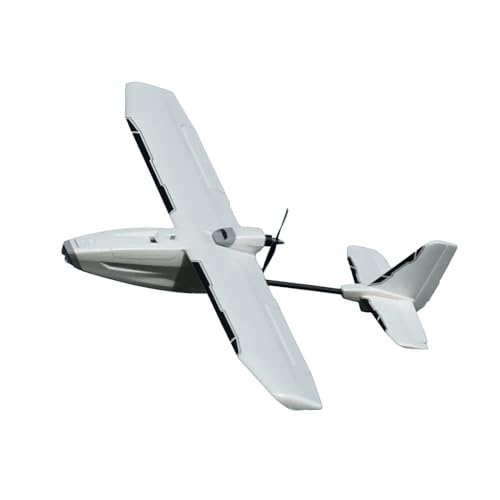
The X1300 from XFLY-MODEL features a spacious battery compartment compatible with 4S LiPo packs, enabling longer flight times. Its screwless, glue-free quick assembly appeals to hobbyists seeking rapid builds or field setup. Access to 3D printable files helps users customize parts or replace components easily. This model suits pilots who want efficient assembly and flexible power options for FPV cruising or light acro flights.
Kafoopolly Ranger T1 VTOL FPV Aircraft

The Ranger T1 from Kafoopolly is a VTOL FPV aircraft with a 730mm wingspan and a compact EPP construction. It ships with a FPV camera mount and Flight Controller, and the kit emphasizes portability with a quick-release wing system for fast setup and disassembly. Aerodynamic refinements enhance stability at low speeds, while the VTOL capability broadens flight options for indoor testing or tight-quarters outdoor flying. This model is well-suited for pilots exploring VTOL transitions and FPV route planning.
Buying Guide: Key Purchase Considerations And Comparisons
Choosing the right FPV RC plane involves balancing build quality, ease of use, and the intended scope of flight. The following considerations help buyers compare options across limitations and benefits.
- Durability and materials: EPP foam, carbon fiber, and ABS shells improve impact resistance and longevity, important for beginners who experience more crashes.
- Wingspan and stability: Larger wingspans tend to offer steadier flight and easier FPV handling, but may require more space and a larger field for takeoff and landing.
- Power and propulsion: Dual-motor configurations or brushless motors can enhance thrust and maneuverability, yet may add weight and complexity.
- FPV capability: Cameras (720P or higher), real-time video transmission, and integrated OSD aid situational awareness and flight safety.
- Payload and modularity: Ability to add external cameras or flight controllers extends versatility for filming, mapping, or learning flight dynamics.
- Portability and assembly: Quick-assembly designs and VTOL options simplify field practice and transport to flights or clubs.
- Support and spare parts: Availability of replacement parts and community guides accelerates troubleshooting and upgrades.
- Skill progression: Choose models with adjustable CoG ranges and multiple modes to accommodate growth from beginner to intermediate piloting.
For new pilots, a model with forgiving handling, a robust protection frame, and a clear FPV feed is a prudent start. As skills develop, pilots can explore more complex FPV setups or longer-range flights with additional sensors or 3D-printed custom parts. Each model in this guide offers a different balance of these factors, enabling a stepwise learning curve while maintaining safety and reliability.