Best Fruit Pictures for Toddlers: Fun Learning With Flash Cards and Posters
Discover engaging, kid-friendly tools to help toddlers learn fruit names and early vocabulary. This guide highlights five well-rounded products that use real pictures, durable materials, and portable designs to support early language development, memory, and recognition. Each item is chosen for large-picture clarity, age-appropriate formats, and practical use in homes, classrooms, or therapy sessions.
| Product | Brand |
|---|---|
| 52 Pcs Kids Fruit Flash Cards for Toddler | TROMOD |
| 50 Food Double Sided Flash Cards | CreateFun |
| Hungry Brain Fruits Educational Flash Cards | hungry brain |
| MAGDUM PHOTO FRUITS & Berries Magnets | magdum |
| 45Pcs Fruits and Vegetables Cognitive Cards | TNCDJKPA |
To maximize effectiveness, consider age, attention span, and whether the goal is vocabulary building, memory training, or language therapy. The items below cover a range of formats—from flash cards to magnets and posters—allowing caregivers and educators to mix visual learning with hands-on activities.
52 Pcs Fruit Flash Cards With Rings

The 52 double-sided flash cards feature fruit pictures on the front and words with phonetic symbols on the back. This design supports visual recognition, vocabulary development, and pronunciation practice. The durable PET-coated cards are printed with high-quality ink and include a sturdy ring for easy flipping and transport. With a compact size of 3.23 x 4.53 inches, they’re ideal for on-the-go learning and classroom use. The set also comes in an appealing packaging box, making it a thoughtful learning gift.
50 Food Double Sided Flash Cards
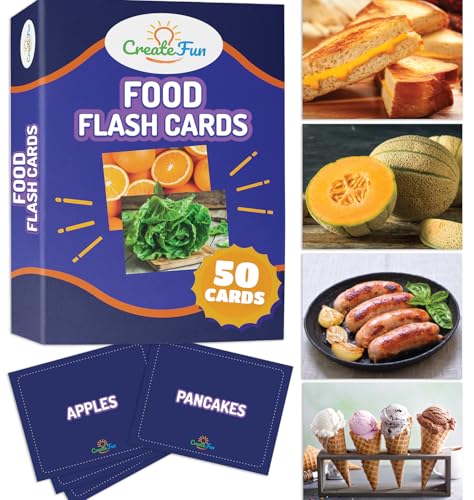
Created for a range of learners, these cards are used by speech-language pathologists, occupational therapists, and teachers. The 50-card set aims to improve visual recall, problem solving, and critical thinking. The cards are thick with a smudge-proof, water-resistant coating, designed to withstand frequent handling by young children. Each card measures 3.5 x 4.5 inches, a size that’s easy for little hands to manage during therapy or classroom activities.
Hungry Brain Fruits Educational Flash Cards

These 24 double-sided cards use real-life fruit pictures to support vocabulary building, memory, and early recognition skills. Real photographs help toddlers connect words with actual objects, aiding comprehension. Designed for ages 1–4, the set is suitable for preschool activities, language development sessions, and home learning environments. The photographic approach promotes easier association between fruit names and their appearance, supporting early reading readiness and expressive language growth.
Magdum Fruits & Berries Magnets

These large fridge magnets offer a magnetic, hands-on way to learn fruit names and basic categorization. The set includes 25 big fruit magnets—an engaging tool for kitchen-based lessons, interactive demonstrations, and independent play. The tactile experience of placing magnets on a metal surface helps reinforce memory and language through physical action and visual association, making it suitable for toddler activities and early bilingual or second-language exposure in a fun, kitchen-centered environment.
45Pcs Fruits and Vegetables Cognitive Cards

This set provides 45 realistic fruit and vegetable cards designed to boost memory, attention, and problem-solving through interactive play. The cards are made from durable PVC material, making them waterproof and suitable for travel to parks or beaches. Portable and light, they can be used for group activities, individual practice, or family games that promote cooperative learning. The realistic illustrations help children recognize and name common produce, supporting early literacy and cognitive development.
Buying Guide: Key Purchase Considerations
- Learning goals: Choose sets that align with vocabulary expansion, memory training, or language therapy needs. Real photo cards tend to enhance object recognition, while picture-illustration cards support naming and categorization.
- Durability and materials: For toddlers, durability matters. Look for thick cards, PET or PVC coating, and waterproof options for travel and messy play. Magnets are ideal for kitchen or classroom walls and metal surfaces.
- Size and portability: Smaller cards increase portability but may be harder for very young children to handle. Medium-sized cards with rings or rings-enabled packaging offer a balance between ease of use and portability.
- Double-sided design: Cards with front-facing pictures and back-facing words or phonetics provide reinforcement for both recognition and pronunciation practice, supporting multi-sensory learning.
- Age range and safety: Ensure cards are designed for toddlers or preschoolers and meet safety certifications. Avoid smaller pieces that could pose choking hazards for younger children.
- Supplementary tools: Magnets and posters can complement flash cards by delivering hands-on experiences and broader classroom decor, aiding in memory retention and classroom engagement.
- Care and maintenance: Look for smudge-proof coatings and wipeable surfaces to facilitate quick cleanup after messy play or spills, which is common in early childhood settings.
- Difficulty progression: A mix of sets with varying complexity (e.g., plain fruit names, phonetic backings, or more illustrative content) helps maintain challenge as children grow.
In selecting the best options, consider combining a core set of flash cards with a magnetic or poster-based supplement to support a full-spectrum learning routine. This approach can accommodate diverse learning styles and keep toddlers engaged as they build foundational language and cognitive skills.