Best Game Systems for 8 Year Olds: Educational Handhelds and STEM Toys
Finding engaging, educational game systems for 8-year-olds can boost problem-solving, memory, and STEM curiosity. The following selections cover handheld brain games, laser-path reasoning, geography challenges, motion-based play, and classic retro-style gaming—each designed to entertain while developing critical skills. Below is a quick comparison of five standout options.
| Product | Type | Key Benefit |
|---|---|---|
| PlayRoute Light Up Memory Cube | Electronic brain games | Enhances memory and concentration through pattern-based play |
| VkotaVkoty Laser Maze Reasoning | STEM puzzle set | Teach refraction, optics, and spatial reasoning with hands-on challenges |
| The World Game Geography Card Game | Educational card game | Builds geography knowledge and memory in a family-friendly format |
| AR Motion Game Console | Motion-sensing console | Active play that promotes physical activity and family togetherness |
| CCTU Handheld 218 Games Console | Portable handheld game system | Wide game variety and portability for travel and on-the-go play |
Note: All products below are presented with a direct link to their Amazon listings for convenient browsing and purchase decisions.
PlayRoute Light Up Brain Cube
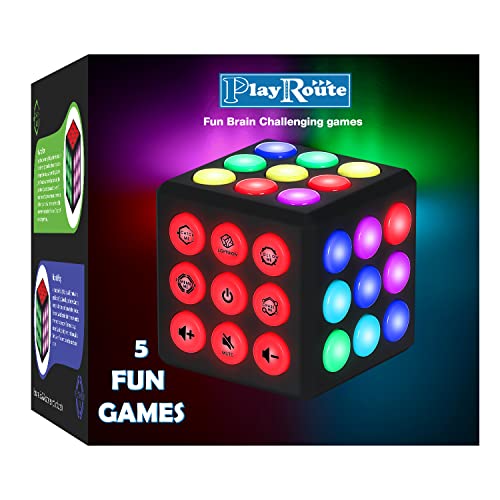
The PlayRoute Light Up Cube offers five interactive games that blend memory, rhythm, and pattern recognition in a handheld format. Designed for ages 6-12, the cube functions as a compact travel companion and a thoughtful gift for kids and teens. The included games focus on memory and concentration challenges, such as Follow Me and Remember Me, encouraging attentiveness and cognitive development in a fun, engaging way.
VkotaVkoty Laser Maze Reasoning Game

This STEM-oriented set introduces light-path puzzles using mirrors and beams, guiding 8-12 year-olds through refractive challenges. With 60+ gradient levels, players can adjust difficulty to match growing skills. The kit supports solo play or multiplayer competition, fostering strategic thinking and problem-solving while staying aligned with safety standards and durable construction for classroom or home use.
The World Game: Geography Card Game

Geography becomes interactive with flags, capitals, and location challenges across all 194 countries. This family-friendly card game invites players to memorize and recognize world facts while competing to win by discovering the strongest country insight. Suitable for kids aged 8-12 and adaptable for adults, it supports multi-generational learning and casual competition.
AR Motion Game Console for Kids

The AR Motion Console transforms living room spaces into interactive playgrounds with 28 built-in motion-sensing games. Players move their bodies to interact with on-screen actions, promoting physical activity and family engagement. No subscription is required, and the device supports single or two-player modes—ideal for varied group activities during holidays or weekends.
CCTU Handheld 218 Games Console

This portable handheld system packs 218 built-in games spanning puzzle, action, and adventure genres. Aimed at kids, it supports easy, kid-friendly gameplay and offers portability for travel or quick play sessions. The compact design helps kids develop manual dexterity and strategic thinking while keeping gameplay accessible and engaging for extended periods away from screens.
Buying Guide: Key Purchase Considerations
- Age-appropriateness: Choose games aligned with an 8-year-old’s developmental stage, balancing challenge with accessibility.
- Educational value: Look for systems that emphasize memory, logic, spatial reasoning, geography, or physical activity to complement learning goals.
- Maintenance and durability: Prioritize sturdy construction, kid-friendly materials, and simple maintenance for frequent use.
- Game variety and longevity: A broad library or expandable content reduces early boredom and supports ongoing engagement.
- Multiplayer options: Family-friendly titles with two-player modes encourage social interaction and teamwork.
- Safety and supervision: Check for child-safe materials, non-direct-beam designs where applicable, and age-appropriate content.
- Portability vs. screen time: Handheld or tabletop options offer portability, but consider balance with screen-free play.
- Budget considerations: Weigh the upfront cost against the breadth of included games and learning benefits.
- Setup and ease of use: Look for plug-and-play devices or straightforward assembly to maximize playtime and minimize frustration.
- Future-proofing: Some devices offer updates or additional games; prioritize systems with upgrade paths or widely available accessories.
Across these options, parents and guardians can select game systems that blend entertainment with skill development—supporting critical thinking, memory, physical activity, and world knowledge in an age-appropriate format for 8-year-olds.