Best Guitars for 4 Year Olds: Safe, Fun Toys to Inspire Little Musicians
Finding the right first guitar for a preschooler combines safety, durability, and engaging features. This guide highlights five highly compatible options that balance play and learning. Each choice emphasizes kid-friendly design, non-toxic materials, and interactive elements that support early rhythm and coordination. Below you’ll find concise product overviews, a handy buying guide, and notes on what to look for when selecting a first instrument for a 4-year-old.
| Product | Brand | Key Feature | Notes |
|---|---|---|---|
| Kids Toddler Electric Toy Guitar | Jakeloo | Built-in 8 demos and interactive lights | Safe no-string design; great for early rhythm work |
| 2-in-1 Electric Guitar With Piano Mode | Drmukie | Piano and guitar modes with infrared lights | Multifunctional, encourages fine motor skills |
| 21 Inch Wooden Acoustic Guitar | Jakeloo | Wooden construction with four strings | Natural feel; durable for growing hands |
| Raimy Kids Guitar Ukulele | Raimy | Authentic sound in a kid-sized package | Durable, kid-friendly design |
| M SANMERSEN Pink Electric Toy | M SANMERSEN | 8 demos, 4 rhythms, infrared lights | No-string design, safe for little hands |
Jakeloo Kids Toddler Electric Toy Guitar
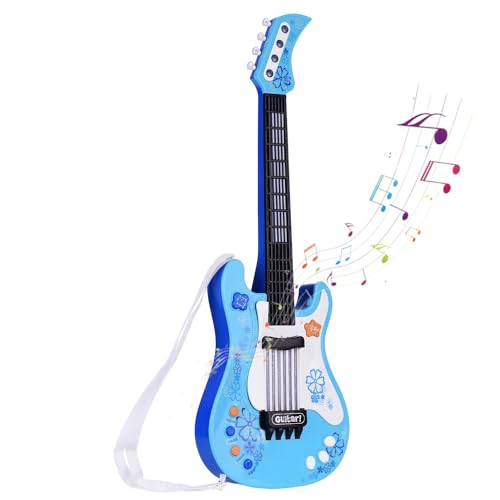
The Jakeloo electric toy guitar is tailored for younger players with a no-string design and child-friendly ABS material. It features built-in demos, animal sounds, tones, and rhythms to spark early musical exploration. LED flash lights respond to touch, reinforcing cause-and-effect learning while keeping sessions visually engaging. The compact size and durable construction suit 3- to 5-year-olds who are developing rhythm and ear training. This option supports creative play and can help establish basic musical interest in a safe, approachable format.
Drmukie 2-in-1 Electric Guitar With Piano Mode

This 2-in-1 toy blends guitar and piano modes with infrared sensing lights that dance to the music. It offers eight piano and eight guitar songs plus various kid-friendly rhythms and instrument sounds. The lights and sounds are designed to enhance hand-eye coordination and auditory learning, making it a strong candidate for active pretend play. Its portable, adjustable design supports kids as they grow, while the no-strings build reduces snags and pinching hazards.
Jakeloo Wooden Acoustic Guitar for Toddlers

This 21-inch wooden acoustic guitar is built for small hands with a comfortable grip and a gliding fret layout. Four plastic strings provide a crisp, approachable sound ideal for beginners. The natural wood finish helps children see strings and frets up close, aiding early music education and rhythm recognition. It’s sturdy enough to survive the exploratory play common in preschoolers and forms a durable foundation for future instrument exploration.
Raimy Kids Guitar Ukulele

The Raimy 21-inch kid’s guitar offers an authentic-sounding instrument in a compact size designed for children aged 3–7. It emphasizes safe materials and durable construction to withstand daily play. The design supports proper technique as children grow, making it a practical transition instrument that balances realism with kid-friendly ergonomics. Its scaled dimensions help nurture a genuine interest in music while keeping playtime accessible and fun.
M SANMERSEN Pink Electric Toy Guitar

The M SANMERSEN toy guitar for girls emphasizes a safe no-string design and durable ABS plastic. It includes eight demos, four instrument tones, and four rhythms with infrared light interactions that respond to touch. The design focuses on early musical exploration, rhythm development, and sensory engagement, making it a compelling option for 3- to 5-year-olds. The adjustable ease-of-use and vibrant colors support inclusive play and motor skill growth.
Buying Guide
- Safety first: look for no-sharp-edges design, non-toxic materials, and durable construction suited for rough handling.
- Size and weight: choose instruments scaled to small hands (around 16–24 inches) to promote comfortable grip and proper technique.
- Learning vs. play balance: consider whether the toy emphasizes sound variety, rhythm, or pretend play, depending on your child’s interests.
- Durability: toys should withstand drops, spills, and frequent handling typical of preschool environments.
- Future-proofing: select an instrument that supports progression, such as transitioning from toy-like to more realistic sounds as skills develop.
- Maintenance: easy cleaning and simple parts reduce long-term upkeep and ensure ongoing safe use.
- Materials: prioritize BPA-free plastics and sustainably sourced wood when possible for environmental and health considerations.
- Value: weigh included features (lights, demos, multiple modes) against price to determine long-term entertainment and educational value.